
Rialton Reid: Growing Up with Sickle Cell Disease
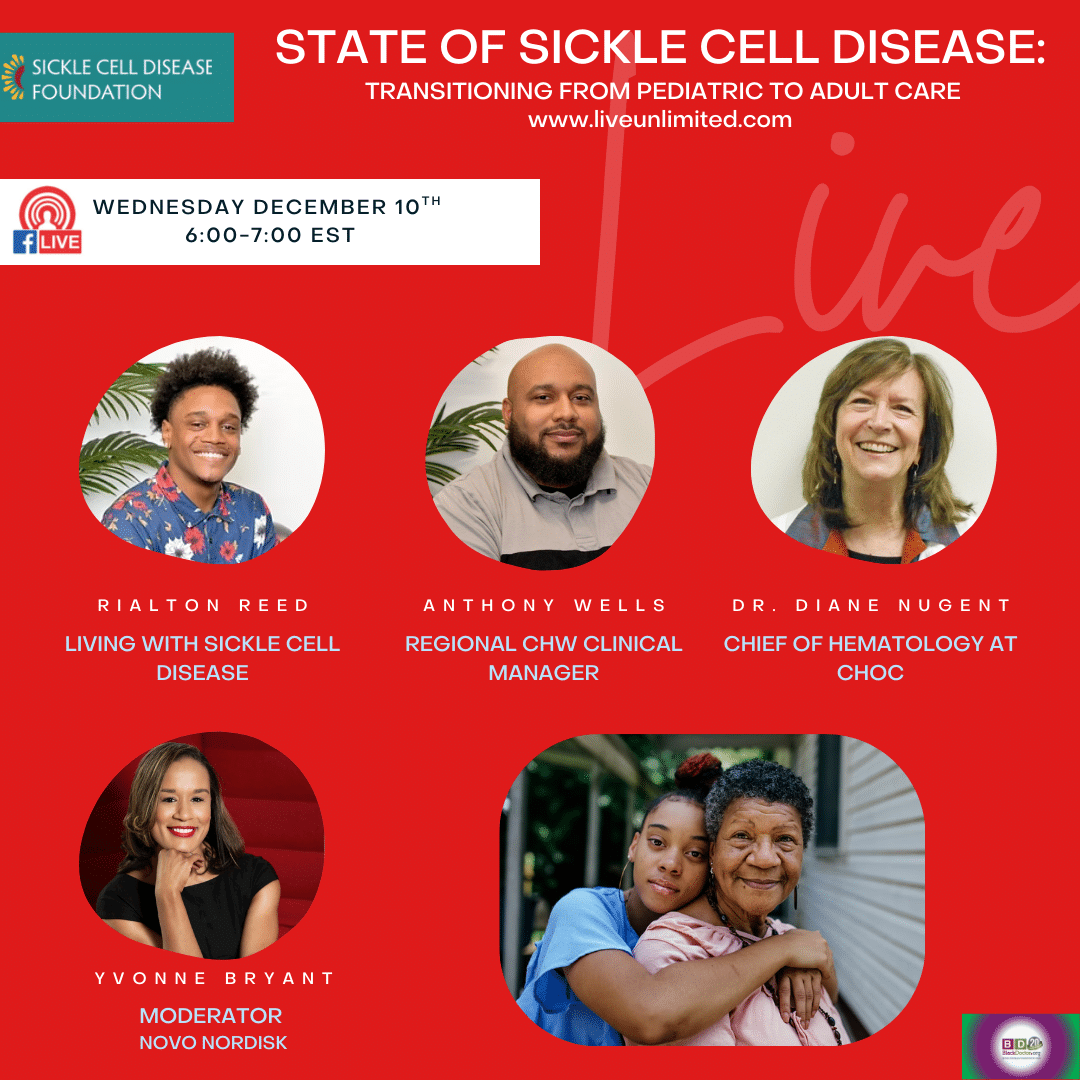
Rialton will be sharing his story on BlackDoctor’s “State of Sickle Cell Disease: Transition from Pediatric to Adult Care” Facebook Live on December 10th at 6 EST. Click the link to register!
In preparation for the Facebook Live event, we sat down with Rialton to learn more about his lived experience with sickle cell disease and why he is so committed to helping others find community support.
Early Childhood and Living with SCD
Sickle Cell Disease (SCD) is a complex genetic blood disorder that affects everyone differently. It can cause complications throughout the body, including:
- Organ failure and organ damage
- Muscle damage
- Avascular necrosis (bone deterioration)
- High risk of strokes
- Blood clots
“Luckily, I didn’t have to deal with a lot of those complications,” Reid shares.
But he did face other major complications three times—at ages six, 14, and 19—when he was hospitalized for pneumonia, the flu, and a fungal lung infection. All three hospitalizations required blood transfusions.
Despite these challenges, Rialton did his best to not allow sickle cell disease to hold him back and he learned early to openly discuss his illness with his peers. He even found his passion for basketball.
“Going to school…I had no problem telling my friends I had sickle cell or explaining to my friends or my teachers about sickle cell disease, because I was always comfortable letting people know that, ‘Hey, this is what I’m going through, but I can still do everything anybody else can do.’ So, don’t feel like you have to do anything to accommodate me…don’t feel like you have to feel bad for me…because when certain people find out you have sickle cell, they try to…make it seem like…you’re extra needy,” Reid adds
“But growing up with sickle cell, sometimes you do feel alone and isolated because it can be difficult to learn about the resources that are out there for you,” Reid tells BlackDoctor.
Finding Community: Camp Crescent Moon & SC Crew
At age 12, Reid connected with the Sickle Cell Disease Foundation and attended the summer program Camp Crescent Moon. Later, the teen transition program SC Crew taught him the skills needed for independent adult self-management.
“That’s what exposed me to so many people with sickle cell disease. Some of my best friends to this day are from the camp. The summer camp has pretty much changed my outlook on sickle cell in my life and helped me get where I am today,” he explains.
In California, where Rialton lives, mortality rates for people with SCD are highest during the transition period (ages 18–23/24). SC Crew supports teens ages 14.5–20 to prepare for the shift from pediatric to adult care.
Reid credits the SC Crew for teaching him the following:
- Understanding triggers: learning that stress and anxiety are triggers for a crisis
- Treatment plan & medication compliance: Why it’s important to develop a treatment plan in partnership with my doctor and how to advocate for that plan on my own so that I can properly manage this condition. And also how certain medications impact fetal hemoglobin, the sickling of red blood cells, and why Folic Acid is needed to build iron
- Managing complications: including priapism (a sickle cell crisis in the penis), which many males experience
- Life skills and relationships: including job applications and important conversations about family planning
- Exercise and breathing: learning not to overexert and practicing good oxygen flow techniques
“I would say SC Crew taught me everything from how to manage my sickle cell, to how to fill out a job application, to how to actually make sure I’m well, medically wise,” Reid says.
Facing the ER
A major challenge for sickle cell warriors is emergency room care.
Reid calls the ER “a difficult place for a person living with sickle cell disease,” because of a lack of SCD awareness as well as discrimination and bias. Many patients are wrongly labeled “drug seekers,” which leads some to avoid the ER even during serious complications.
“Luckily, I knew my body and my sickle cell well enough to know that I needed to keep going back to the ER to figure that out,” Reid shares. “I didn’t really start having major complications until I got older.”
Reid offers guidance for those navigating the healthcare system.
1. Come Prepared
Reid stresses the importance of keeping key information written down:
- Diagnosis
- Medications
- Last blood work
- Hospitalizations for the year
“…Make sure that if you go to an ER that you’ve never been to before, they have some information to jump start the process,” he advises.
Reid also suggests keeping distractions on hand.
“…Always make sure you take some things that can…help you distract your mind if you’re in pain,” he adds.
2. Understand Triage Levels
“Learn the triage levels of their emergency room. A sickle cell patient always comes in at a level three, so we should be seen pretty quickly,” Reid notes. “But if you come in with chest pain, you should automatically go to a level five and should be seen immediately.”
3. Study Your Disease and Know Your Baseline
Reid explains that all people with SCD have anemia and low hemoglobin, but knowing your personal baseline prevents unnecessary transfusions.
“Make sure you know your baseline hemoglobin so that way you don’t get over transfusion and…become iron overloaded…For example, my baseline is between nine and 10. So, if I were to go into the emergency room and they see that my hemoglobin dropped to an eight…or a seven, they probably might try to transfuse me, but I might be okay.”
This knowledge helps ensure safe, appropriate care.
Family Support: The Foundation of His Strength
Reid credits his family, especially his mother, for shaping his independence and resilience.
“I’m a mama’s boy. Can’t nobody tell me nothing bad about my mom. So, my mom has literally been my backbone, my rock…from making sure I know how to call the pharmacy…to making sure I’m comfortable talking to my doctors by myself. My mom has been the one who literally taught me how to be independent from day one,” he shares.
He also praises his siblings.
“Both my brothers don’t have sickle cell or the trait, and they sometimes can’t even understand anything I’m going through. But for them to even try…to sit there and listen to me…and try to understand…is always amazing.”
“My older brother is one of my rocks too…I can talk to him about anything…even if he doesn’t understand, he’ll just sit there and listen and let me vent,” he adds.
Reid says his younger brother “probably knows me and my sickle cell the best,” after years of sharing a room.
Advice for Caregivers
Reid urges caregivers and loved ones who want to better support someone with SCD to:
- Ask questions: “Nothing is a dumb question.”
- Be the anchor: advocate during crises
- Check-up often: ensure warriors don’t feel like a burden
- Listen: sometimes support is about presence, not solutions
He also emphasizes the importance of working collaboratively with healthcare providers.
“Doctors should be more willing to listen to the people with sickle cell disease…we should actually be working together…to come to the best plan possible,” he says.
The Sickle Cell Foundation: A Critical Resource
The Sickle Cell Disease Foundation fights the misconception that SCD is “rare.”
Their California services include:
- SC Crew (teen transition)
- Warrior Circle (adult support)
- Camp Crescent Moon
- Appointment Assistance (transportation & scheduling)
- Social Services: food pantry, utility support, insurance changes
- Holiday Giving Program: gifts and food for families
“Don’t ever feel like you are alone in this world. You can find your community, and your community is right here,” Reid concludes.
Join us on Tuesday, December 10th, at 6 PM EST for the Facebook Live event, “State of Sickle Cell Disease: Transition from Pediatric to Adult Care”. Hear Rialton Reid’s story live and learn from his journey as a sickle cell warrior.
Learn more: www.liveunlimited.com