
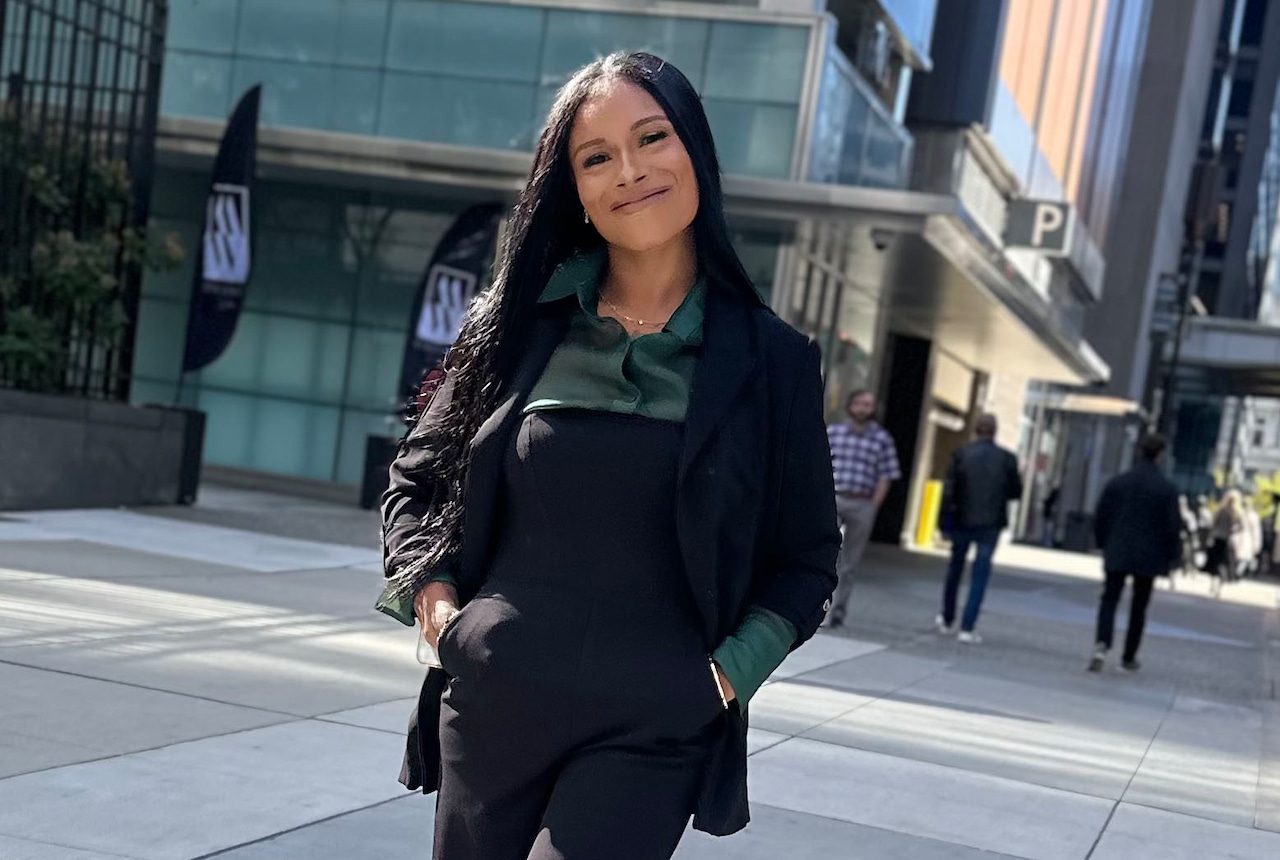
After building a million-dollar business from scratch, Tianna Williams says an overzealous bank fraud investigator ruined her business and left her scrambling with no means to help care for her five children and her cancer-stricken mother.
The 30-year-old Catasauqua woman sued M&T Bank in Philadelphia court in what she is calling a case of “banking while Black” discrimination.
Attorneys representing the Buffalo, New York-based bank and the branch manager in Whitehall didn’t respond to an email seeking comment Tuesday, Dec. 2.
Williams grew up in poverty. She dropped out of Whitehall High School to take care of her first child and help care for her sick mother and her three siblings. They were barely making it on what she and her mother earned cleaning homes, she said.
“She was working 20 hours a day, even through chemo and radiation. I didn’t want to do that,” Williams said.
She met a car salesman who took her under his wing and taught her how to “flip” cars – to buy used cars at auctions, clean them up, get them fixed and sell them.
She was a natural. She left his tutelage after a year, went on her own and then got a job at a dealership, where she learned about financing.
Then she figured out she could earn a whole lot more by opening her own car lot and selling for herself. She lined up lenders to finance her sales, figured out how to obtain a dealer’s license and opened Automo-Deals, Inc., on Freemansburg Avenue in Bethlehem Township.
She sold cars to low-income individuals with bad credit who desperately needed a vehicle to earn income.

The business took off.
“She caught lightning in a bottle,” according to her attorney, Dean Malik of King of Prussia.
She had gross sales earnings of $200,000 one year and more than $1 million the next year. Finally, her family didn’t need to fear creditors or the loss of the family home.
Then Williams turned to M&T Bank to expand her lending power. It was a huge mistake, according to her lawsuit.
The lawsuit says she deposited $35,000 and applied for a line of credit in March 2023 on the advice of an M&T banker.
Then, her account was frozen. It wasn’t clear why at first, according to the lawsuit. Then, she was told she was under investigation for fraud.
Her account was frozen for six weeks. She needed that capital to keep her business going, she said.
A fraud investigator at M&T tracked down her other lenders, told them about the fraud investigation and asked them to keep an eye on Williams, the lawsuit says. The investigation ultimately uncovered no wrongdoing, and after Williams hired Malik the bank finally unfroze her account.
By then, it was too late. Her lenders, fearing she couldn’t be trusted, walked away from her. Her business was ruined, she said.
“I just feel like I lost myself, my identity,” Williams said. “I feel like I lost my stability for me and my kids.”
According to her lawsuit, the investigator noted that Williams was young, African American, had tattoos and was making large deposits.
The lawsuit says Williams’ business was derailed “for no reason other than the spite, racism, and self-righteousness of an overzealous and unrestrained fraud investigator employed by … M&T Bank.”
According to the lawsuit, the investigator told Williams during the investigation, “‘you people’ have a way of trying to make things look legitimate when they are actually fraudulent.”
The lawsuit says the investigator went out of her way to target Williams, citing a March 29 email to her colleagues where she says, “Doing my best not to let her win on my watch,” with a smiley-face emoji.
Malik filed the lawsuit in March. He said he’s been fighting for months to obtain documents from the bank and depositions from its employees. The bank filed court papers denying the allegations but the papers say the bank “lacks knowledge or information sufficient” to back up its position.
At a court hearing in September, bank attorney James P. Berg of Philadelphia refused to turn over documents related to Williams’ investigation. He told Judge Paula Patrick the account was flagged because Williams wanted to deposit a check in a third-party’s name and the person’s middle name was misspelled. The bank wanted to clear up the discrepancy, so it held up the deposit and froze the account, he said.
It’s not clear why it took so long to resolve the matter.
Berg told the judge the investigatory files are confidential under the Bank Secrecy Act. But the judge said the investigation has concluded, so the bank should turn over the files.
“I don’t understand why you can’t just give the documents,” she said, according to a court transcript. “I mean, what’s the problem?”
The bank refused. The judge imposed sanctions on the bank, and the bank appealed her decision to Pennsylvania Superior Court, where the matter is pending.
Williams believes she has joined a list of Black individuals featured in news stories who are accused of “banking while Black.” Their large deposits triggered unfounded fraud investigations and left them embarrassed, scared, or in Williams’ case, bankrupt.
To add to her misery, her house burned down in June. She and her five children were forced to move.
She said she just wants her litigation to end so she can start selling cars and rebuild her life and her business.
“That’s what I’m passionate about,” she said.
The five-count lawsuit seeks unspecified damages for fraudulently inducing Williams to become a customer, wrecking her business and failing to properly train the fraud investigator.
“I think the public has a right to know what happened in this case, and I think many people in the public will be absolutely outraged by what this bank did,” Malik said.He said the issue is broader than racial profiling.
“I believe racism was a component, but it could happen to anybody. It’s just a question of a bank being accountable for the actions of its employees,” he said.