
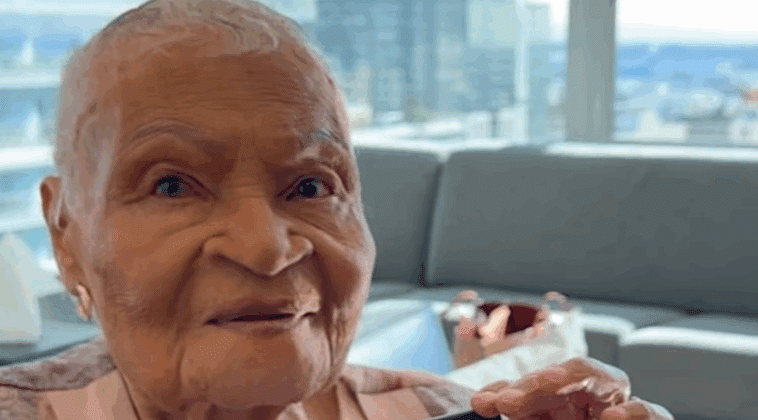
Viola Ford Fletcher, the oldest known survivor of the 1921 Tulsa Race Massacre, died November 24, 2025, at age 111, taking with her memories of gospel hymns echoing through a thriving neighborhood—and the screams that silenced them forever. Her passing, announced by Tulsa Mayor Monroe Nichols, marks not just the loss of a witness to history, but the closing of a chapter in America’s ongoing reckoning with racial violence and its generational toll.
From Black Wall Street to Ashes
Fletcher was seven years old when she lived in Greenwood, a self-sustaining Black neighborhood of roughly 10,000 residents with at least 191 Black-owned businesses. Known as “Black Wall Street,” the district represented an extraordinary achievement: economic independence and prosperity in Jim Crow America. She remembered Sunday dinners of fried chicken and cobbler, her sister singing in the church choir, and the simple joy of walking through aisles of Black-owned stores.
On May 31, 1921, that world ended. Following rumors that a Black teenager had assaulted a white woman—charges never prosecuted after the alleged victim declined to press them—a white mob, some armed and deputized by city officials, invaded Greenwood. Fletcher’s mother frantically shook her children awake in the dead of night as vigilantes torched their neighborhood.
“People were falling and bleeding, crying and howling. I saw houses and burning cars. You could hear airplanes flying over the top,” Fletcher recalled in a 2021 TIME interview. “Somebody told us, ‘Hurry up, leave. They’re killing all the Black people.’”
By dawn on June 1, 35 city blocks lay in ruins, more than 1,200 homes destroyed, and as many as 300 Black residents killed. The Tulsa City Commission immediately passed fire ordinances prohibiting rebuilding, ensuring the destruction would be permanent. Fifteen years of accumulated wealth vanished overnight.
The Fletcher family escaped with only the clothes they wore, joining nearly 10,000 Black Greenwood residents left homeless. Insurance claims were denied. Lawsuits against the city failed. No perpetrators were ever prosecuted.
Fletcher’s family became sharecroppers, living in tents and moving from town to town across Oklahoma. “We picked cotton, shucked the corn, dug up potatoes—whatever harvests were in the garden or in the fields,” she remembered. Her siblings worked the fields instead of attending school.
The economic devastation proved multigenerational. Harvard researchers found that by 2000, the Massacre had reduced the probability of Black Tulsans living in family-owned homes by 26 percentage points. Average incomes dropped 7.3 percent, and the effects compounded over time rather than healing. Property losses, adjusted for inflation, totaled between $32.6 and $47.4 million—though some estimates reach $100 million.
“We should have generational wealth to pass on, but we don’t,” Fletcher’s grandson Ike Howard told TIME in 2021. “It’s been the other way around. We’ve been helping keep her afloat.”
Fletcher eventually found work as a welder in a California shipyard during World War II, only to be dismissed when the war ended. She spent decades as a housekeeper for affluent white families in Oklahoma—many of whom, she later discovered, failed to pay her social security taxes, forcing her to work until age 85.
The trauma Fletcher carried manifested in ways both visible and hidden. She slept sitting upright on her couch with the lights on well into her later years. “Being in the dark, I can’t see how to get out. I can’t see who is coming in,” she explained. When she closed her eyes, she saw Black bodies scattered across Greenwood’s streets.
Yet Fletcher refused to let her story die in silence. When Oklahoma finally launched an investigative commission in 1997—76 years after the massacre—she emerged as a crucial voice. In 2020, at age 106, she joined her brother Hughes Van Ellis and fellow survivor Less