
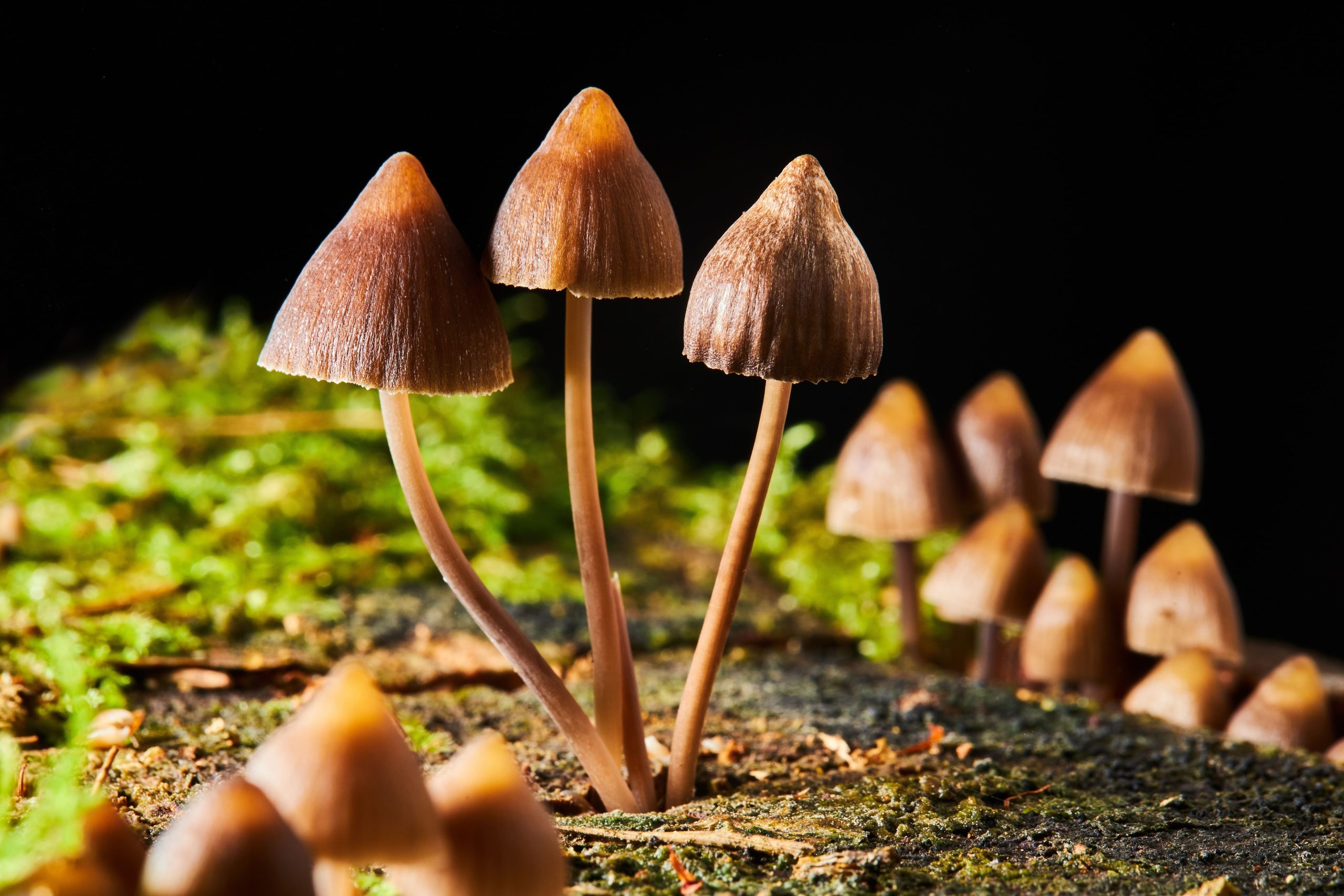
Have you ever wondered what that small, pointy-capped mushroom is that appears in damp meadows in autumn? Today we want to talk to you about Psilocybe semilanceata, one of the most well-known and discussed mushroom species in the world due to its powerful effects and its almost global presence in temperate climates.
What is Psilocybe semilanceata? Main characteristics
Psilocybe semilanceata, also known as the Liberty Cap, is a mushroom from the Psilocybe genus, famous for its potency and for being one of the most emblematic species within the group of psychoactive mushrooms.
It is also one of the most widespread and recognisable species in the world, with an unmistakable appearance that has shaped both its study and its presence in European folklore.
Visual characteristics of Psilocybe semilanceata
This mushroom is recognised by its small size (generally between 2 and 5 cm tall) and by its conical or bell-shaped cap with a characteristic nipple-like protrusion on the top.
The cap shows a colour ranging from yellow-brown to darker brown when wet, becoming paler as it dries.
The stem is thin, flexible and usually has a similar or slightly lighter tone than the cap.
Where does Psilocybe semilanceata grow?
Unlike other psychoactive mushrooms such as Psilocybe Cubensis, which prefer manure, Psilocybe semilanceata fruits mainly in damp meadows and grasslands, especially in areas with grazing livestock. It does not grow directly on dung, but it does benefit from the fertility it brings to the soil.
It is widely distributed throughout Europe, North America and other temperate regions, appearing mainly during autumn.

How much psilocybin does Psilocybe semilanceata actually contain?
If you are already familiar with the world of psychoactive mushrooms, you’ll know that semilanceata has a reputation for being “small but mighty”. And that’s no exaggeration: within the European mycological universe, it is one of the species with the highest relative potency in proportion to its size.
Although the variability of the psilocybin it contains is considerable — depending on climate, maturity or even the specific meadow where it grows — many analyses place its usual levels around 0.3–0.8% dry weight, with exceptional cases exceeding these figures.
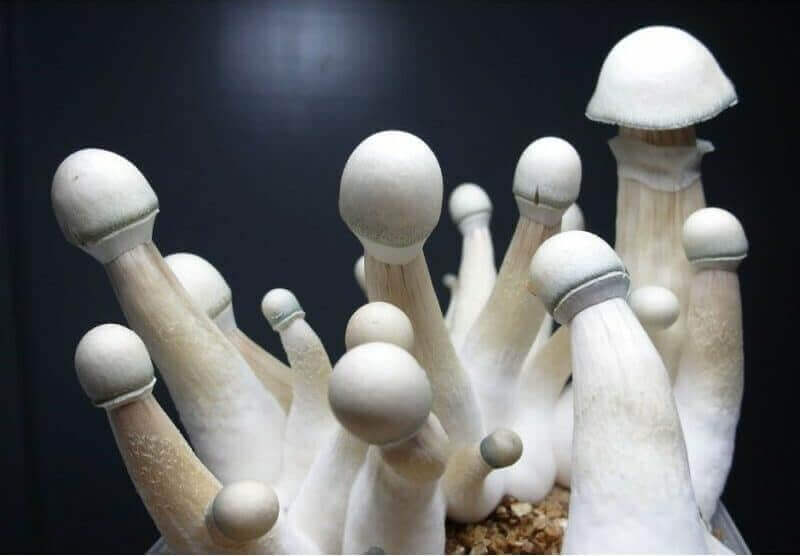
7 varieties of mushrooms you should know
Discover 7 varieties of magic mushrooms that every conscious explorer should know. From the legendary Thai Pink Buffalo to the intense Panaeolus cyanescens or the legendary Penis Envy, each offers a unique journey filled with visual, introspective, and transformative nuances. Today we bring you a clear and accessible guide to choosing the experience that best suits you.
A tiny presence… but huge in the European imagination
Hallucinogenic mushrooms have accompanied psychedelic culture for decades and continue to spark interest among naturalists, historians and mycologists. Among the best known in Europe are Amanita Muscaria and Psilocybe Semilanceata.
Its stable presence in the grasslands of the northern hemisphere makes it a true mycological emblem, both for its biology and for the role it has played in the European collective imagination.
When we talk about Psilocybe semilanceata, we are not only referring to a mushroom typical of damp meadows: we are talking about a small cultural icon that has quietly left its mark on European folklore. Its discreet conical cap appears every autumn from Scotland to the Pyrenees, and many believe that behind numerous rural tales lies this tiny mycological traveller.

Legends, forests and “encounters”: From druids to rural tales
In several northern European countries, stories circulate about dancing lights, unexplained laughter in the middle of the night, or “doors” to other planes that only opened on damp afternoons. Coincidence? Perhaps. But the truth is that these narratives fit surprisingly well with the perceptual alterations that this mushroom can produce when someone — often shepherds or foragers — consumed it without really knowing what they had in their hands.
In Atlantic areas, people also spoke of “meadow madness”, a sudden hilarity attributed to mischievous goblins. Today we know that the explanation may have been much closer to the ground… and shaped like a small pointy cap.
There is no direct evidence confirming its use by druids, but many mythologists believe that certain rites described in medieval texts — linked to visions, messages from nature or states of deep introspection — could be related to mushrooms present in Europe, among them semilanceata, which is abundant, recognisable and closely tied to the Celtic landscape.
Over the centuries, this symbolic echo persisted in rural tales: fae beings altering perception, travellers returning “changed” from a walk in the woods, “enchanted” meadows where time seemed to stand still. All of this fits perfectly with the sensations described by those who encounter this mushroom in unexpected contexts.
Ultimately, Psilocybe semilanceata doesn’t just grow in damp pastures: it grows in oral tradition, in stories told by the fire, in the mystique of the European forest. And although today we study it from a more modern and responsible perspective, it’s nice to imagine that these little “liberty caps” have accompanied human creativity for centuries, bringing mystery, wonder and a few stories still waiting to be told.