
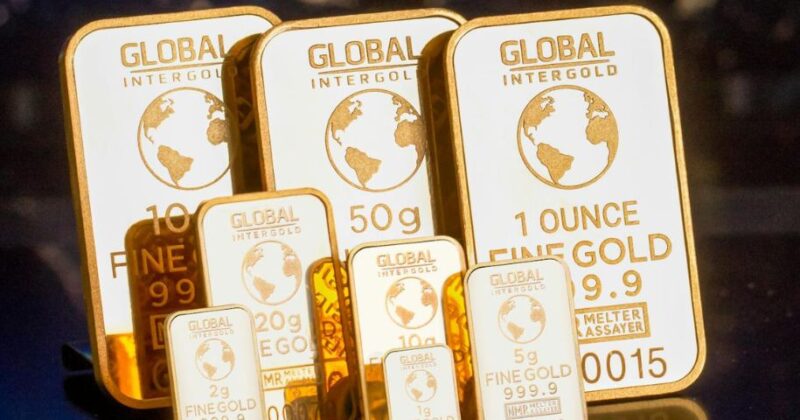
Gold blasted to a new record above $4,800 an ounce on Wednesday as investors piled into the metal on escalating tariff threats tied to U.S. efforts to exert control over Greenland, stoking fears of a fresh global trade war.
Spot gold rose as high as $4,847.09 in New York afternoon trading, extending a powerful rally that began in 2024 and accelerated through a record‑breaking 2025. Futures touched an all‑time high of $4,759.60 on Tuesday, logging the biggest one‑day dollar gain on record.
The latest leg higher was triggered by renewed White House threats to slap additional tariffs on European allies if they fail to back Washington’s push over Greenland, adding to a string of geopolitical shocks that have driven demand for safe‑haven assets.
“Gold remains the headline story after a record‑breaking 2025,” the London Bullion Market Association said in its annual forecast survey, noting that bullion has entered 2026 with “momentum firmly intact” as investors and central banks diversify away from the dollar.
$5,000 breached next — and $7,000 in sight?
Analysts are increasingly converging around the view that the rally still has room to run. In the LBMA survey, forecasters on average see prices rising above $5,000 an ounce this year, supported by expectations of lower U.S. real interest rates, continued Federal Reserve easing and sustained central‑bank buying.
Some are far more aggressive. ICBC Standard Bank senior commodities strategist Julia Du expects gold to climb as high as $7,150, arguing that the metal is at the heart of a longer‑term shift in how investors think about safety and reserves.
“This is a secular trade. This isn’t a commodity blowoff top,” said Nicky Shiels, head of metals strategy at MKS PAMP, who forecasts gold at $5,400 in 2026. After a “once in a hundred year” run in 2025 that saw silver nearly double and gold jump about 60%, she still sees roughly 30% upside from current levels.
From central banks to private wealth
What began as a central‑bank‑driven move is increasingly being reinforced by private capital. Goldman Sachs, which has repeatedly described gold as its “highest‑conviction” long position, on Wednesday reiterated a year‑end target of $4,900.
“Gold remains our highest conviction long or base case,” said Daan Struyven, co‑head of global commodities research at Goldman Sachs. “Private investors are starting to diversify into gold through different channels,” he added, pointing to strong inflows into gold‑backed exchange‑traded funds.
According to Goldman, fresh demand is coming from private wealth firms, asset managers, hedge funds and pension funds reallocating a sliver of their portfolios away from crowded equity trades and low‑yielding bonds.
At the official level, central banks have flipped decisively from net sellers to net buyers over the past decade, accelerating purchases after Western sanctions on Russia in 2022 heightened concerns about exposure to dollar‑denominated assets. That bid has remained a key pillar of support, particularly among countries seeking to reduce the vulnerability of their reserves to sanctions or currency swings.
Geopolitics and the “debasement trade”
The macro backdrop remains highly supportive. Analysts say investors are responding to a mix of mounting geopolitical risks — including U.S. actions in Venezuela and tensions over Greenland — and worries about the long‑term value of major currencies as governments run large deficits and pressure central banks to keep rates low.
Known on Wall Street as the “debasement trade,” the strategy rests on the belief that gold will hold its value better than paper assets if debt levels, political pressure on monetary policy and inflation risks continue to rise.
With real yields falling and markets pricing in further Fed cuts, the opportunity cost of holding a non‑yielding asset like gold has dropped sharply. If even a small portion of the trillions parked in money‑market funds and safe government bonds rotates into bullion, strategists say, the impact on prices could be outsized.
For now, the combination of geopolitical anxiety, easier monetary policy and surging investor demand has left gold within striking distance of $5,000 — and, in the eyes of some of the market’s most bullish voices, has put the once‑unthinkable $7,000 level on the horizon.