
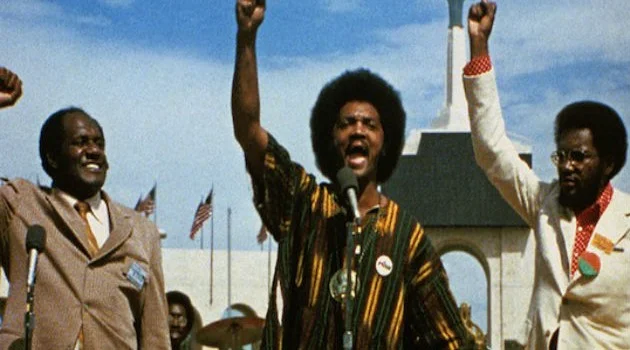
The Rev. Jesse L. Jackson, a protégé of the Rev. Martin Luther King Jr. and a two-time Democratic presidential contender who led the Civil Rights Movement for decades after King’s assassination, died Tuesday at 84. Santita Jackson confirmed her father died at home in Chicago, surrounded by family; he had been living with a progressive neurological disorder.
Jackson rose from the segregated streets of Greenville, South Carolina, to become one of the most recognizable faces of modern American activism. Born Oct. 8, 1941, he channeled early experiences of poverty and Jim Crow into a lifetime of organizing for voting rights, jobs, education and health care. A gifted speaker shaped by the Black church, he popularized slogans—“I am Somebody,” “Keep hope alive,” “Hope not dope”—that folded moral urgency into practical calls for change.
His civil-rights apprenticeship under Dr. King was formative and traumatic. Jackson worked closely with King in the mid-1960s—leading Operation Breadbasket in Chicago and joining the Selma-to-Montgomery march—and was in Memphis shortly before King’s assassination in April 1968. Jackson later described those years as “a phenomenal four years of work,” and he carried King’s rhetoric and resolve into his own leadership after the loss.
In 1971 he founded People United to Save Humanity (PUSH), which pressed corporations and institutions to broaden hiring, contracting and investment in Black communities. That economic focus—demanding not only legal equality but access to opportunity—became a hallmark of his work. PUSH merged with the National Rainbow Coalition in 1996 to form Rainbow/PUSH, an organization that blended community organizing, legal pressure and electoral politics.
Jackson’s two White House bids—1984 and 1988—never captured the nomination, but they reshaped the Democratic landscape. His 1988 campaign won 13 primaries and caucuses and helped nationalize a multiracial coalition of Black, Latino, Native and working-class white voters. “Part of my job was to sow seeds of the possibilities,” he said of those runs, which many allies credit with opening doors for politicians of color.
Beyond U.S. politics, Jackson cultivated a role as an informal diplomat. He negotiated the release of hostages and detained Americans from Syria to Yugoslavia, and he frequently used his pulpit to humanize global crises. In 2000, President Bill Clinton awarded him the Presidential Medal of Freedom.
Jackson’s record was not without controversy. He drew criticism for off-color remarks and clashed with peers; some called him a showman. Yet colleagues and rivals alike acknowledged his toughness, persistence and ability to translate protest into policy. He also acknowledged personal failings, including fathering a child outside his marriage, and worked to address those harms privately.
At home, Jackson married Jacqueline Lavinia Brown in 1963; they raised five children, including former U.S. Rep. Jesse Jackson Jr. Friends and neighbors remember him as a family man who quietly offered counsel, played basketball with neighborhood youth and measured success in lives touched, not headlines won.
In recent years Jackson’s public voice was constrained by illness. He disclosed a Parkinson’s diagnosis in 2017 and in 2025 doctors confirmed progressive supranuclear palsy, a degenerative condition that eventually affected his speech and mobility. Even as his body weakened, he made public appearances to press for racial justice, police reform and economic equity—standing with families bereaved by violence and joining demonstrations linked to Black Lives Matter.
Leaders across the political spectrum paid tribute, describing Jackson as a bridge-builder and a relentless advocate for the overlooked. The family said memorial plans will be announced by Rainbow/PUSH.
Jackson’s life threaded the pastoral and the political: preacher’s cadence and organizer’s persistence fused into a singular public mission. He transformed grief over King’s death into a long career of agitation, negotiation and institution-building—always insisting that dignity and opportunity be extended beyond slogans into workplaces, classrooms and civic life. His passing leaves a quieter pulpit and a living question for the nation: who will carry forward the unfinished work he named—economic justice, voting access and a more inclusive democracy.