
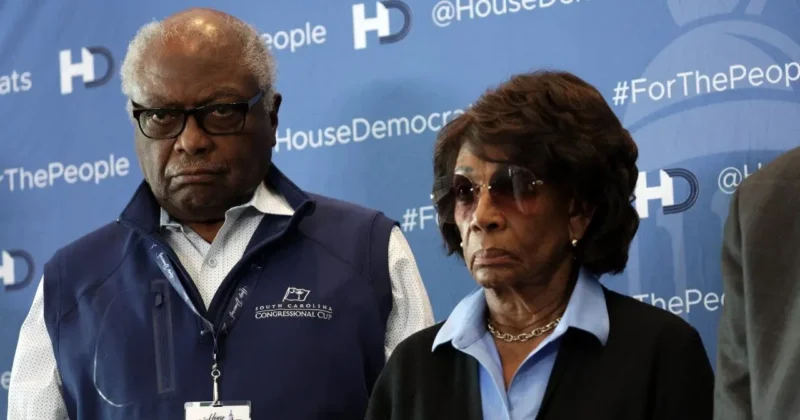
Maxine Waters and Jim Clyburn represent something more complicated than a simple gerontocracy problem—they embody the tension between Black political power and generational renewal that threatens to fracture the Democratic Party’s most loyal voting bloc. But their refusal to step aside reveals a deeper structural crisis: the Democratic Party is controlled by senior leadership that is demonstrably out of touch, lacking vision, and incapable of connecting to younger generations and working-class Americans.
Waters, 87, has become an icon to young Black progressives who embraced her “reclaiming my time” rallying cry during the Trump era. Clyburn, 85, is the Democratic kingmaker whose 2020 South Carolina endorsement saved Biden’s campaign and whose influence over Black voters remains unmatched. Yet both are now seeking extended terms at an age when the party forced Biden from the race, creating a crisis of legitimacy among Black Democrats who wonder: if age disqualified a president, why not a committee chair? And more painfully: are we being asked to accept different standards for our own leaders?
The implicit answer from party leadership is damning: Yes, leaders approaching 90 are the best we can do.
The Democratic Party’s Structural Crisis: Old Guard, Old Ideas
The Democratic Party has a systemic problem, and Waters and Clyburn are symptoms, not causes. The party is controlled by a gerontocracy that has lost touch with the economic anxieties, cultural concerns, and political priorities of younger Americans and working-class voters. This isn’t about individual fitness—it’s about an entire leadership class that has calcified around outdated assumptions.
Consider the evidence:
- Median age of House Democratic leadership is climbing toward 70. Senate leadership is even older.
- Committee chairs control resources, visibility, and succession planning, yet most are in their 70s and 80s.
- Younger Democrats consistently report feeling blocked from advancement and meaningful input on party strategy.
- Working-class voters have fled the party in droves, particularly in Rust Belt and rural areas where Democratic leadership has no credible connection to their lives.
- Youth turnout for Democrats has collapsed from 2020 to 2024, suggesting the party’s messaging isn’t resonating with the generation it claims to champion.
This isn’t coincidence. It’s the predictable result of a party run by people who came of age in the 1960s and 70s, whose political instincts were formed by that era, and who lack the lived experience to understand what young Americans and working-class voters actually need.
Waters and Clyburn: Symbols of a Disconnected Party
Waters’ grip on the House Financial Services Committee illustrates the bind facing Black voters—and the broader Democratic dysfunction. She’s genuinely beloved—”Auntie Maxine” isn’t just a nickname, it’s a generational marker. Young Black progressives credit her with modeling resistance, with refusing to be silenced, with making power uncomfortable. Her “reclaiming my time” became a cultural touchstone.
But that same iconic status has calcified into gatekeeping that serves no one but herself. Some Democrats on her committee complain privately that she doesn’t elevate younger members, doesn’t share fundraising resources, doesn’t create pathways for the next generation. She’s contributed just $250,000 to the Democratic Congressional Campaign Committee since 2023—far below peers like Richard Neal ($990,000) and Rosa DeLauro ($869,000).
More troubling: Waters’ approach to committee work reveals a leadership class out of touch with economic realities. The Financial Services Committee oversees banking, housing, cryptocurrency, and Fed policy—areas where younger Americans and working-class voters have been devastated by Democratic policy failures. Yet Waters’ priorities often reflect the concerns of an earlier era, not the housing crisis, student debt crisis, or wage stagnation that define younger voters’ lives.
Clyburn’s decision to run for an 18th term carries even heavier implications. He’s not just a senior member—he’s the architect of Democratic succession. His endorsement in 2020 propelled Biden to victory when the campaign was collapsing. His influence over South Carolina’s primary, through his annual Fish Fry and his network, makes him arguably the most powerful Black political figure in the party.
Yet that power comes with a troubling cost: it concentrates Black political influence in the hands of an 85-year-old rather than distributing it among younger leaders who might actually understand the economic desperation facing Black working-class Americans. When Clyburn stays, he preserves his leverage over 2028. Ambitious Black presidential candidates will have to court him. Black voters in South Carolina will continue to look to him for guidance. The pipeline for younger Black leaders to exercise that kind of kingmaker power gets longer, not shorter.
The message to younger, working-class Black voters is clear: your concerns don’t matter as much as maintaining power for aging gatekeepers.
Is This Really the Best Democrats Have?
The question haunts Democratic leadership: With millions of Black voters, hundreds of Black elected officials, and a generation of younger Black leaders ready to step up, why are Waters and Clyburn—both approaching or past 85—still controlling the most important levers of power?
The answer reveals a party in crisis. Democrats don’t have a bench because they haven’t invested in building one. They haven’t created mentorship pipelines or succession plans. They haven’t elevated younger voices to positions of real power. Instead, they’ve allowed power to concentrate in aging hands, betting that experience and institutional knowledge matter more than energy, vision, and the ability to connect with working-class Americans who are increasingly abandoning the party.
Compare this to what the party could be doing: elevating younger Black members to committee leadership, creating term limits that force succession planning, actively mentoring the next generation of Black political leaders who understand the gig economy, housing crisis, and wage stagnation. Instead, the party is defending two figures approaching 90 as if they’re irreplaceable.
They’re not irreplaceable. They’re just unwilling to leave.
The Vision Problem: Why Older Leadership Fails Working-Class Voters
The structural problem isn’t just age—it’s that senior Democratic leadership lacks the vision and insight to connect with younger generations and working-class Americans. This manifests in concrete ways:
On economic policy: Waters and Clyburn came of age when union jobs, pensions, and stable employment were still viable paths to the middle class. They don’t viscerally understand the gig economy, algorithmic wage suppression, or the collapse of job security that defines younger workers’ lives. Their policy prescriptions reflect an older era.
On cultural issues: Senior Democratic leadership often treats younger voters’ concerns about climate, student debt, and housing as secondary to older priorities. They compromise too easily, move too slowly, and lack the urgency younger voters feel about existential threats.
On working-class connection: Democrats have lost white working-class voters, rural voters, and increasingly working-class voters of color. Senior leadership offers no credible path to winning them back because they lack lived experience with working-class struggle. They don’t speak the language, understand the cultural grievances, or offer compelling visions of economic transformation.
On innovation: Younger leaders would bring new ideas about economic policy, climate action, and political organizing. Older leadership recycles strategies from the 1990s and 2000s, wondering why they don’t work anymore.
The Feinstein Shadow and Systemic Dysfunction
Dianne Feinstein died in office at 90, having suffered a stroke while serving on critical committees. Her death should have prompted Democrats to establish age-based standards and force succession planning. Instead, it prompted nothing—and now Waters and Clyburn are announcing extended terms just months later.
This reveals the systemic dysfunction at the heart of the Democratic Party. The party is incapable of self-correction. It doesn’t learn from failures. It doesn’t adapt. It simply doubles down on the same aging leadership, the same outdated strategies, and the same disconnect from the voters it claims to represent.
The Biden Withdrawal: Applied Selectively
Democrats forced Biden from the race in July 2024 over age concerns. Party elders, celebrities, and media figures lined up to argue he was unfit. Black voters, who had backed Biden overwhelmingly, suddenly found themselves told their preferred candidate couldn’t continue.
Now, Waters (87) and Clyburn (85) are both older than Biden was when forced out. Yet the party that demanded Biden’s withdrawal is protecting them with arguments about constitutional rights, individual fitness, and the value of experience. The double standard is impossible to miss—and impossible for Black voters to ignore.
Senate Majority Leader Chuck Schumer, 73, remains silent. He could establish age-based mentorship models or term limits for committee leadership. He could signal that the party is serious about generational change. He hasn’t. His silence signals that age is a problem only when it threatens electoral viability, not when it concentrates power in aging hands.
This is the systemic problem: Democratic leadership lacks the vision and insight to understand that clinging to power is destroying the party’s future.
What Black Voters and Working-Class Americans Are Actually Saying
Privately, some Black Democrats express frustration. They recognize Waters’ iconic status and Clyburn’s influence, but they also see younger Black members—like Myla Rahman, challenging Waters in her primary—struggling to break through. They see the pipeline for Black leadership advancement getting clogged by figures who refuse to mentor successors or share power.
Working-class voters are saying something louder: they’re leaving. Democratic margins among working-class voters have collapsed. In 2020, Biden won 54% of voters making under $50,000. By 2024, that had dropped significantly. Why? Because working-class voters don’t see Democratic leadership offering anything relevant to their lives. They see aging politicians defending outdated ideas and refusing to make space for younger voices.
One committee Democrat told Politico that Waters should “take care of your troops first”—a pointed critique that Waters’ allies dismiss but that resonates with younger Black members watching opportunities pass them by.
The unspoken question: If the Democratic Party’s answer to “what’s next?” is two leaders approaching 90, what does that say about the party’s faith in its own future?
The Structural Problem: Age as Selective Weapon
The core issue isn’t Waters’ or Clyburn’s individual fitness—colleagues genuinely attest to their sharpness. The problem is that Democrats have created a system where age disqualifies presidents but protects committee chairs. And because both Waters and Clyburn are Black icons with genuine constituencies, challenging them feels like betrayal.
But this structural dysfunction goes deeper. The Democratic Party has allowed power to concentrate in aging hands across the board—not just committee chairs, but in campaign strategy, donor networks, and party messaging. This creates a self-reinforcing cycle:
- Older leadership controls resources and access to donors
- Younger leaders can’t advance without older leaders’ blessing
- Older leaders resist change because change threatens their power
- The party stagnates and loses touch with younger and working-class voters
- Voters abandon the party because it offers no vision for their future
This is a systemic problem, not an individual one.
What Needs to Happen
Democrats should have learned from Feinstein’s death and Biden’s withdrawal. They should establish:
- Mandatory term limits for committee chairs (12 years maximum)
- Mentorship models where senior members actively elevate younger colleagues
- Transparent succession planning that doesn’t concentrate power in aging gatekeepers
- Applied equally to all leaders, regardless of race or seniority
- Generational leadership development programs that create pathways for younger voices
- Strategy overhaul that reflects the concerns of working-class and younger voters, not 1990s Democratic orthodoxy
Most importantly, they should acknowledge that protecting Waters and Clyburn while removing Biden sends a message to Black voters and working-class Americans: your leaders are exceptions to the rules that apply to everyone else. That’s not respect—it’s condescension.
The Verdict: Structural Failure, Not Individual Failure
Maxine Waters and Jim Clyburn have earned their power through decades of service to Black communities and Democratic causes. That’s real. But loyalty to individuals shouldn’t require accepting a system that blocks generational advancement and disconnects the party from younger and working-class voters. Black voters deserve leaders who model the change they demand from others—not gatekeepers approaching 90 who invoke constitutional rights when asked to step aside.
The Democratic Party’s structural problem is that it is controlled by senior leadership that is out of touch, lacking vision, and incapable of connecting to the voters it needs to win. Waters and Clyburn are symptoms of this dysfunction, not causes. Until the party addresses the systemic concentration of power in aging hands, until it creates real pathways for younger leadership, and until it develops a vision that speaks to working-class Americans’ actual concerns, it will continue to lose ground.
The question facing Black Democrats and working-class voters isn’t whether to abandon Waters and Clyburn. It’s whether the Democratic Party will finally create space for both honoring their legacy and building the next generation of leadership. So far, it’s choosing neither—and the party’s future hangs in the balance.