The Trump administration is pushing for American retirement savers to gain access to “alternative” investments, including private equity and cryptocurrency. That push is feeding debate on whether those potentially risky assets belong in retirement accounts.
On March 31, the Labor Department issued a proposed rule that would ease legal and regulatory barriers against adding alternative investments to retirement plans. The rule follows an executive order from President Donald Trump in 2025.
The introduction of private equity into 401(k) accounts is a controversial initiative of the Trump administration. Firms that invest in private assets have been lobbying for access to lucrative workplace retirement plans. Critics warn that private assets are risky, complex and opaque. Recently, concerns have mounted about the fundamental health of the private credit industry.
“Anyone who cares about the financial security of working people should oppose this proposed rule,” said Sen. Elizabeth Warren, D-Massachusetts, in a March 30 statement.
Industry leaders applauded the administration’s efforts.
“Private investment has delivered strong, stable returns and provided diversification for public pension funds for decades; everyday savers should be able to enjoy those benefits, too,” said Will Dunham, CEO of the American Investment Council, a private equity industry group.
401(k) retirement savers are gaining access to private equity
In the past, the private investment world has been populated mostly by wealthy investors, endowments and pension funds.
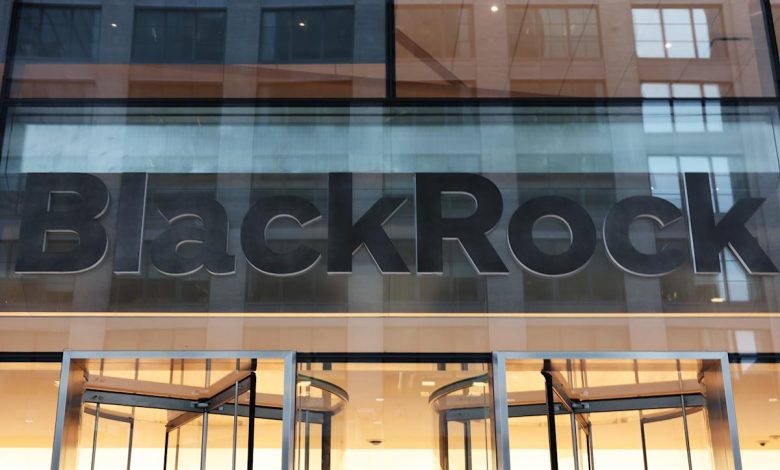
That is changing. Last summer, BlackRock announced it would offer a 401(k) target-date retirement fund that includes private investments. Empower, another retirement giant, made a similar move. Other 401(k) providers are studying the idea.

BlackRock announced in 2025 that it would offer a 401(k) target-date retirement fund that includes private investments.
In an August 2025 executive order, Trump gave a big boost to private equity and other “alternative” investments in retirement plans.
“It is the policy of the United States that every American preparing for retirement should have access to funds that include investments in alternative assets,” the order said, provided the investments enhance returns on retirement investments.
What is private equity? What’s an ‘alternative’ investment?
The executive order covered several categories of alternative investments: basically, anything other than traditional stocks and bonds, the bread and butter of traditional investing. Alternative investments can include private equity, real estate, cryptocurrency and direct investment in private companies.
Private equity firms raise money to buy, manage and sell companies for profit. Investors are typically wealthy individuals or institutions. The private credit marketplace loans money to companies or individuals outside the banking and fixed-income industries.
In the past, everyday retirement savers haven’t had much access to that world. The minimum investment in a private equity fund might be in the millions, or at least the hundreds of thousands, according to Investopedia. Your money might be tied up for years.
But retirees have long had access to private investments through pension plans, which have a history of investing in private markets.
What are the pros and cons of private investments?
Private equity is attractive to well-heeled investors and pension fund managers because of its potential to outperform the stock market.
Private equity yielded average annual returns of 10.5% from 2000 through 2020, outdistancing the S&P 500, Investopedia reports. Private equity is considered a high-risk, high-return alternative to stocks.
There are steep downsides to private investment. Private companies face fewer regulations and reporting requirements than public ones. It can be hard to divine how much money a private company earns.
“These are private companies, and with that comes less transparency,” Robert Brokamp, a senior adviser at The Motley Fool, told USA TODAY in 2025.

Private equity has the potential to outperform the stock market. But there are downsides.
Stocks are risky. Private equity can be riskier
Stocks carry risk, but a retirement saver who puts money in an S&P 500 index fund is “investing in some pretty well-established companies,” Brokamp said.
Private equity, by contrast, often involves companies in distress. Bankruptcies run higher.
“Private equity is riskier than public equity,” said Caleb Silver, editor in chief of Investopedia, speaking to USA TODAY in 2025. “It’s more speculative in nature because you are investing in companies that, in some cases, have no proven track record.”
Given the risk, Silver suggests an everyday retirement saver should not invest “more than 10% of your portfolio” in private investments: “It’s simply too risky.”
Is there room for private investments in a 401(k)?
Some prominent voices have questioned the wisdom of opening up the 401(k) industry to private investment.
In 2025, Warren, the Massachusetts senator, penned a letter to the CEO of Empower about its plan to offer private investments in 401(k)s.
“Given the sector’s weak investor protections, its lack of transparency, expensive management fees, and unsubstantiated claims of high returns, we are seeking information on how your company will ensure the safety of the billions of dollars of retirement savings it safeguards as it implements this program,” Warren wrote.
Empower responded, essentially, that retirement savers deserve a crack at the lucrative private investment market, after decades of exclusion.
Some economists have raised similar doubts. Alicia Munnell, senior adviser at the Center for Retirement Research at Boston College, critiqued Trump’s executive order in a 2025 essay.
“As far as I can see, the only party pushing for private equity in 401(k) plans is the private-equity industry,” Munnell wrote. She added, “My view is that people should invest in stuff they understand, and private equity is not a transparent investment.”
Contributing: Reuters. This story has been updated with new information.
This article originally appeared on USA TODAY: You can add private equity to a 401(k) in Trump plan. Should you?