
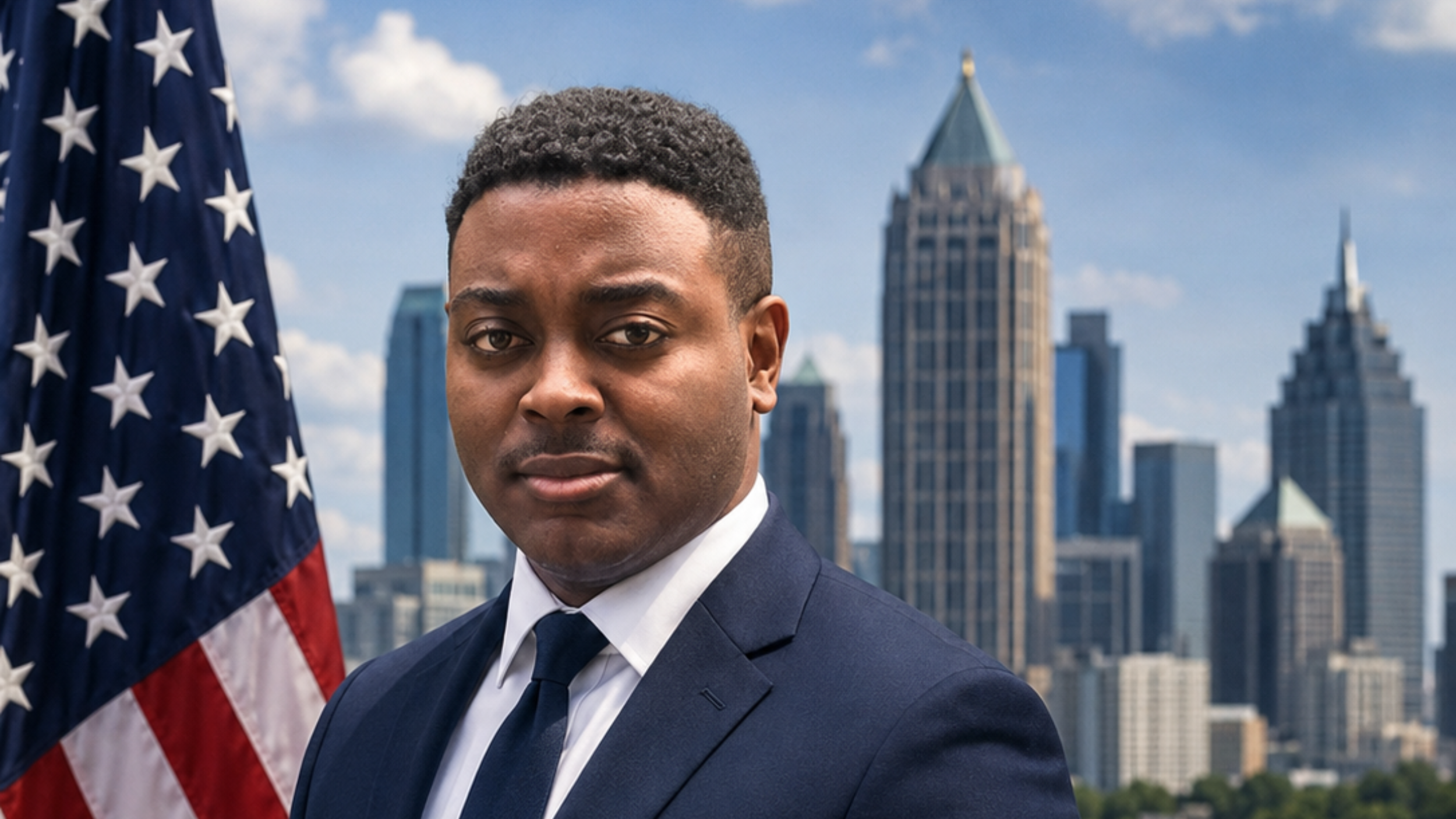
A political shift may be brewing in Atlanta—and for many voters, it is arriving with a fresh face, a different message, and a new generation of leadership.
Devonta “Sully” Sullivan has officially advanced from the Republican primary in the race for Georgia House District 59, positioning himself as a candidate attempting to reshape the political conversation in one of Georgia’s most closely watched regions. Public election listings show Sullivan moving forward in the race and challenging the status quo in District 59. (Ballotpedia)
For decades, Atlanta politics has largely been controlled by familiar networks, familiar names, and familiar talking points. But Sullivan’s emergence reflects a growing sentiment among voters—particularly younger conservatives and independent thinkers—that balance matters.
Not domination.
Balance.
The conversation around Sullivan’s campaign is not simply about party labels. It represents something larger: the possibility that Atlanta’s political ecosystem could include stronger ideological diversity, creating more accountability and forcing leaders from every side to sharpen their focus on the issues residents care about most.
For many supporters, this race is becoming less about red versus blue and more about practical concerns:
- Protecting young people from violence and instability
- Supporting and honoring senior citizens and elders
- Building safer communities
- Strengthening local economic opportunity
- Preserving spaces where faith and religious freedom are respected without apology
Supporters argue that communities thrive when leadership reflects a range of perspectives instead of political uniformity.
Sullivan also appears to be aligning with reform-minded ideas. He previously signed a pledge supporting congressional term limits, signaling interest in structural political reforms and a desire to challenge long-standing political systems. (U.S. Term Limits)
Across Georgia, Republican energy has remained active heading into the 2026 election cycle as multiple races and primaries continue reshaping the state’s political landscape. (The Washington Post)
What makes Sullivan’s candidacy especially interesting is the larger trend emerging nationally: younger conservative candidates are stepping into spaces where traditional assumptions are being questioned. Rather than focusing only on national headlines and partisan warfare, many are centering their campaigns around neighborhood-level concerns—public safety, entrepreneurship, family stability, and local opportunity.
And in Atlanta, where culture influences the nation, even small political shifts can create major conversations.
Can a younger conservative voice gain traction in an area long viewed through a single political lens?
Can Atlanta embrace a political environment where ideological competition leads to stronger outcomes?
And could District 59 become one of the first signs that the city’s political future is becoming more diverse than many expected?
November may tell the story.
One thing is certain: people are paying attention now.
And when people stop laughing and start watching, politics gets interesting.