
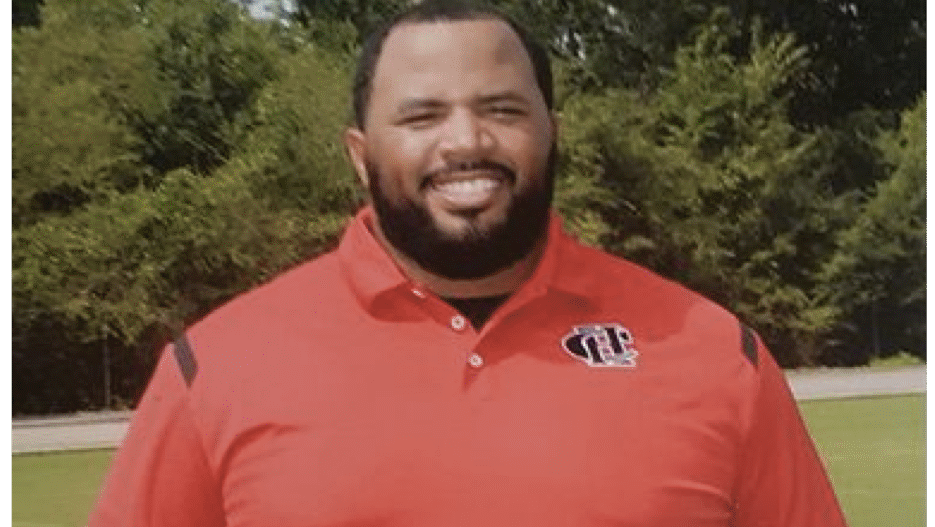
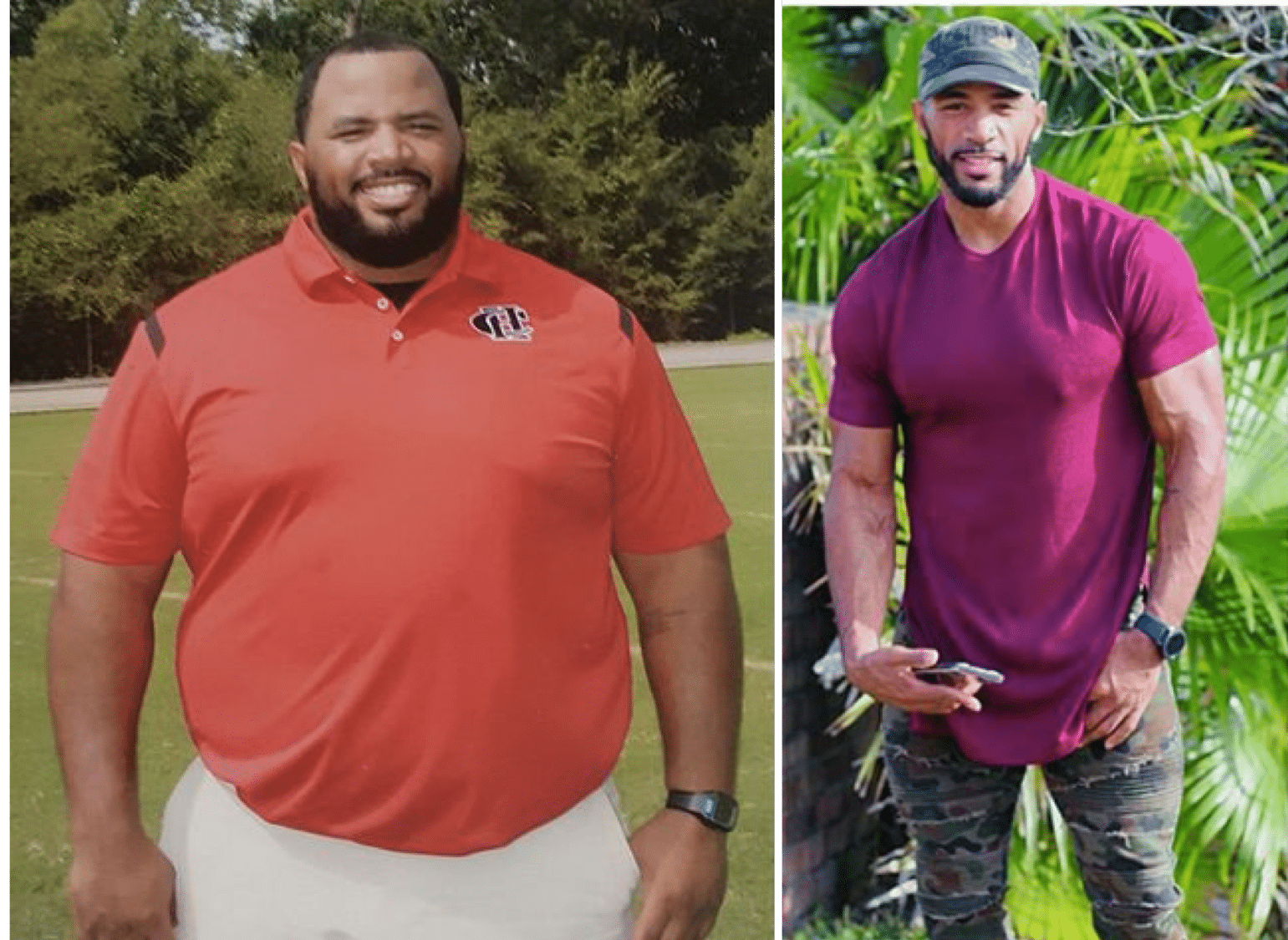
 (Photo credit: @Robby_Browne Instagram)
We receive so many different feature requests each week, but this one stood out. Just imagine playing in the sport that you love only to be taken out by an injury that not only changes the course of your life but also changes what you look like. That’s exactly what happened to Robby.
Back when he was in high school, Robert Browne lived and breathed football—and was good enough to earn a college scholarship for it. But he fractured his knee toward the end of his junior year, which required several surgeries just to repair the damage.
Needless to say, he never played football again after that injury.
So he became a coach instead, but the season-ending injury affected him mentally. He became depressed, stopped working out, and ate whatever he wanted. Before he realized it, his weight jumped to over 350 pounds.
Browne was at a family barbecue in 2013 when the repercussions of his weight gain started to become increasingly evident. His mother urged him to seek medical attention after he became dizzy and started to sweat heavily.
RELATED: Relationship Goals: Couple Loses Nearly 200 Pounds Together!
He took her advice and was told by a doctor that he was at high risk of having a stroke. Browne was prescribed medication to regulate his blood pressure, but the number on the scale stayed the same. He quickly came to realize he didn’t want to be stuck taking those pills for the rest of his life, so he decided to take charge of his life and his health.
Browne shared with Men’sHealth.com that making little changes is super important when aiming to get rid of unhealthy and toxic habits. For example, he took the stairs instead of the elevator and parked his car farther away to walk more.
“Whenever I get bored, instead of snacking, I’ll go and just walk around the beach. I’ll go do something, even if I just go wash my truck. Physical activity doesn’t need to be contained to the gym. Go help your mom with her garden. Go wash the dishes. Constantly moving burns off extra calories. It’s all about maintaining a healthy lifestyle.”
He shared on Instagram some motivation about him as a family member:
“So.. We have 2 twins.. Same body type.. Same demographic.. Same family history.. Both predisposed to obesity.. heart disease, colon cancer and many other metabolic disorders.. That doesn’t mean just accept those things.. Especially if can do something to change them.. Your ambition might spark family change🙏🏽🙌🏾 Yes we are all dealt a hand.. sometimes you just have to play it better🤷🏽♂️.. make better choices to get a better outcomes.. nothing works unless you are willing to.. be better than you best excuse”
Now, he spends most of his time either working out, coaching, teaching his students, and motivating the world to live better, healthier, and happier lives.
6 Weight Loss Tips for Men Who Want to Build Muscle and Burn Fat
Losing weight doesn’t mean spending hours on a treadmill or giving up your favorite foods. For men looking to shed fat, build muscle, and feel stronger, the key is finding a sustainable combination of strength training, smart nutrition, and everyday movement.
Strength coach Browne’s transformation offers a useful lesson: Consistency matters more than following an extreme workout routine. By combining weightlifting, changes to his diet, and small lifestyle adjustments, he gradually transformed his physique. Here are six tips men can learn from his approach.
1. Make Strength Training a Priority
If you want to lose fat while maintaining or building muscle, strength training should be a cornerstone of your fitness routine. Exercises such as squats, deadlifts, bench presses, and rows work multiple muscle groups at once, making them effective choices for building strength and developing a stronger physique.
You don’t need to lift weights twice a day to see results. Start with two or three full-body strength sessions per week, focus on proper form, and gradually increase the weight or repetitions as you get stronger.
What Browne did: Browne made weightlifting a central part of his lifestyle. He trained with his football players and powerlifting students, then completed additional sessions on his own. Although his schedule was unusually demanding, his approach demonstrates how consistent resistance training can support fat loss and muscle development. Most men can start with a much more manageable routine and build from there.
2. Focus on Compound Exercises
Compound movements recruit multiple muscles and joints, allowing you to train efficiently and build overall strength. Squats, deadlifts, lunges, and presses are excellent examples.
These exercises can also increase the energy you expend during a workout compared with many smaller, isolated movements, depending on the intensity and duration of your training. Combine compound lifts with a balanced workout plan rather than relying on any single exercise to burn fat.
What Browne did: During sessions with his football players, Browne focused on explosive Olympic lifts. With his powerlifting students, he concentrated on improving performance in the squat, deadlift, and bench press. He also favored squats and deadlifts because he enjoyed their challenging, full-body nature more than traditional cardio. His example shows that choosing exercises you enjoy can help you stay committed to training.
3. Support Your Workouts With a Balanced Diet
Exercise plays an important role in weight management, but nutrition matters just as much. To lose body fat, you generally need to consume fewer calories than your body uses over time.
Prioritize lean protein sources, including chicken, fish, eggs, Greek yogurt, beans, and tofu. Protein helps support muscle repair and recovery while helping you feel satisfied after meals.
You don’t need to eliminate carbohydrates to lose weight. Foods such as rice, oats, potatoes, whole grains, and vegetables provide energy for training and everyday activities. Build meals around protein, fiber-rich produce, and appropriate portions of carbohydrates and healthy fats.
What Browne did: Browne changed his eating habits after realizing that his training alone wasn’t enough. Instead of relying on traditional Southern comfort foods such as macaroni and cheese, he began focusing on lean protein, rice, and vegetables, including broccoli, cabbage, and asparagus. He maintained carbohydrates in his diet rather than cutting them out entirely and aimed for approximately 2,700 calories a day to support his training. That number was specific to his needs and shouldn’t be treated as a universal weight loss target.
4. Plan Your Meals Ahead of Time
Meal prepping can make it easier to stick to your nutrition goals, especially when work, family, and other responsibilities leave little time for cooking.
Set aside time each week to prepare a few staple foods, such as grilled chicken, rice, roasted vegetables, and hard-boiled eggs. Keep convenient options like fruit, nuts, and yogurt available so you have satisfying alternatives when hunger strikes.
Planning meals also helps you make more intentional food choices instead of relying on takeout or calorie-dense convenience foods when you’re busy. You can still enjoy your favorite comfort foods; the key is balancing them with nutrient-rich meals and appropriate portions.
What Browne did: Browne began preparing meals for the week instead of relying on the comfort foods he had grown accustomed to eating. Having meals ready made it easier for him to stick to his nutrition plan and fuel his demanding workout schedule. Men with busy routines can apply the same strategy by preparing a few protein-rich meals and healthy sides in advance.
5. Move More Outside the Gym
You don’t have to spend every free hour exercising to become more active. Small choices throughout the day can add up, increasing your overall energy expenditure without requiring another formal workout.
Take the stairs instead of the elevator, park a little farther from your destination, go for a walk during your lunch break, or tackle household chores instead of sitting for extended periods. If you find traditional cardio boring, try activities you genuinely enjoy, such as hiking, swimming, cycling, or walking outdoors.
What Browne did: Browne incorporated movement into his everyday life by taking the stairs, parking farther away, and choosing water instead of sugary drinks. When he felt bored and wanted to snack, he sometimes walked along the beach or found something active to do, such as washing his truck or helping with household tasks. His approach highlights that staying active doesn’t have to mean spending more time at the gym.
6. Stay Consistent and Give Yourself Time
Sustainable weight loss rarely happens overnight. Rather than chasing quick fixes, focus on habits you can maintain for months and years. Allow time for rest, get adequate sleep, and adjust your workouts as your fitness improves.
Track progress using more than the number on the scale. Changes in waist circumference, strength, energy levels, and how your clothes fit can all help you assess your progress.
What Browne did: Browne’s transformation took nearly three years to reach his leanest weight of 218 pounds while following a lower-calorie diet. He later spent about eight months bulking up, reached 260 pounds, and eventually settled at approximately 235 pounds. His changing weight reflected different phases of his fitness journey, rather than a simple, straight-line decline. His experience reinforces the importance of patience, adjusting your approach as your goals change, and focusing on long-term progress instead of overnight results.
The Bottom Line
Men who want to lose weight and build a stronger physique should focus on lifting weights consistently, eating balanced meals with enough protein, planning their food choices, and staying active throughout the day. Browne’s results came from combining these habits over time, not from exercise alone.
You don’t need to replicate his demanding workout schedule or follow his exact diet to see results. Start with manageable changes, build a routine that fits your lifestyle, and remember that consistency is more valuable than an extreme plan you can’t maintain.
For more on Robert, check him out online here.