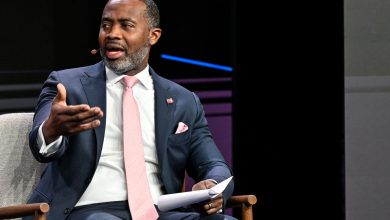

Paul Atkins, chairman of the US Securities and Exchange Commission (SEC), is hosting a joint event with the Commodities and Futures Trading Commission (CFTC) to focus on harmonization and leadership in crypto.
© 2025 Bloomberg Finance LP
Washington convenes tomorrow for “Harmonization: U.S. Financial Leadership in the Crypto Era,”a joint SEC–CFTC event signaling that the two most important market regulators — SEC Chair Paul Atkins and CFTC Chair Mike Selig — appear ready to lean in on digital assets. For an administration promising to make the United States the “crypto capital of the world,” the key question is how far regulators can carry that vision without waiting on Congress.
A July 2025 White House report offered a detailed playbook for using existing authority at the SEC and CFTC to modernize digital asset market structure, including explicit recommendations that the two agencies coordinate more closely. The report also urged the SEC to “create a conditional ‘innovation exemption’ under the Exchange Act to allow SEC registrants to engage in innovative new business models.”
Since then, Atkins and Selig — who previously served as chief counsel to the SEC’s Crypto Task Force and as a senior adviser to Atkins on cross‑agency crypto issues — have advanced the idea of an “innovation exemption” as a way to let registrants test tokenization and novel platform structures within clear guardrails. Analysts describe the proposal as a sandbox‑style framework for tokenized securities and integrated trading and custody models, including tokenized equity platforms and integrated broker‑exchange‑custody stacks.
However, implementation has slipped amid delays, including a government shutdown that Atkins cited for missing his December target and pushing his forecast into late January. With Selig sworn in as CFTC chair on December 22, 2025, Thursday’s event will mark the first time the SEC and CFTC appear together on crypto with both chairs fully nominated and Senate‑confirmed. Selig’s prior work as chief counsel to the SEC’s Crypto Task Force and as a senior adviser to Atkins gives the two an established working relationship — you’d be hard‑pressed to script a better moment for the agencies to cooperate on crypto.
The Post-Chevron Reality For Crypto
The unresolved question is how far U.S. regulators can go in shaping a crypto market structure without Congress moving on legislation. Earlier this week, in an interview with CoinDesk, Patrick Witt, Executive Director of the President’s Council of Advisors for Digital Assets, underscored the importance of passing a market structure bill while the Trump 2.0 administration is in power.
“Recognize there is a lot of goodness in this bill that…will equip regulators with the authorities they need to do appropriate rulemakings in a post‑Chevron world,” Witt said.
That “post‑Chevron” reference points to the Supreme Court’s decision curbing Chevron deference and narrowing the latitude agencies have to interpret ambiguous statutes. It is not lost on the crypto industry that the loss of Chevron deference helped rein in what many viewed as the overly aggressive posture of former SEC Chair Gary Gensler, but it also limits how far a friendlier Atkins-led commission can lean in on behalf of the industry.
“The removal of Chevron deference means—for better or for worse—companies can’t rely as much on regulatory discretion. This was a positive development during a much tougher regulatory regime, not as positive now with a more collaborative, innovation‑friendly SEC and CFTC,” said Katherine Kirkpatrick Bos, General Counsel of StarkWare.
“Post‑Chevron, it is far more important for companies to have very clear statutory guardrails, including defined terms and articulated standards for any regulatory discretion. For crypto market structure, the longer‑term clarity in CLARITY is a question mark,” Bos added.
Thus, market structure legislation itself may be the permanence companies are looking for, particularly those building long‑term businesses in the space. Without legislation, the question becomes: what can actually be done? “Chair Atkins has repeatedly said he is trying to ‘future proof’ what the SEC is doing. Chair Selig has also used this term. At the same time, both agencies are clearly aware that statutory language from Congress is the only thing that can’t be easily undone, which is also why Chair Atkins has emphasized his support for the codification of a crypto market structure framework.”
“From the market participant perspective, crypto is greatly appreciative of the collaboration and transparency we’ve seen from the SEC in particular, but the lack of market structure legislation is still a major barrier to entry for a swath of more risk‑averse institutional participants and flows,” said Bos. The reality, then, is that as exciting as it is to see U.S. regulators share a stage and signal progress on crypto, the open question is how far they can go—and how much of it can actually stick—without Congress.