Cathie Wood sold Circle before it crashed, then bought the dip. Here’s why the crypto world is watching

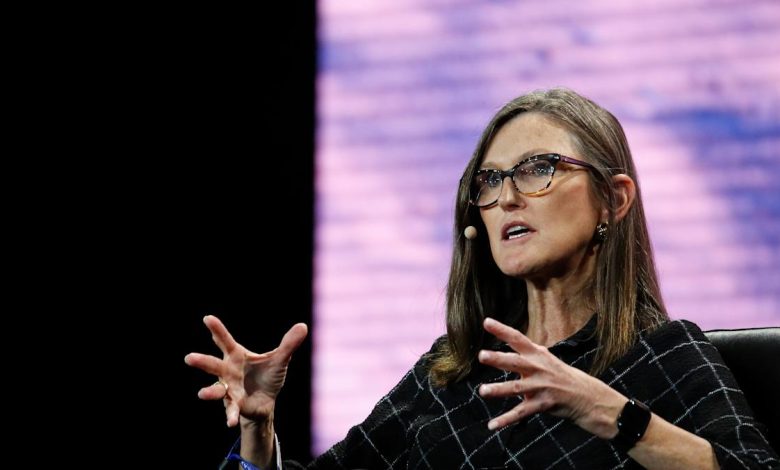
Most investors watched and waited when shares of the stablecoin issuer Circle Internet Group fell this week. Not ARK Invest CEO Cathie Wood.
As Benzinga reports, the multi-millionaire founder bought $16.3-million worth of Circle (NYSE:CRCL) shares on the way down — after selling Circle stock a few days earlier.
Her investment firm’s flagship ETFs — ARK Innovation ETF (BATS:ARKK), ARK Next Generation Internet (BATS:ARKW) and ARK Blockchain & Fintech Innovation (BATS:ARKF) — snapped up (1) 161,513 Circle shares at $101.17 on the same day the stock cratered.
The stock fell upon news the proposed Senate CLARITY bill would ban interest-like returns (2) on stablecoin balances. That’s a threat to Circle, which earns most of its revenue from interest on its reserves of USDC, the world’s second-largest (3) stablecoin.
Wood’s play was a textbook contrarian move (4): Sell near the top, let the stock drop, buy back at a lower price with more capital.
It doesn’t always work, but when it does, the investor who moved against the crowd captures gains the crowd left behind.
For everyday investors, the more useful question is, what does a move like this reveal about crypto as an asset class? And does it belong in your portfolio at all?
More people than you might think are investing in crypto, though it’s still a minority.
According to the JPMorgan Chase Institute, approximately 17% (5) of active Chase checking account holders invested in crypto assets between January 2017 and May 2025, with adoption spiking around periods of peak Bitcoin prices.
That means the majority of everyday bank customers have never touched it — which makes the allocation question more relevant than ever as crypto becomes harder to ignore.
Read More: 5 essential money moves to make once you’ve saved $50,000
Morgan Stanley’s Global Investment Committee recommends (6) capping crypto exposure at 4% for aggressive growth portfolios, 3% for moderate-to-aggressive investors and zero for conservative investors focused on income or wealth preservation.
For most investors, financial advisors suggest no more than 5% of a well-balanced portfolio in crypto — with many choosing a smaller allocation of around 1–3%, according to CNBC’s analysis citing (7) Grayscale Investments research.