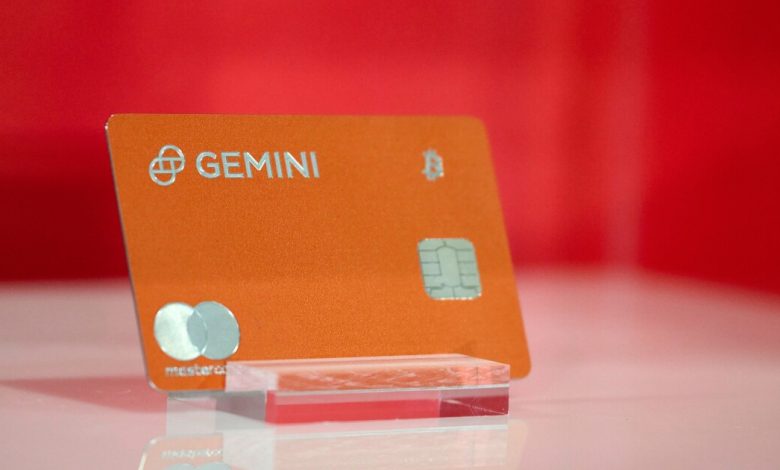

Bridget Bennett/Bloomberg
Have you ever wondered why the icon for a mobile phone call is still usually the silhouette of an old-school handset, even though most users today have never used dial telephones? Or why email is usually represented by an envelope, even though most emailers have never posted a letter?
Processing Content
The big hurdle for the adoption of new technologies is the “new.” Without a clear incentive, most users don’t see the point in learning new processes when the old ones work fine, largely because our limited imaginations fail to grasp future convenience.
To help with this, product designers give us “hooks” to link new activities to old, and new processes to those that are familiar.
In the world of crypto-linked
So far, the numbers are striking. A
Investors seem to believe this is just getting started. Earlier this month, stablecoin card infrastructure provider Rain
So, let’s dive into the emerging juggernaut of crypto-linked credit cards: how they extend crypto utility, how they may come to limit it and why this matters for what’s ahead.
As in the fiat system, crypto cards can be divided into two main buckets (with some hybrid models): debit/prepaid and credit-based.
Crypto debit cards work much like their traditional counterparts, only instead of funds directly deducted from a bank account or card balance, the requisite number of tokens from the linked wallet are converted into fiat that then works its way through traditional rails, usually operated by Visa or Mastercard. This enables holders to use their digital assets for everyday purchases without needing merchants to accept crypto — their cards will be accepted at
A disadvantage, however, is that each payment becomes a taxable event — with stablecoins this is not an issue since there are rarely any capital gains or losses, and there is a strong possibility that steady stablecoins
Credit-based crypto cards also echo familiar formats. One popular model is a traditional credit card linked directly to the holder’s bank account but managed by a crypto platform that pays rewards in crypto assets. For these platforms, it’s a way to onboard new crypto market participants. For users without crypto balances, it’s a way to passively accumulate crypto assets with potential upside.
Another model is based on crypto-backed credit. Users pledge crypto assets as collateral for a fiat credit line to fund card purchases. The interest rate tends to be lower than with traditional cards as the credit is fully or even over-collateralized. Investors get to keep their holdings while leveraging them for fiat spending without triggering a taxable event. And they can earn
Crypto cards work: Mainstream spenders onboard into the digital asset ecosystem, attracted by the rewards, while crypto market participants can boost the utility of their holdings via potential spending ability wherever credit cards are accepted around the world. Minimal hassle, maximal reach.
But there is a downside for those hoping to see crypto rails assume their intended role as an alternative financial system. For now, it looks like they are instead becoming a subservient niche.
Card settlement directly in stablecoins is still a nascent idea as merchants generally prefer the relative ease of established connections, despite their slower payouts, higher fees and greater capital inefficiency. Technically, the crypto cards of today are not “spending” crypto assets, they’re bending the knee to the dominance of traditional rails and impeding the pull of decentralization by offering a convenience most mainstream users value.
But, as we saw with the evolution of mobile phones, the proximity of new functionalities has a pull of its own. Faster settlement, lower fees, spending balances that can earn yield — these and other blockchain advantages could soon become standard features everyone wants.
Already there are glimmers of what the landscape could look like in years to come, and how users and merchants could benefit.
One is the emergence of credit and debit cards
We are also seeing
It remains to be seen, however, just how receptive users are to any complex change in business processes or daily habits.
Many blockchain builders hope that stablecoin rails will eventually
Yet the tentative disruption from crypto-linked cards is a subtle yet significant step toward a more efficient system.
We know that disruption happens most effectively when the desired action is similar to old habits but offers new functionality that eventually transforms the initial idea. Just as mobile phones enabled us to make familiar-feeling calls on a new device while also offering the texting that eventually replaced voice, crypto-linked credit cards will end up evolving the options available to consumers and merchants alike.
Familiarity is comforting. It can also be confining. But habits change when nudged with the proximity of innovations that improve outcomes with minimal additional cognitive effort. What’s more, the quiet changes that subtly sidle into our daily process tend to brace our mindset for further evolution.