Crypto hardware wallet provider Ledger has disclosed a security incident at its third-party payment processor, Global-e, exposing customer names and contact information. The breach affected an undisclosed number of users who made purchases on Ledger.com, but to be clear, this was not a security incident that involved the theft of any crypto directly. Instead, the concerns regarding this incident involve the possibility that the leaked data could be used in potential future attacks on Ledger customers.
Hardware wallets like Ledger’s devices safeguard cryptocurrencies by isolating private keys used for transaction signing from internet-connected computers or phones. This offline storage ensures that even if a user’s laptop or smartphone gets hacked, their holdings stay protected from remote theft.
The irony of a data breach involving customers of a crypto company focused on providing users with the highest degree of technical security possible has not been lost on both crypto enthusiasts and skeptics alike.
Community alert: Ledger had another data breach via payment processor Global-e leaking the personal data of customers (name & other contact information).
Earlier today customers received the email below. pic.twitter.com/RKVbv6BTGO
— ZachXBT (@zachxbt) January 5, 2026
Global-e, which handles order processing for Ledger’s online store, detected the intrusion, isolated systems, and began notifying impacted individuals while engaging forensic experts. Emails regarding the incident were sent to affected customers around January 5th, according to blockchain observer ZachXBT.
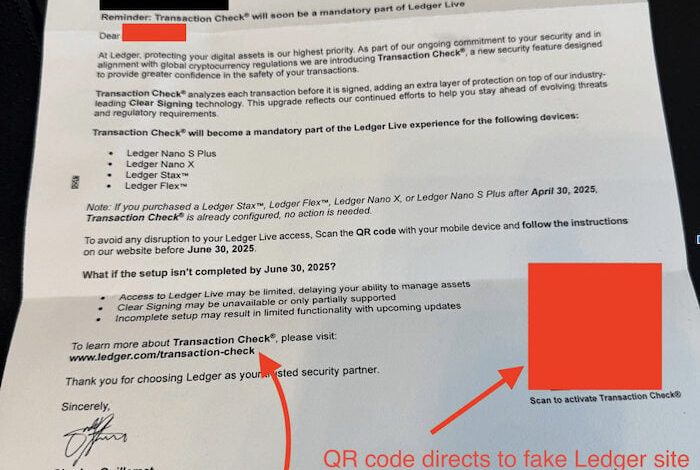
Ledger has emphasized that its own systems remain untouched and secure, with no access granted to Global-e for users’ 24-word recovery phrases or other crypto-related details. The company urged customers to enable Clear Signing for greater clarity on the exact details of transactions being sent and stay alert to phishing attempts exploiting the leaked info.
This security incident affecting Ledger users comes nearly six years after a major 2020 leak that compromised over 270,000 customer records directly from the hardware wallet manufacturer, including sensitive data such as physical shipping addresses. The 2020 incident involved a marketing database hack that is believed to have fueled persistent phishing campaigns and social engineering scams targeting Ledger owners.

According to an end-of-year report from blockchain analytics firm Chainalysis, 2025 saw crypto thefts climb to $3.4 billion overall, with physical attacks on holders nearly doubling from prior years to over 100 new documented cases amid more than 215 total incidents since 2020. Just a couple of months ago, a brazen physical attack in broad daylight was reported in San Francisco that involved the theft of around $11 million worth of crypto following a home invasion at gunpoint.

Personal details from data breaches, which are often traded on darknet markets, can serve as prime leads for criminals seeking high-value targets, and data related to crypto users is particularly valuable due to the knowledge that the individual or entity is likely to own some form of digital cash. In some ways, it’s analogous to getting a list of names and addresses where the attacker knows there’s a good chance a home invasion will lead to a treasure of physical cash stored under the mattress. This sort of data also aids phone-based scams, where fraudsters pose as exchange support staff from firms like Coinbase to extract logins or funds.
While hardware wallets excel at blocking online hacks, they offer less defense against in-person coercion, known as “$5 wrench attacks,” where threats or violence force victims to transfer assets. Crypto’s irreversible transactions leave little recourse post-theft (unless centralized stablecoins are involved), though traditional law enforcement techniques can still be used to find and arrest those responsible. Additionally, many hardware devices now come with enhanced features where decoy wallets can be used to provide attackers with a smaller payoff rather than a victim’s entire crypto stash.
As digital cash systems like Bitcoin gain traction, users and service providers must prioritize operational security, since irreversible transfers clash with widespread lax handling of personal data. In this new paradigm, the tradeoff being made is that those who seek complete sovereignty over their digital assets will also need to take full responsibility over the operational security around the protection of those funds.