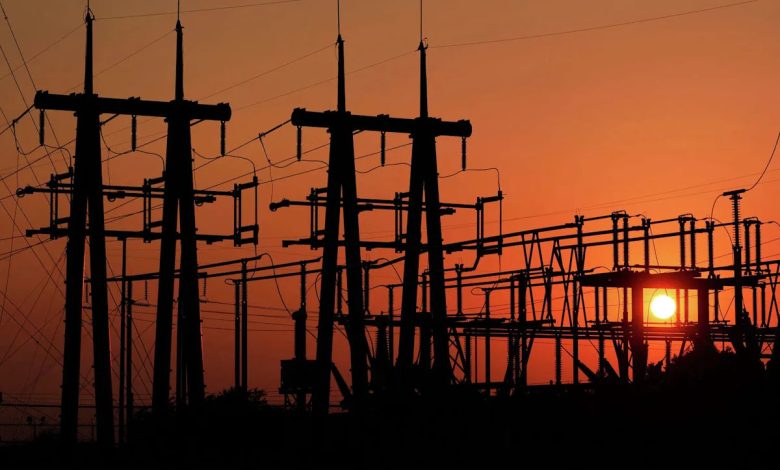
Texas’ grid operator is developing a new process to evaluate multiple large-load interconnection requests at the same time. The question for cryptocurrency miners and data center developers that are already in line is: who gets to go first?
That could be sorted out this week.
The Electric Reliability Council of Texas said it hopes to have criteria announced by the end of the month for which energy-intensive projects could be considered for “Batch Zero,” the first group to go through its revised planning process.
At a Public Utility Commission of Texas meeting earlier this month, Jeff Billo, ERCOT’s vice president of interconnection and grid analysis, said that for “Batch Zero,” the grid operator will consider proposed large load interconnection requests from projects that have been in the queue for some time and don’t need to be restudied. Projects that aren’t as far along will be studied in a later batch.
RELATED: Denver company building fourth data center in booming San Antonio tech hub
The requests primarily come from data centers, crypto mines, industrial sites and hydrogen projects. Though some projects already in ERCOT’s queue might warrant another transmission study doesn’t mean they couldn’t be considered for “Batch Zero.”
“There are a lot of details to fill out there,” Billo told the commission. “We are still really early in the process of designing how that batch study would work.”
The timing of a transmission study matters greatly for companies with billions of dollars at stake in developments requiring grid connection.
PUC Chairman Thomas Gleeson said one of the largest points of contention among data center developers has been uncertainty about where their projects stand despite some of them having been in the queue for years. He said it’s important not to leave these companies in limbo while ERCOT sorts out its new procedures for reviewing multiple requests from large energy users together and allocating existing transmission capacity among them. ERCOT previously studied large load users one at a time.
“Transparency around this is going to be critically important to ensuring success,” Gleeson said.

Bitcoin mining machines are seen in 2021 at the Whinstone US Bitcoin mining facility in Rockdale. (Mark Felix/Tribune News Service)
The planning around “Batch Zero” comes as ERCOT is well into reforming its transmission planning procedures. With the increasing number of large loads seeking to connect to the grid, ERCOT and utilities cannot keep up with the required transmission planning and end issuing restudies.
The current system, built for a large load queue totaling 40 or 50 projects, is now bogged down by the 225 new interconnection requests ERCOT received last year, according to a December report.
Under its previous planning process, by the time one data center finished planning studies, the results would often have to be reconsidered almost immediately as more projects joined the interconnection queue, changing local transmission needs and reliability.
The consensus from early conversations with corporate stakeholders, including Google, Meta, CenterPoint, Amazon and OpenAI – all looking for grid capacity in Texas – was that the uncertainty in the current process creates undue risk for developers with existing interconnection requests.
RELATED: Microsoft acquires 90 acres to expand its data center hub in San Antonio
The proposed batch method aims to ameliorate that.
The outcome of the new process would determine the number of megawatts that Texas’ independent grid could reliably deliver and the additional transmission projects needed to enable full interconnection.
If a developer requested a 500-megawatt project be interconnected in 2028, but the batch study showed that ERCOT could only reliably provide 100 megawatts and would need to undergo a transmission upgrade project in 2030, the developer would be offered an “on-ramp” of 100 megawatts until the transmission upgrade is completed in 2030, Billo said as an example. Then, the developer would receive the full 500 megawatts of grid power.
At the end of the batch study process, developers would have a set amount of time to make a financial commitment, Billo said, to demonstrate they will proceed with the project. After that, ERCOT could begin a transmission project to cover “firm” commitments, which could then be utilized in other batch studies.
The initial sentiment from “hyperscale” data center users like Google, Amazon Web Services, Meta and Microsoft, developers and independent power generators is that a batch-based approach is necessary for large load interconnection, Billo said. “Everyone that we have talked to so far has been supportive of us moving to a batch study process,” Billo said.
This report is published in partnership with Inside Climate News, a nonprofit, independent news organization that covers climate, energy and the environment.

Power lines under construction in 2021 for Bitcoin mining operations at the Whinstone US Bitcoin mining facility in Rockdale. (Mark Felix/Tribune News Service)
This article originally published at ERCOT promises data centers, crypto mines a new fast track to get on Texas electric grid.