For many, the age of 24 is a time of planning for the future. For Crystal Gaines, it was the year her world changed. In 1997, as an active Hampton University graduate preparing for her upcoming wedding and a burgeoning career on Capitol Hill, Crystal received a diagnosis that few young adults expect: multiple sclerosis. Today, nearly 30 years later, Crystal reflects on a life defined not by the disease but by her resilience in navigating it.
The Catalyst for Change
Crystal’s journey began not with a slow decline, but with a sudden, alarming symptom. While working at her computer in January 1997, she noticed her vision becoming blurry. Despite a very low prescription and no prior history of sight issues, the blurriness persisted.
“I went in to my primary care, and then he said, ‘Well, you might want to see a neurologist,’” she recalls.
While her vision issues were later identified as optic neuritis, she describes them as the catalyst for her diagnosis. Looking back, she realizes there were signs earlier in life. “I think back on things that may have happened to me growing up; I used to get pins and needles in my feet a lot and my hands would get [really frostbit and cold] when I was skiing,” she tells BlackDoctor. “So those were things that, now that I look back on my childhood, probably were early signs.”
RELATED: Filmmaker Gets Real on Living With MS: “It Affects Your Mental Health”
Navigating the Early Days
The early days of diagnosis were a whirlwind of medical appointments and uncertainty. Crystal recalls her first neurologist having a difficult bedside manner, offering little more than the vague advice to “just keep going on about your life” because MS affects everyone differently.
“In the beginning, you know, with having kids, doctors will say, ‘Well, it could exacerbate. You could have a relapse’… Everything is like it could do this, it could do that, but you never know until you’re in it. So, it was one of those things I kind of kept on going, kept on moving,” shares the mother of two children (one adopted).
Taking that advice to heart, Crystal did just that. She moved forward with her marriage, built a successful life on Capitol Hill, and raised a family, all while learning to manage the complexities of a chronic illness—including learning to walk with walking sticks and drive with hand controls.
Overcoming “Hard Stops”
Over the decades, Crystal has navigated several different neurologists and evolved her approach as medical understanding grew. She eventually landed on Dr. Heidi Crayton, Director of the MS Wellness Center of Greater Washington.
“When I went to see my neurologist [previously]… she was okay, but, like I mentioned before, not so forward-thinking. She was more of a general neurologist, and she said, ‘Crystal, I think you should really see an MS specialist—somebody where that is their practice,’” Crystal explains.
This partnership was a pivotal point. Throughout the journey, Crystal encountered “hard stops” where she could no longer get away with certain activities. The first things to go were small joys: high heels, line dancing, and the fast-paced “strutting” she once loved. “The heels were probably the first to go… they just would feel uncomfortable because my feet had the pins and needles,” she recalls.
Driving also presented challenges. She recalls a scare in 2013: “I was with my mom… but it was snowy and icy, and I was going down a hill, and my foot didn’t quite get to the brake, so it was a complete scare,” she says of the resulting panic attack.
For six weeks, her husband took over the driving. “This was right in the middle of PTA and sports seasons, and my daughter was still in preschool, so it was really a challenge,” she says.
For 10 years, she continued driving with her feet, though it was never comfortable and she stayed away from big cities. But in September 2023, while backing out of her driveway, her foot went under the brake again. “It didn’t go on the brake; it went under the brake, and I couldn’t stop. That was it. My husband was like, ‘That’s it. No more,’” she recalls.
Crystal refused to let her mobility stop there. Her husband researched accessible driving, and she enrolled in a specialized course. “My doctor also sent me the course. I had to take maybe an eight-week course with hand controls, where they come out and drive with you.” After the road test, she earned her special license and had the system installed.
“Now my car can be driven with feet or with hand controls. There is a button I press when I’m driving… It’s been life-changing because now I drive anywhere with no thought about it. There’s no more worry,” she shares.
Technology and physical aids have allowed her to maintain her active social life. She credits specific tools for helping her “keep on moving”:
- FES (Functional Electric Stimulator): A game-changer for “foot drop” that uses electric pads on the calf. “Now I can wear whatever shoes I want to wear,” she says.
- Trekking Poles: Crystal uses these for stability outdoors, allowing her to attend her daughter’s track meets without the anxiety of a fall.
- Hand Controls: Modified vehicle controls that allow her to drive safely and can be moved from one car to the next.
- “Big Bertha”: Her mobility scooter, which she embraced for a recent 7,000-person conference in Las Vegas, where walking distances reached five miles a day.

A Commitment to Wellness
Crystal’s commitment to movement remains a cornerstone of her life. A dedicated yogi for over 22 years, she faced a setback in 2024 following knee surgery, but 2026 marked a turning point as she returned to yoga with a mindset focused on modification:
- Adaptive Yoga: Each week becomes easier as she modifies poses to fit her current physical reality.
- Targeted Stretching: She explores “stretch labs” and massage therapy to combat stiffness in her legs.
- Digital Community: She credits online resources for bridging the gap between traditional PT and daily life.
She has also seen a shift in treatments: “I remember when I first changed neurologists, he said, ‘Oh no, we don’t do injections anymore.’” This move to innovative oral therapies has allowed her lesions to remain stable for decades.
Crystal’s Resource Center
One of the most isolating aspects of MS is feeling like there is no roadmap. Crystal highlights a few “go-tos” that have changed her perspective:
Advice for the Newly Diagnosed: Stay in the Present
When asked what advice she would give someone on “Day One,” Crystal’s answer is clear: Research your doctor. “The patient-doctor relationship is of utmost importance. Find one you feel comfortable with, someone with the right bedside manner,” she says.
She also warns against the “comparison trap.” “Don’t ever compare yourself,” Crystal insists. “Everybody’s path is different. X plus Y doesn’t equal. It’s your individual journey.”
Perhaps her most profound advice is to avoid “fast-forwarding” to a scary future. “Don’t get in your mind like, ‘Oh my god, I’m going to be in a wheelchair tomorrow.’ You deal with the future in the future. Stay in the present,” she adds.
A Life Fully Lived
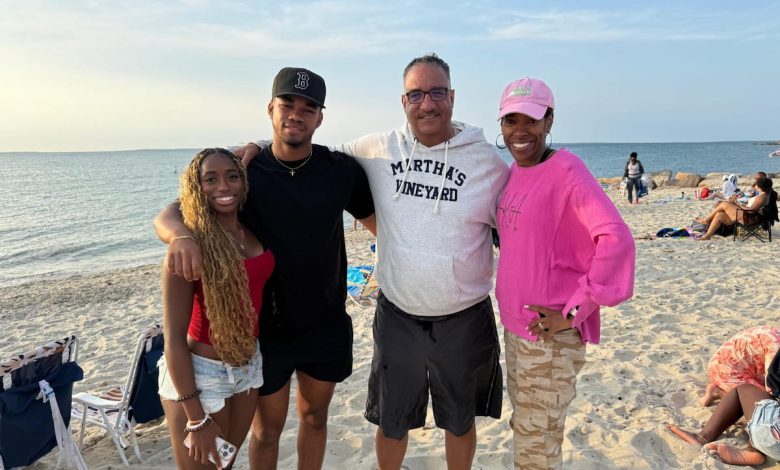
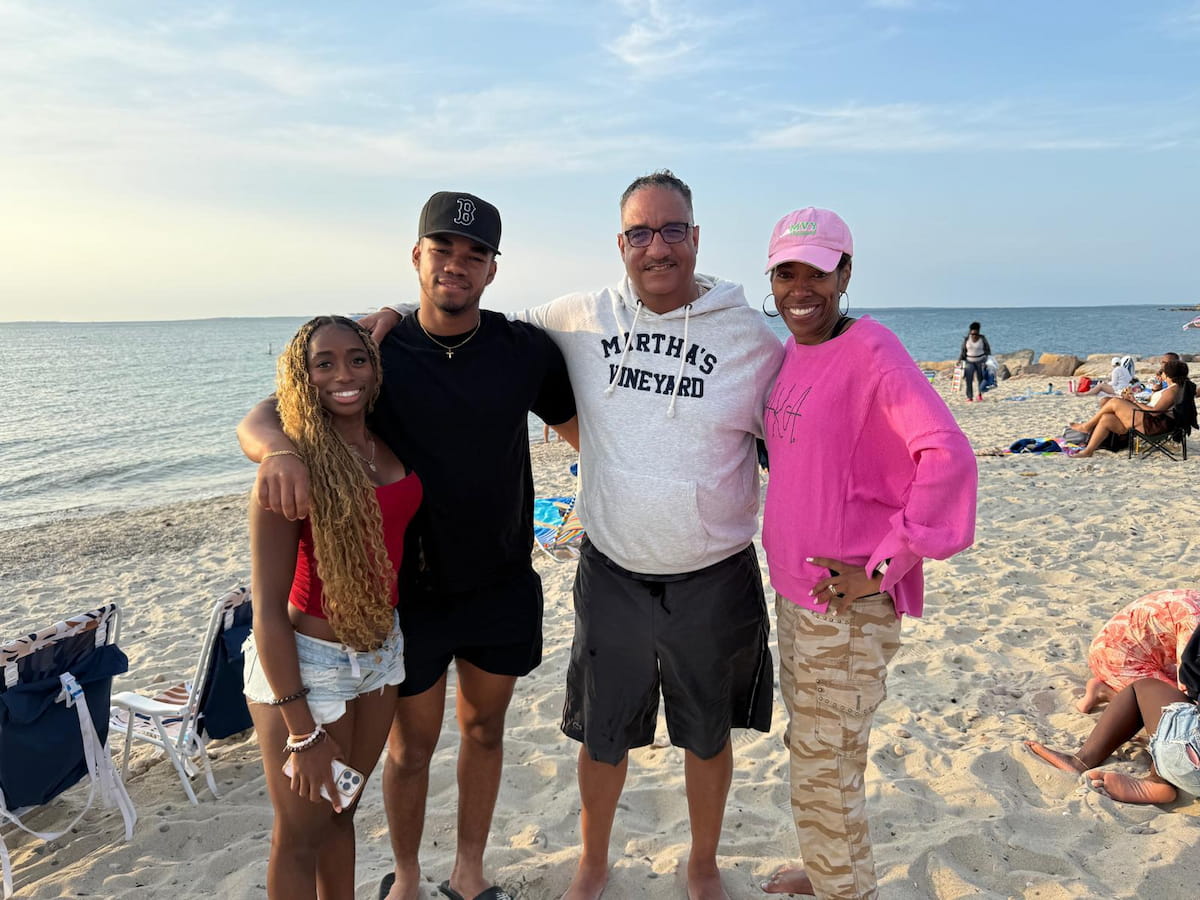
As Crystal prepares for her next check-up in May 2026, her outlook is one of proactive curiosity. Whether she is attending Alpha Kappa Alpha (Hampton) reunions, Jack and Jill events, or spending time at her Martha’s Vineyard summer home, she refuses to let MS shrink her world.
“Life is too short,” she says. “I don’t sweat the small stuff. You’re not promised tomorrow, so we’re just going to keep on going.” Supported by her husband, children, and a “line” of supportive sorority sisters, Crystal Gaines continues to be the “caboose” of the family—always moving, always catching up, and always blessed.