Although microplastics have been around for a while, there have been more discussions about them recently. The resurgence in these conversations may be because scientists are finding them in foods that didn’t have them before, and the levels of microplastics in the environment continue to rise. It’s even been said that everybody has some level of microplastics in their bodies at this point. Fortunately, there’s some good news for once. A new study suggests that including kimchi in your diet may help your body get rid of the microplastics that you’ve accumulated over the years.
What Exactly Are Microplastics?
Plastic is used in a variety of applications. They’re in toys, clothing, appliances, cosmetics, cars, construction materials, and more. These manufacturing industries use plastic because of its versatility and durability. While this is great for manufacturing and consumers, it’s not so good for the environment.
Unlike some other materials, plastic doesn’t degrade when it’s discarded. Instead, it breaks down into much smaller components that are known as micro- and nanoplastics. The only difference between the two is their size. Although these are technical definitions, microplastics are usually about five millimeters in size, while nanoplastics are only a micrometer in size.
Both of these particles are present in the environment and can therefore get into waterways, soil, and the air. According to a recent study, about 35 percent of primary microplastics come from laundering synthetic clothing, and another 28 percent comes from the abrasion of tyres during regular use. A smaller percentage of microplastics comes from personal items, such as facial scrubs, where they’re intentionally added. Secondary microplastics come from the breakdown of plastic in the environment.
The high percentage of primary microplastics that come from laundering may explain why they constitute up to 30 percent of the microplastics that are found in the oceans. To make things worse, secondary microplastics can make up more than 80 percent of the microplastics in the ocean. Of course, it’s also found in the soil that’s close to areas where plastic is often dumped or stored. The proliferation of microplastics in the environment also explains why they find their way into our food.
Animals can consume microplastics in their environment, and that’s usually how they end up in your body. When researchers checked, microplastics were found in blood, breast milk, saliva, liver, kidneys, and placenta. Studies are also being conducted to determine if it’s possible for microplastics to get into the lungs and gastrointestinal system while still intact.
RELATED: Plastic Chemicals Tied to 350,000 Heart-Related Deaths: What to Know
How Microplastics Can Affect You
While more research needs to be done, health experts already have some concerns about how microplastics can affect your health. The main concern is the chemicals that these plastics can contain. For example, you may find BPA, phthalates, and heavy metals in many forms of plastic. These components are known to cause serious issues with the nervous and reproductive systems.
However, at the moment, there is some evidence of the damage that microplastics cause in marine life and other animals. Animals that had microplastics in their bodies showed signs of oxidative damage, DNA damage, changes in gene activity, and increased risks of developing cancer. Additionally, they had significantly decreased fertility. Researchers are worried that microplastics are having the same effect on human beings.
Another concern is how the ingestion of microplastics affects the nutritional value of your food. Animals that ate these tiny pieces of plastic were less likely to eat more nutritious food. As a result, they can have less value when you eat them. This may mean that even if you’re eating healthy food, you may not be getting as many essential nutrients as you used to.
While different countries are working on plans to reduce the amount of microplastics in the environment, they are fairly long-term. In the meantime, doctors recommend avoiding microplastics as much as you can. That can mean wearing more natural clothing so you don’t absorb microplastics from synthetic materials. The best options include cotton, linen, silk, or wool. You should avoid using plastic containers and only drink filtered water.
RELATED: 9 of The Scariest Chemicals Hiding in Your Home
How Eating Kimchi May Help
Some doctors suggest being careful about what you eat because of possible contamination with microplastics. However, this is getting harder since the contaminants have been found in all kinds of food, including beer, wine, water, honey, sugar, salt, milk, seafood, and tea. The good news is that a recent study may have found food that can help your body get rid of microplastics.
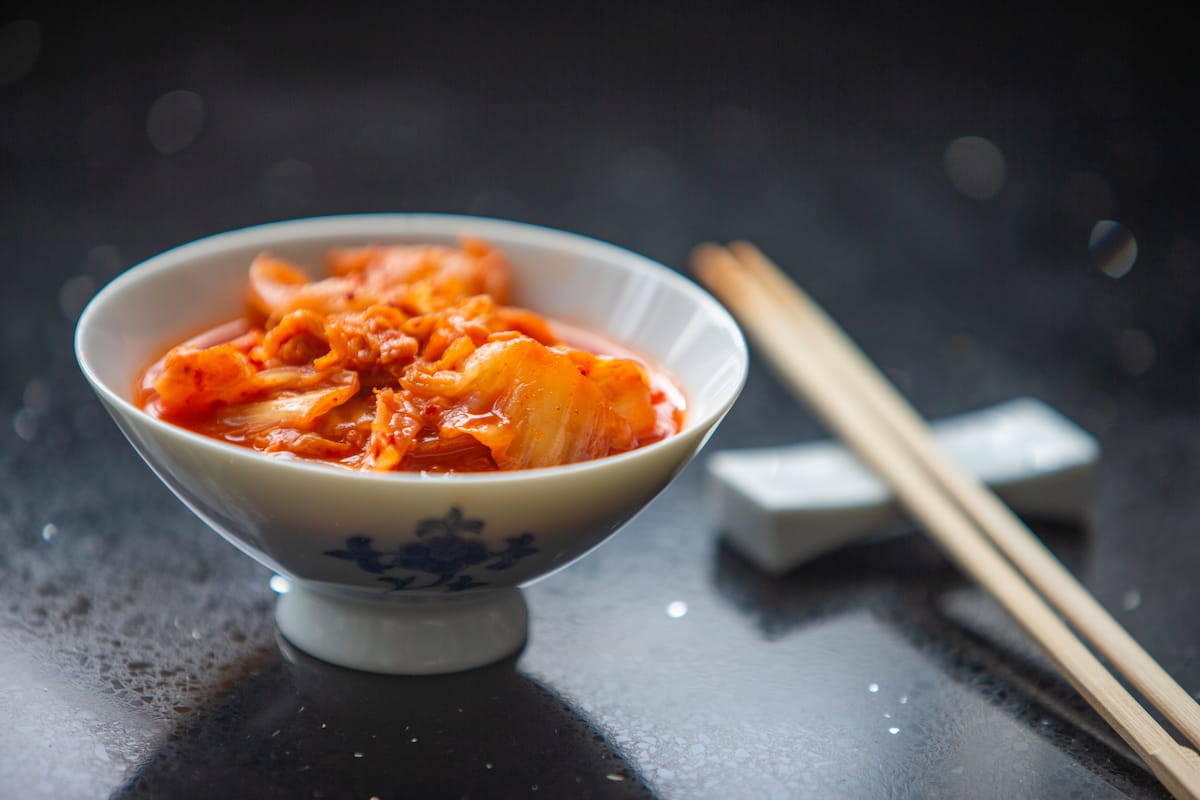
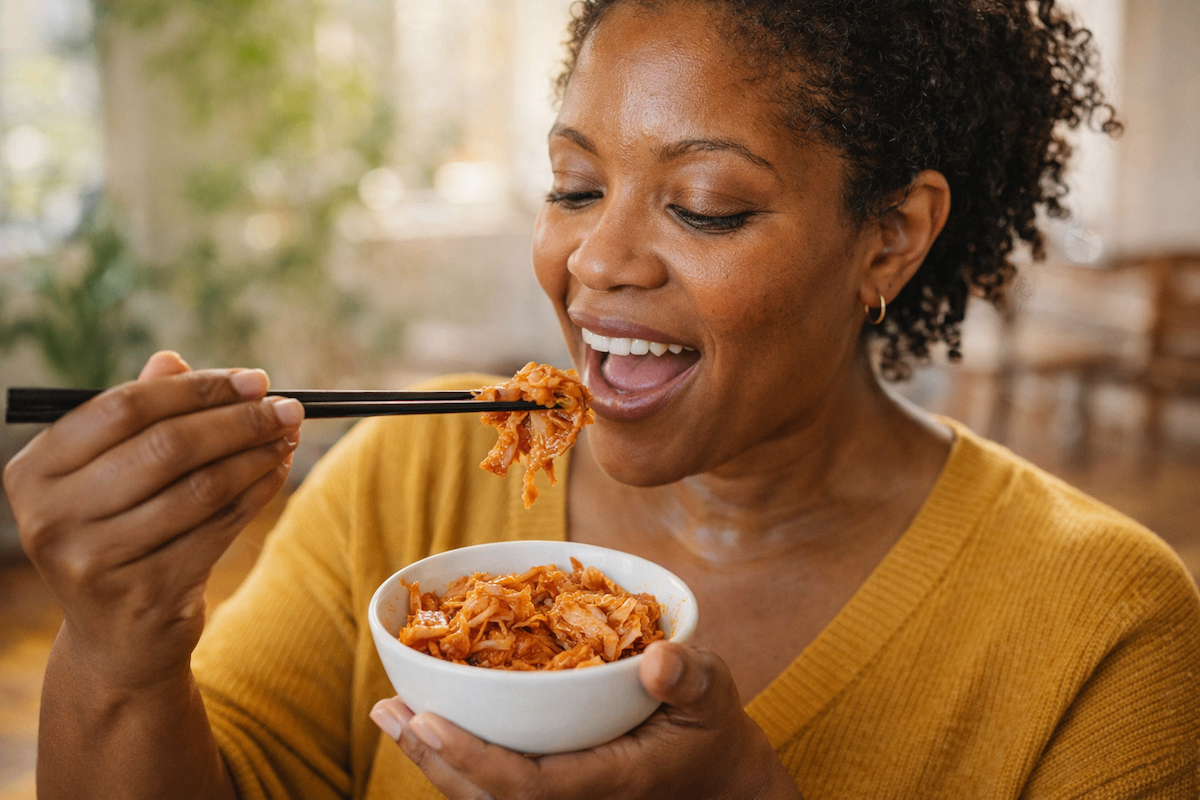
In this study, researchers found that the lactic acid bacterium that’s usually present in kimchi may help your body remove micro- and nanoplastics. That’s because the bacterium may bind to these contaminants and make it easier for your body to pass them out as waste. Researchers assessed the bacterium’s ability to bind to these plastics in mice as well as an environment that was designed to mimic the human digestive system.
Although further research is needed, the results are strong and promising.
How to Make Kimchi at Home
While you can certainly buy kimchi at the store, you have more control over the quality, freshness, and versatility of the ingredients if you make it yourself. This can be especially important if you have any food sensitivities. Here are two great recipes for you to try.
1. Easy Napa Cabbage Kimchi Recipe
Servings: 8
Ingredients
- 1 medium head Napa cabbage (about 2 pounds)
- ¼ cup iodine-free sea salt or kosher salt
- Water, preferably distilled or filtered
- 1 tablespoon grated garlic (5 to 6 cloves)
- 1 teaspoon grated peeled fresh ginger
- 1 teaspoon granulated sugar
- 2 tablespoons fish sauce or salted shrimp paste, or 3 tablespoons water
- 1 to 5 tablespoons Korean red pepper flakes (gochugaru)
- 8 ounces Korean radish or daikon radish, peeled and cut into matchsticks
- 4 medium scallions, trimmed and cut into 1-inch pieces
Method:
- Cut the cabbage lengthwise through the stem into quarters. Cut the cores from each piece. Cut each quarter crosswise into 2-inch-wide strips.
- Place the cabbage in a large bowl and sprinkle with the salt. Using your hands, massage the salt into the cabbage until it starts to soften a bit. Add enough water to cover the cabbage. Put a plate on top of the cabbage and weigh it down with something heavy, like a jar or can of beans. Let stand for 1 to 2 hours.
- Rinse and drain the cabbage. Rinse the cabbage under cold water 3 times. Set aside to drain in a colander for 15 to 20 minutes. Meanwhile, make the spice paste.
- Rinse and dry the bowl you used for salting. Add the garlic, ginger, sugar, and fish sauce, shrimp paste, or water, and stir into a smooth paste. Stir in the gochugaru, using 1 tablespoon for mild and up to 5 tablespoons for spicy. Set aside until the cabbage is ready.
- Combine the vegetables and spice paste. Gently squeeze any remaining water from the cabbage and add it to the spice paste. Add the radish and scallions.
- Mix thoroughly. Using your hands, gently work the paste into the vegetables until they are thoroughly coated. The gloves are optional here, but highly recommended to protect your hands from stings, stains, and smells.
- Pack the kimchi into a 1-quart jar. Press down on the kimchi until the brine (the liquid that comes out) rises to cover the vegetables, leaving at least 1 inch of space at the top. Seal the jar.
- Let it ferment for 1 to 5 days. Place a bowl or plate under the jar to help catch any overflow. Let the jar stand at cool room temperature, out of direct sunlight, for 1 to 5 days. You may see bubbles inside the jar, and brine may seep out of the lid.
- Check it daily and refrigerate when ready. Check the kimchi once a day, opening the jar and pressing down on the vegetables with a clean finger or spoon to keep them submerged under the brine. This also releases gases produced during fermentation. You can also taste it at this point. When the kimchi tastes ripe enough for your liking, transfer the jar to the refrigerator. You may eat it right away, but it’s best after another week or two.
2. Napa Cabbage Kimchi
Servings: 7
Ingredients
- 9 pounds Napa cabbage, remove thick outer cabbage leaves
- 18 cups water
- 1 ½ cups Korean coarse sea salt or natural rock salt (for salt water)
- ½ cup cooking salt, medium-sized crystals (for sprinkling)
- 2 tablespoons glutinous rice flour (sweet rice flour)
- 1 ½ cups gochugaru (Korean chili flakes)
- 1 ⅓ pounds Korean radish or daikon radish, julienned
- 1 tablespoon fine sea salt
- 3 ½ tablespoons Korean fish sauce
- 2 tablespoons salted fermented shrimp, minced
- 3 ¼ ounces Korean chives, cut in 2 inch length
- 5 ounces carrots, julienned
- ¼ cup minced garlic
- ½ tablespoon minced ginger
- 2 tablespoons raw sugar
- 2 ¾ ounces onion, blended or finely grated
Method:
- Cut the napa cabbage into quarters and rinse it in running water. Make sure the stem is intact.
- Dissolve the coarse salt in the water (16 cups) in a large bowl. Dip the napa cabbage in the saltwater one at a time and transfer it onto a tray for further salting.
- Pinch some cooking salt (½ cup total for all pickled cabbages) and rub over the thick white part of the cabbage. Open each leaf gently and sprinkle the salt over the thick white part. Repeat this for the rest of the cabbage. Reserve the saltwater from when you soaked the cabbage for later use.
- Put the salted cabbage in a large food-grade plastic bag or large bucket (wedge side of the cabbage to be facing up) and pour in the reserved saltwater from step 2. Close the plastic bag. If using a bucket, get something heavy on top of the cabbage to press down (e.g heavy pot with water).
- Set the cabbage aside for 6 hours to pickle. Rotate the cabbage upside down every 2 hours. Using a large food-grade plastic bag will make the turning process much easier than using a large bucket.
- Once the soaking process is finished, rinse the cabbages in running water, especially the thick white part of the cabbage, to get rid of the salt. Place them in a colander and allow to drain for 1 hour.
- While waiting, prepare the glutinous rice paste. Mix glutinous rice flour with the water (1 ½ cups) in a saucepan and boil it over medium heat for 5-8 minutes, until it thickens. Once ready, transfer the rice paste to the medium-sized bowl and let it cool. Add Korean chili flakes once it has cooled. Then, combine them well.
- Prepare a large mixing bowl and add radish, fine sea salt, Korean fish sauce, and salted shrimp. Leave it for 10 minutes for the radish to salt down. Add Korean chives, carrots, minced garlic, minced ginger, sugar, blended onion, and the Korean chili flakes mixture from step 5. Mix them well. Now the kimchi seasoning/kimchi paste is made, ready for use.
- Place a quarter of a cabbage on a tray. Spread the seasonings over each leaf. You only need to season one side of the leaf. 1 to 2 small fistfuls of seasoning is enough per quarter of cabbage. Repeat this step for the rest of the cabbage. Don’t pull the cabbage leaves off the stem. Leave them attached so it holds together better.
- Transfer the kimchi into a kimchi container or an airtight container and put the lid on. Leave it out at room temperature for 24 hours, then move it to the refrigerator. While you can start eating it once it’s chilled, you may want to wait 3-4 more days for it to develop more flavor.
- Once the kimchi is ready to eat, chop a small portion and store it in a smaller glass container. This makes it more convenient to serve with your meal. Keep the other batches intact in the large kimchi container. This way, you only cut it up as needed, which helps keep the remaining kimchi fresh longer.
At the moment, researchers aren’t sure if we’ll ever be rid of the microplastics in the environment. While it’s good to adjust your habits to reduce your likelihood of exposure to them, it’s good to know that you may be able to get rid of what you have already consumed.