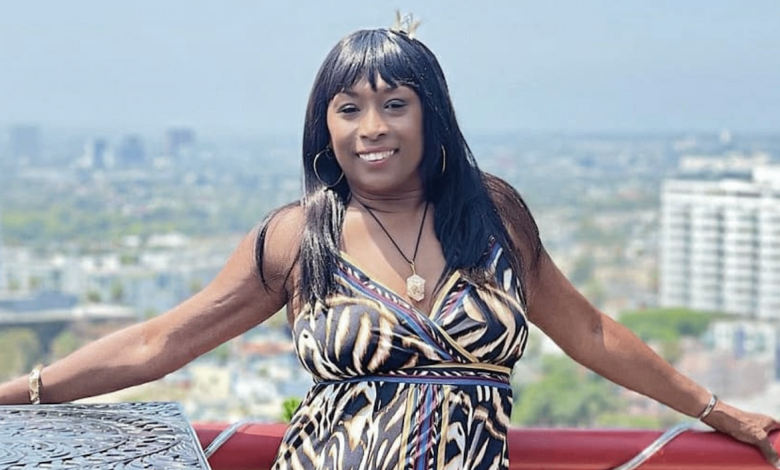

Kiki Shephard, the co-host of the legendary long-running music show, Showtime at the Apollo, died after suffering a ‘massive’ and ‘completely unexpected’ heart attack in Los Angeles on Monday.
The Family of KiKi Shepard and The KIS Foundation, Inc issued an official statement:
“It is with profound sadness that we announce the unexpected passing of our beloved KiKi Shepard, cherished Sister, Auntie, friend, and an unwavering advocate for those living with sickle cell disease.”
“For 15 years, KiKi brought grace, warmth, and joy into the homes of millions as the beloved Co-Host of Showtime at the Apollo. She was also renowned as the Apollo Queen of Fashion and Ambassador of the show. Beyond the spotlight, however, her greatest passion was service. Through The KIS Foundation, Inc., a 501(c)(3) non-profit organization which she founded 20 years ago. KiKi dedicated her life to raising awareness, providing support, and advocating for families affected by sickle cell disease — a cause deeply personal to her heart.”
“KiKi believed that compassion, community, and education could change lives. Her voice uplifted countless individuals who often felt unseen, and her work created lasting pathways for hope, resources, and understanding for those living with this disease.”
“To her family, she was our guiding light: strong, loving, joyful, and endlessly generous. To the community she served, she was a tireless champion and a source of inspiration. KiKi is survived by a loving sister, a nephew, and two nieces.”
“We are heartbroken by this loss, but we remain committed to continuing the mission she built with such love and determination. The KIS Foundation will carry forward KiKi’s legacy of advocacy, empowerment, and care for the sickle cell community.”
“We thank everyone for the outpouring of love, prayers, and support during this incredibly difficult time. Details regarding memorial services and ways to honor KiKi’s legacy will be shared in the coming days.”
“KiKi’s light, compassion, and purpose will continue to shine through all those whose lives she touched.”

KiKi’s Journey to Stardom
Shepard was born on July 15, 1951 in Tyler, Texas. Her dad coached high-school baseball and basketball after having played semiprofessional baseball. Her mom sang, put on plays, and taught American and English literature at a high school. Both parents were champion competitive dancers. Shepard’s older sister, Von Gretchen, was the 1974 Miss Black America.
Shepard began dancing worldwide in 1971. While she was a student at Howard she became a charter member of the D. C. Repertory Dance Company. The troupe that began as an experimental workshop participated in the World Festival of Black Arts in Lagos, Nigeria in February 1977. Shepard said of the group, “We were dynamite! We communicated. We created an uproar in Washington. We fulfilled a need in the community.”
In 1976 she performed at the Delacourt Summer Shakespearean Festival in New York and in Owens Song at the Kennedy Center. She was one of the dancers on the 1977 Academy Awards broadcast.
Shepard worked as an actress and voice actor. She performed in several Broadway theatre productions in the 1970s and 1980s. They included Bubbling Brown Sugar (1976), Comin’ Uptown (1979), Reggae (1980), Your Arms Too Short to Box With God (1980, 1982), and Porgy and Bess (1983).
Shepard appeared in the film The Wiz (1978). Her work on television included being co-star of Showtime at the Apollo for 16 years, hosting Live in Hollywood, and portraying singer Trelawney in Thunder in Paradise.
Kiki’s Commitment to Sickle Cell Warriors
Having the sickle cell trait, Kiki had a deep passion for those who suffered from sickle cell. She has been raising awareness of sickle cell disease for over 20 years now and actually has the sickle cell trait herself. The K.I.S Foundation prides itself in being committed to improving the health and quality of life for all people living with sickle cell disease because this “sickness has no boundaries and compassion has no limits.”
Sickle-cell disease is a group of blood disorders typically inherited from a person’s parents. The most common type is known as sickle-cell anaemia. It results in an abnormality in the oxygen-carrying protein hemoglobin found in red blood cells. This leads to a rigid, sickle-like shape under certain circumstances. A number of health problems may develop, such as attacks of pain (“sickle-cell crisis”), anemia, bacterial infections, and stroke.
According to her website, the journey to end sickle cell began when she saw the effect of the disease on the family of a personal friend whose brother suffered and died as a result of it.
“The strong desire to combat my shared grief and sense of helplessness led me to offer my services to the Sickle Cell Disease Association of America, Inc. Through this national organization, I was introduced to SCD families across America, and was able to interact with many patients whose bodies and minds are ravaged by this disease.”
“On one occasion while visiting Childrens Hospital L.A., one of the gallant doctors there shared with me the story of how he had administered “enough morphine to kill an adult” to a child having a SCD crisis, and it didn’t even make a dent in the pain this child was experiencing. Hearing these life stories of SCD patients fueled my desire to help even more. My commitment continues.”
Heart Attacks and Black Women: What We All Need to Know
Shephard’s passing brings to light the risk factors of heart disease affecting Black women. Black women face the highest risk of heart disease and related mortality among all racial/ethnic groups, with over 60% of Black women over age 20 living with cardiovascular disease. Key drivers include high rates of hypertension (58.4%), obesity, diabetes, and structural disparities, including chronic stress. Symptoms often differ from the “classic” Hollywood heart attack and may include chest pain, shortness of breath, fatigue, headache, and shoulder pain.
Key Risk Factors and Disparities
– Highest Risk: Black women have higher heart attack and mortality rates than any other racial/ethnic group, particularly at younger ages.
– Hypertension & Health Conditions: Black women have the highest prevalence of high blood pressure, with only 25% having it under control.
– Structural & Social Stressors: Systemic racism, lack of access to care, and social factors contribute significantly to higher rates of cardiovascular disease.
– Childhood Trauma: Research shows childhood trauma can physically alter the heart and increase risk for Black women.
Heart Attack Symptoms in Black Women
Symptoms can sometimes be subtle or missed, often mistaken for stress or fatigue:
– Chest discomfort, pressure, or squeezing.
– Shortness of breath.
– Pain in one or both arms, back, neck, jaw, or stomach.
– Headache, dizziness, or lightheadedness.
– Nausea or vomiting.
Actionable Prevention and Protection
– Know Your Numbers: Actively track blood pressure, cholesterol, blood sugar, and BMI with a doctor.
– Life’s Essential 8: Follow the American Heart Association’s guidelines—eat better, get active, quit smoking, maintain healthy sleep, and manage weight.
– Prioritize Mental Health: Manage stress levels due to the proven link between stress, systemic factors, and heart disease.
– Be Proactive: Do not ignore symptoms; seek medical care immediately if you feel something is wrong.