It’s market intelligence.
For years, companies treated inclusion as a moral gesture instead of an economic reality. They argued about ideology while ignoring the most important force shaping their future: the customer. But diversity, equity, and inclusion never needed rescuing — it needed better analytics.
Business runs on metrics — profits, market share, viewership. And for years, many companies refused to measure the economic power of Black and brown consumers, even as we shaped the very markets they relied on. In a 2021 McKinsey Podcast, McKinsey partner Shelley Stewart III stated that businesses were missing out on a $300 billion market. Outside of Black Enterprise magazine, few bothered to count our dollars or track our influence with the rigor applied elsewhere.
Contrast that with the blockbuster data fueling the rise of women’s sports — sold-out stadiums, soaring ratings, and investment flowing into everything from women’s rugby to softball and baseball. Metrics drove belief. Metrics drove investment. Metrics are driving change.
The same economic power has always existed in Black and brown communities, but stereotypes kept companies from seeing it. Tiger Woods was treated as an anomaly. And despite Serena Williams’s undeniable dominance, her white counterparts long earned more endorsements and higher appearance fees. The star power and profitability of Black and brown audiences were were obvious; the industry simply refused to acknowledge them.
The awakening started after the police killing of George Floyd in 2020. From Misty Copeland redefining ballet to Coco Gauff electrifying tennis to Black snowboarder Zeb Powell winning gold at the 2020 X Games, companies are no longer guessing. They’re following the culture, the viewership, and the purchasing power of Black and brown communities.
I have lived the shift from an industry that once struggled to imagine me — or people who look like me — as part of their customer base. I am a proud member of the National Brotherhood of Snowsports, a 50-year-old movement that rewrote who belongs on the mountain. My first ski outfit was a canary yellow one-piece Bogner — bought when the brand’s aspirational image was European, white, and exclusive. Yet there we were: thousands of Black skiers nationwide, not asking permission to participate but expanding the market and looking good.
Timberland tells a similar story. Its boots became iconic in cities with large Black populations in the early 1990s, long before the company understood why. Biggie, Nas, Tupac, and the Wu-Tang Clan took them far from New England construction sites. Only later did Timberland follow the culture that had already embraced them.
Nike grasped the economic potential of Black and brown communities early. It built an empire around Black athletic excellence — from Michael Jordan to Williams to LeBron James — and didn’t flinch in backing Colin Kaepernick, who took a knee in 2016 to protest police brutality. Critics warned Nike to stay out of politics; Nike simply followed the market. Culture drives consumption, and culture has long been led by Black and brown consumers.
My friend Ross captured it perfectly, telling me: “Black folks don’t wait for a sale. Status is having it first.”
That is not vanity. That is predictable market behavior — the kind companies pay consultants millions to understand.
Boston has its own version of this evolution. In 2016, New Balance faced backlash after its vice president of public affairs came out in support of Donald Trump in the presidential election, and a neo-Nazi website called New Balance sneakers “the official shoes of white people.” Many of us stopped buying. The business felt out of step with the city we live in.
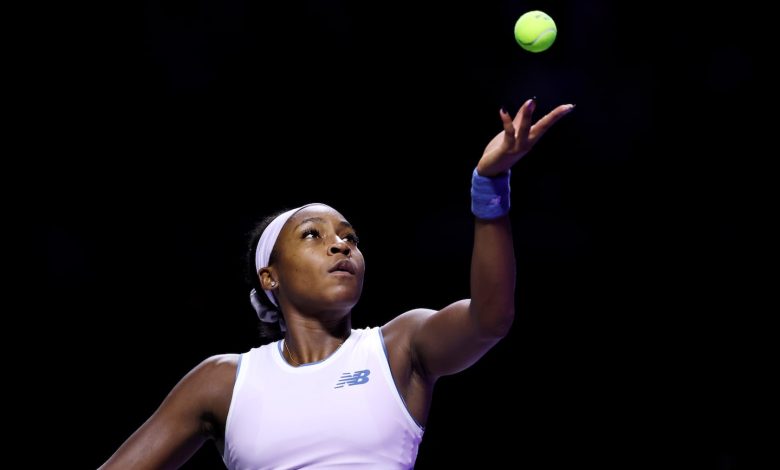
Fast forward eight years. New Balance now sponsors Gauff — brilliant, bold, beloved — whose presence electrifies every tennis court she touches. It sponsors Sydney McLaughlin-Levrone, an Olympic track and field marvel. It has invested in Historically Black Colleges and Universities. It has expanded its designs. And now it is supporting Sportsmen’s Tennis, a community where Boston’s athletic, cultural, and demographic future is already vibrant and visible.
New Balance didn’t change its politics. It changed its marketing to be in sync with the marketplace, because inclusion is simply the work of seeing, engaging, and honoring all the customers who shape your future.
This is not a diversity initiative. This is a business pivot — toward the consumers who shape the culture and drive the market.
The company I stopped buying from is not the company I see today. It’s following the market. It’s following the money. And it’s smart to do so.
Customers first. Profit follows. Inclusion isn’t charity. It’s reality.
Companies can rebrand DEI, reorganize it, or declare it over. It doesn’t matter. The sneaker companies know who is buying. The apparel companies know who sets the trends. The entertainment companies know who creates cultural gravity.
There’s no need to rescue DEI. It’s alive and well in the customers who are buying products. The market has already moved, and the companies that follow their consumers, not the politics, will be the ones that win.