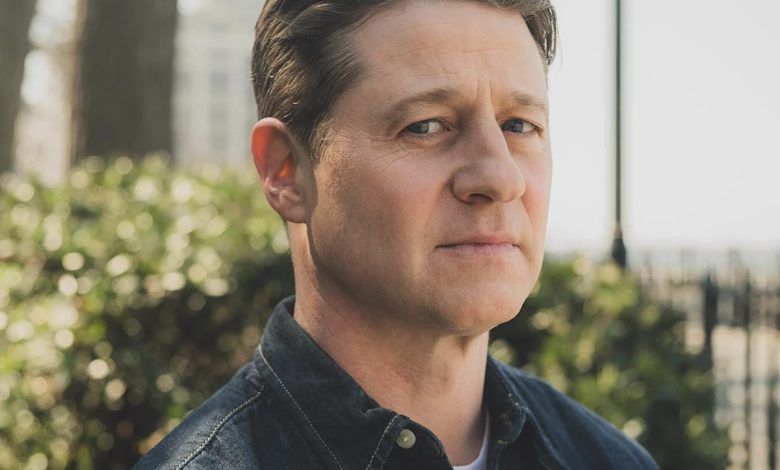
Ben McKenzie began the pandemic like many men in their mid-40s: hunched over a computer screen, late at night, regressing to behaviors that they thought they had left behind in college. While other men rediscovered a love for first-person shooters or map-based strategy games, McKenzie, veteran actor and mainstay on both critically acclaimed and globally famous TV shows, found a vice far more perverse and confusing: he stayed up late thinking about the economy.
Specifically, McKenzie had become obsessed with cryptocurrency — the online infrastructure of alternative forms of money backed by a system of computer code that promised to revolutionize the world, or, failing that, make a lot of people very rich. For months, McKenzie poured money into dubious online exchanges and traditional markets alike, falling back on his undergraduate degree in economics and specifically trying to “short” companies he thought were overvalued or built on fraud. Many of his fellow celebrities, meanwhile, couldn’t get enough, and as McKenzie watched Matt Damon, the Kardashians, Larry David, Snoop Dog and others cutting ads for crypto exchanges, his skepticism deepened.
More from Rolling Stone
“If there’s one thing I did know right off the bat it’s that Matt Damon didn’t know fuck all about crypto,” McKenzie says. “As I looked into it, it just got worse and worse and worse.”
Then, he hired a camera crew.
“Ben was like an animal trapped in a cage,” says McKenzie’s wife, the actor Morena Baccarin. “But I applaud his ability to go stir crazy and then actually make something of that time.”
In his new documentary, Everyone Is Lying to You For Money — in theaters April 17 — McKenzie has recorded both his initial journey into the world of cryptocurrency and his subsequent obsession over the fraud that he claims is at its heart. McKenzie is, for the culturally ignorant, most famous for the first major role of his career: four seasons as Ryan Atwood, a bad boy with a heart of gold on the generational-defining show The O.C. Since his stint as Atwood, McKenzie has thrown himself into two other major roles on network television, as a rookie cop on the gritty police drama Southland and Detective James Gordon on the Batman-inspired WB show Gotham, neatly dividing his life into eras of devotion to one role.
Everyone is Lying to You For Money is McKenzie’s newest role, and he plays himself in scripted segments and re-enactments with the same fervor: dipping into lurid crypto conventions in Miami and a surreal encounter with a true believer living in squalor on the site of a promised “Bitcoin City” in El Salvador, while coming back repeatedly to his home life with Baccarin and the children in Brooklyn. It’s a condensed look, in some ways, at what happened to thousands of families over the past few years: a father with a new obsession in online money, his emotions riding on the performance of a graph that periodically appears on his phone.
“The face of it was sorta pathetic — luring in young guys to gamble on this thing they were going to lose on,” McKenzie says. “But behind it was real crime.”
His experience in showbiz and obsession with true crime, he says, had primed him to smell bullshit. “I was the guy with a background in lying who could look at this from a completely different angle.”
WHAT MCKENZIE CAN’T LIE ABOUT, however, is that he’s really bad at pool. We met for the first time in late March, at a pool hall in Manhattan at 11 a.m, after scratching our plans to play basketball in a Brooklyn park when temperatures dropped back into the 30s. As we stumbled through several games, a few regulars filtered in, politely declining to look in our direction as we took turns scratching over and over again. I get the immediate impression that McKenzie, like me, is extremely competitive, out of his comfort zone, and also trying to be very chill about it — a balance I think we both pulled off well. (Final score, two games to one, McKenzie.)

McKenzie grew up in Austin, Texas, the child of a lawyer and a poet, and we swapped stories about growing up as liberal kids in red towns. “I learned it from my dad too – moral backbone,” McKenzie says. “You had to stand up for yourself or else you’re going to get drowned out.” At 47, McKenzie is still trim and TV-fit, moving around the table with an easy athleticism that is only slightly undercut by the fact that neither of us can reliably hit the balls in the pockets we’re aiming for. We give up relatively quickly, and decide to get lunch.
If you’ve seen The O.C., McKenzie is immediately recognizable — his face still boyish and clean-shaven — but not so much that he stands out on the street or in a trendy Thai spot during lunch hour. But it’s clear that the Ryan Atwood of it all still follows him: In the documentary, he addresses this elephant in its first act, playing a montage of clips of TV anchors and talk-show hosts starstruck by having a former teen-soap heartthrob in their midst. He tells me, early on, that he doesn’t really want this to be another piece about how someone who was nominated for multiple Teen Choice Awards got really into cryptocurrency.
That’s a tough ask, because Everybody is Lying to You for Money is, at its heart, a film about how someone who was nominated for multiple Teen Choice Awards got really into cryptocurrency. It’s a film about Bitcoin, of course, and the fraudsters, fake banks, dodgy exchanges, and developing-world despots that have used it to further their own political goals and financial bottom lines. But it’s also a film about Ben McKenzie. Early on in McKenzie’s 2023 book Easy Money: Cryptocurrency, Casino Capitalism, and the Golden Age of Fraud, which he co-wrote with the journalist Jacob Silverman, McKenzie references the economist Robert Shiller, who wrote about how ponzi schemes and financial or cultural manias can often take off when they’re pushed by a “mildly attractive celebrity.”
“I thought that really describes me,” McKenzie tells me the day after we shot pool, over breakfast at a diner near his home in Brooklyn. I go for a tuna melt, he gets an egg white omelette, spinach, and a side of sausage — a sense of internal discipline that explains our difference in T-shirt sizes. After the meal, an elderly customer approaches our table — there’s a short moment where both McKenzie and I assume he’s going to ask something about the famous actor sitting there, but we’re both thrown for a loop when it turns out that he overheard us chatting about Senator Sherrod Brown, whom the man thinks is just the kind of guy the Democrats need. McKenzie chuckles: for today at least, he doesn’t have to be Ryan Atwood for anyone else.
McKenzie’s hope, clearly, is that he can use that immediate recognition and relationship with the American audience to put his thumb on the scale against something he sees as one of the most flagrant crimes of our time.

“I really believe strongly that what crypto represents is quite bad for the world,” McKenzie tells me after breakfast, as we shivered slightly on a bench overlooking the East River. “It misunderstands money and the nature of all these social contracts, and the nature of trust. Money is trust.”
McKenzie’s obsession with crypto didn’t start with these ideals, of course. Rather, in the book and film, he credits his entry into the world of crypto to a conversation with his friend Dave Miller, a college friend who, McKenzie says, once gave him the “worst financial advice of his life,” on an early investment decision while they were still in their 20s.
“I would argue it was not financial advice, it was a stock tip from a 26-year-old struggling actor living in a guest house,” Miller tells me.
Still, early in the pandemic, Miller admits that he suggested McKenzie check out Bitcoin. In the film (and the book), Dave is used as the proxy for the hoodwinked public — trying to suck in a buddy who he knows has a bit of cash but is always looking to get a little more. In real life, Miller takes the ribbing well, happy to be his friend’s fall guy for the purposes of narrative structure. “I think it’s hilarious that I’m the villain in his origin story,” Miller says.
In college, Miller says, McKenzie was serious, driven, and always competitive (I was right about the pool games). “If you know Ben, you know he’s always got this itch he’s gotta scratch… It’s insufferable at times,” Miller says, laughing. “He’s just such a super thorough guy it just comes with the territory.”
It was clear to Miller that McKenzie had caught some kind of itch. A few weeks after their first call, Miller says he got a text. “It said something to the effect of ‘Are you still in crypto? you need to get out. I’ve been doing some research…’” Miller says. “I was like ‘Oh, here we go.’”
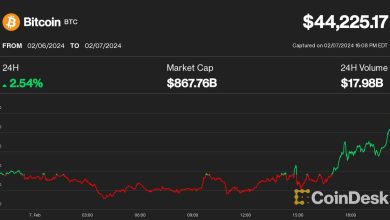
McKenzie’s research led him to conclude that crypto was headed for a cliff. He and Miller made a bet: If a single Bitcoin was worth less than $10,000 by the end of 2021, Miller owed him dinner (and vice versa). McKenzie lost the bet, as the after-effects of Donald Trump’s stimulus checks kept crypto prices in the stratosphere throughout the year, with Bitcoin closing at around $50,000 per coin. McKenzie was right to bet on Bitcoin’s volatility, but wrong on its scale; as he continued to investigate the phenomenon over the following years, prices rose and fell rapidly, but never touched $10,000 — it peaked at $126,198 in 2025 and now hovers around $65,000.
PEOPLE WHO USE CRYPTOCURRENCY BROADLY fall into two camps: cynics and true believers. Both are well represented in the documentary. The cynics are figures like Sam Bankman-Fried, who built a fortune off of a crypto exchange called FTX, which crashed and burned in the fall of 2022, eventually sending Bankman-Fried to prison for fraud. But many other cynics still walk free: making money hand over fist, relying on the true believers to keep pumping up an asset that they know is worth less than the silicon chips it’s stored on. The documentary captures McKenzie’s interview with Bankman-Fried, recorded a few months before his complete fall from grace.

“I almost felt like his big brother, in a way?” McKenzie says. “I just had this sinking feeling of ‘what are you doing? What is this?’”
It was clear from their first meeting, McKenzie says, that Bankman-Fried was full of it.
“To be honest Sam, it doesn’t feel like it’s creating a lot of good for people,” McKenzie says in the documentary interview. Bankman-Fried stumbles through an answer about payments. “Are they paying for things, or using it to gamble?” McKenzie counters.
“The majority of people are not using it for payments,” Bankman-Fried replies. “But my belief is that over the next five or 10 years we are going to see blockchain grow in a few different use cases. If I didn’t think that was true that would significantly change my belief.”
“Your belief system seems to be driven by the fact that you have made so much money,” McKenzie says.
Cynics don’t make that money without the true believers — the ones who hear these promises and hold on to them for dear life. In one of the documentary’s most outlandish scenes, McKenzie meets an American man named Corbin who is living on the site of a proposed “Bitcoin City” in El Salvador, a fanciful project announced by the country’s crypto-obsessed President Nayib Bukele that promised a smart city utopia powered by geothermal energy. Corbin clearly has very little: he describes himself as an “industrial designer” who has had “hundreds of jobs and a few careers,” which have led him to becoming the “first resident” of Bitcoin City. “As Bitcoin goes up my casa goes up,” Corbin says, showing McKenzie the concrete slab he poured himself, which supports a one-room cinderblock shack with a sink and hammock outside. The Bitcoin City project was pure vapor when McKenzie visited in 2022, and has not been made any more tangible since. “I want to be here because I like the potential of what’s coming,” Corbin tells McKenzie in the documentary.

When I ask McKenzie which one of these groups he is, he says right away that he’s a true believer. What the skeptics and acolytes of crypto share is a fundamental belief that whatever its merits, the concept of cryptocurrency is important, that it represents something significant in the way that we relate to money and trust and the people we exchange those things with.
“It’s not about dollars and cents for me,” McKenzie says. “It’s not, ‘Did I make money shorting crypto or not’ — I did, just for the fucking record — I made a million shorting various frauds including crypto. I put half of that profit into shorting it again and lost it and I put the other half into the documentary.”
All of this, he says, brought him closer to the people in the world of crypto who are operating in good faith — the losses, the successes. “I’m a true believer, and I found community with other true believers. There’s a lot of skeptics out there.”
“Ben takes on the weight of the world on his shoulders,” Baccarin says. “The only way he knows how to cope is to do things. He wants to feel like he’s part of the conversation.”
“He’s always been a dork,” Miller says. “He’s always had a very introspective and serious side — you just sort of knew that whatever he did he was going to be successful.”
There are signs now that McKenzie’s next act may be beyond crypto. The conceit, however, is the same: use this fame that was foisted on him at such a young age, make it worth something. He is, after all, no stranger to political communication: In 2004, at the zenith of his Ryan Atwood era, he spoke at the Democratic National Convention, endorsing John Kerry, who he called “a man with a plan to make this country strong and respected.” In recent years, McKenzie’s political activism has expanded from crypto into a small but influential role in local New York City politics (he even briefly considered running for office himself). The day after our first meeting, he and Baccarin sat on the hosting committee for a well-attended fundraiser for former New York City councilman and comptroller Brad Lander, who is running to primary the Democratic incumbent, Dan Goldman, in New York’s 10th Congressional district. One of Lander’s key allies, Mayor Zohran Mamdani, showed up, as did a huge crew of the city’s progressive notables.

“I know I’ve said I’m not running for office this time around, but I could do it in 2028,”” McKenzie tells me. “The thing is I’m not going to stop saying what I feel and think.“
For now, McKenzie is working on a new show with network-producer legend David E. Kelley, a legal drama and political thriller set in a world of shady lawyers, landlords and bureaucrats, inspired by the real-world corruption of former New York City Mayor Eric Adams. The show is still in its early stages, which means that McKenzie is fully in the throes of a new obsession: shadowing lawyers and interviewing bureaucrats. I mention that one of my friends is a lawyer who works at a nonprofit that serves low-income tenants in housing disputes, and he lights up. “Oh I’d love to pick his brain about that,” he says. A new era of Ben McKenzie might be on the horizon.
Best of Rolling Stone
Sign up for RollingStone’s Newsletter. For the latest news, follow us on Facebook, Twitter, and Instagram.