This Clinic Has Rolled Out AI-Powered Cameras For Faster Diabetic Eye Screenings Across Ohio – AfroTech

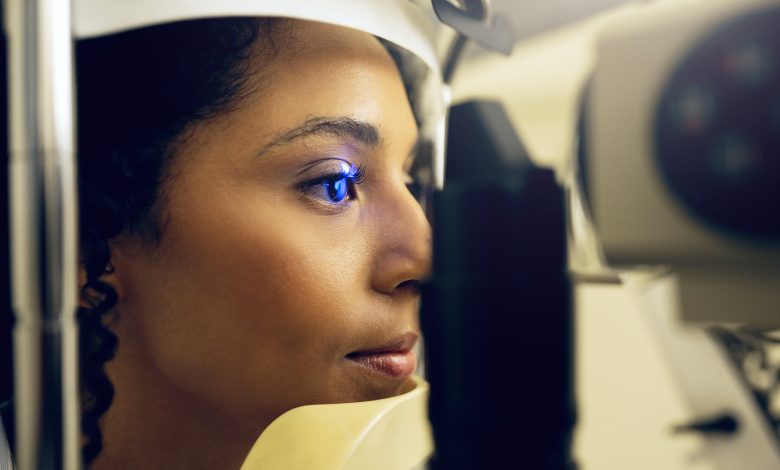

AI-powered fundus cameras have been installed at all Cleveland Clinic Cole Eye Institute locations next to primary care clinics in Ohio, offering a way for patients with diabetes to be screened annually for diabetic retinopathy (DR) and receive results often within 30 seconds.
The new technology, which will also be installed in select Cleveland Clinic primary care and endocrinology clinics, can detect the presence or absence of DR without pupil dilation or a specialist needed, according to Cleveland Clinic.
“Cleveland Clinic cares for tens of thousands of patients with diabetes, and a large proportion of them do not have dilated eye exams, which are critical to prevent vision loss from diabetic retinopathy,” Sumit Sharma, MD, a vitreoretinal surgeon at the Cole Eye Institute, said per Cleveland Clinic.
“However, each year, many of these patients without retinopathy are referred to ophthalmology for a dilated eye exam for retinopathy screening. Those exams require evaluation by a provider and can take one to two hours, depending on how busy the clinic is that day,” Sharma continued. “With our new fundus cameras, we can screen patients in a fraction of the time. That is more convenient for patients and allows us to save ophthalmology visits for patients with active diabetic retinopathy requiring treatment.”
How AI-Powered Fundus Cameras Work
Technicians or staff conduct the screenings using robotic cameras, per Cleveland Clinic. Patients sit at the tabletop device and rest their chin while a technician initiates the scan via a touchscreen. The camera then moves and focuses automatically, capturing two images of each eye — one of the optic nerve and one of the macula, which is at the center of the retina.
AI software analyzes the images for signs of DR and immediately uploads results to the patient’s electronic medical record, as described by the Clinic. Patients who receive inconclusive results or are diagnosed with DR are referred for a comprehensive ophthalmology evaluation at a later date, it notes. Those without signs of retinopathy can schedule a follow-up with their primary care and undergo screening again in a year.
The Importance Of Annual Diabetic Eye Screenings
Sharma advises that patients with diabetes should undergo screenings for DR at least once a year, according to Cleveland Clinic. Vision loss comes at an increased risk as the disease progresses, especially if it remains undetected. Patients are often completely asymptomatic during the early stages.
“Improving the convenience of screenings means we may catch more disease in more patients, and also catch it earlier, even while asymptomatic,” Sharma said, per the Clinic. “A lot of times, the patients who have the most severe disease are those who have the least access to care or the most difficulty getting to appointments. Screening patients on the same day as another visit can remove this barrier.”