The cultivation of magic or edible mushrooms, once reserved for a few well-equipped enthusiasts, is now much more accessible. Among the most popular methods with amateur growers, the technique known as Uncle Ben’s Tek has become widely democratized. It offers a simple, economical and fast way to obtain mycelium from spores, without requiring complex equipment like a pressure cooker or a professional sterile environment.
Although this method does not replace more rigorous approaches such as PF Tek or cultivation on sterilized grains, it nevertheless allows a motivated beginner to discover the basics of mycology while obtaining concrete results.
What is Uncle Ben’s Tek?
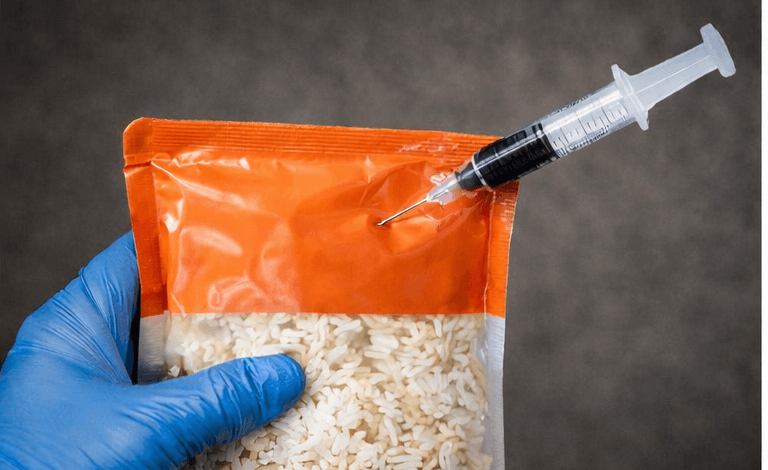
Uncle Ben’s Tek consists of using bags of pre-cooked rice for food use, such as those from the well-known brand “Uncle Ben’s”, as a base substrate for inoculating fungal spores or liquid mycelium. These bags are sold sealed and sterilized, making them ideal containers for starting a mycelium culture without having to go through a home sterilization phase. The idea is to directly inject a spore solution inside the bag, reseal it and let the mycelium colonize the rice at room temperature.
This procedure is based on simplicity: no jars, no pressure cooker, no complex manipulations. And yet, it is perfectly capable of producing viable mycelial substrate, as long as some basic hygiene rules are respected and work is done carefully.
Materials needed to get started
To carry out a cultivation with Uncle Ben’s Tek, very few elements are needed. The main one is, of course, the pre-cooked rice bag. It must be plain, without oil, salt or preservatives, and with separate grains. A bag of brown or seasoned rice risks fermenting or blocking mycelium colonization.
To this is added a syringe containing a spore or mycelium solution, sold sterilely in mycological commerce, a needle, 70% alcohol, a lighter to sterilize it before injection and, ideally, micropore tape to properly reseal the bag. It is also recommended to use gloves and a mask to avoid any contamination during handling. Finally, a clean space, well ventilated but without air currents, will be ideal for working calmly.
Method steps: inoculating the rice bag
Before any manipulation, it is advisable to carefully disinfect the rice bag with a cloth soaked in alcohol, as well as the work surface. Once the needle is sterilized (by heating it with the flame until it becomes red hot and letting it cool for a few seconds), a small hole is pierced in the upper part of the bag, just above the rice level.

The injection must be carried out with caution: it is enough to inject between 1 and 2 milliliters of spore solution in different areas of the bag, avoiding concentrating everything in a single point.
Once the inoculation is done, immediately seal the hole with a piece of micropore tape, which will allow the mycelium to breathe without letting pathogens in. The treated bag can then be placed in a location with stable temperature, between 22 and 26 °C, protected from direct light.
Incubation and mycelium observation
The first signs of colonization usually appear after approximately one week. These are white, fluffy spots that progressively spread throughout the rice. The bag should never be opened during this period, as this would introduce a risk of contamination. However, it is possible to observe through the packaging to verify progress.

The complete development of mycelium can take between two and three weeks, depending on conditions. When the rice is completely covered in white, growth appears homogeneous and no green, black or orange spots appear, it means colonization has been successful.
What to do once the rice is colonized?
The rice bag colonized by mycelium can then serve as a base for fruiting, that is, the development of fruiting bodies (mushrooms). It is possible to crumble the colonized rice and mix it with a fruiting substrate (such as coco coir, vermiculite or a pasteurized mix) in a cultivation box, a “monotub” or a grow bag.
Once set up, the proper conditions for fruiting are activated: high humidity, air renewal, indirect light and an adapted temperature according to the cultivated species. With proper care, the first mushroom heads can appear between 7 and 14 days after transplanting.
If the Uncle Ben’s method is popular, it’s because it’s simple. But it is not without limitations. It is essential to work cleanly, respect doses and not open the bags too early. A common mistake is injecting too much spore solution, which excessively moistens the rice and encourages bacterial contamination. Similarly, using a bag with additives, even natural ones, can prevent mycelium development.
It should also be remembered that this method does not allow precise control of humidity level or sterility, as with more advanced techniques. Nevertheless, it often offers very good results and can be an excellent gateway to the world of mycological cultivation.