


Good dental health can depend on multiple factors, some of which you can control. The U.S. Centers for Disease Control and Prevention (CDC) recommends visiting your dentist at least once a year, brushing your teeth twice daily, flossing regularly, drinking fluoridated water, and preventing dry mouth, among other things. When it comes to what you eat, though, the agency mentions that you should avoid foods and drinks with added sugar, as they can contribute to oral diseases. But what if there are foods that you can eat that encourage dental health?
The Link Between Nitrates and Good Dental Health
Your mouth has the second-largest and most diverse microbial population after the gut. Your oral microbiome contains over 700 species of bacteria, including numerous microorganisms such as bacteria, fungi, viruses, and protozoa. While the specific details of the microbiome can vary from person to person, certain microorganisms remain common in the general oral environment.
One of these is the Prevotella species. Although these microorganisms are usually found in the mouth, they have a bad reputation when it comes to oral health. Many of them are associated with dental issues such as halitosis, inflammation, cavities, and infections. An overgrowth of some of these bacteria may also lead to illnesses outside the mouth, such as abscesses, rheumatic illnesses, and neurologic diseases.
According to this study, though, exposing the oral microbiome to nitrate-rich foods may significantly reduce the presence of the Prevotella species. Researchers studied the saliva of 12 healthy participants after they ate a meal containing nitrate-rich vegetables.
Since Prevotella species occur naturally, you can’t simply remove them with regular brushing and flossing. What if–as the study suggests–you can manage their presence by introducing more nitrate-rich foods into your diet?
RELATED: 6 Uncommon Health Problems Caused by Bad Hygiene
Top Natural Sources of Nitrates
The good news is that it’s relatively easy to introduce nitrate-rich foods into your diet. Some great sources of nitrates are green leafy vegetables and root vegetables, including beetroot, cress, lettuce, radish, chard, Chinese cabbage, endive, parsley, spinach, rucola, and celery, which may contain 1000 to 2000–2500 mg nitrate per kg when they’re fresh.
Cabbage, dill, and turnip are medium sources of nitrates as they can contain between 500 and 1000 mg/kg when fresh. At the low end, broccoli, carrot, cauliflower, cucumber, pumpkin, and chicory can contain 200-500 mg/kg when fresh. Artichoke, asparagus, garlic, onion, green bean, mushroom, pepper, potato, sweet potato, tomato, watermelon, apple, banana, grape, pear, orange, and strawberry contain very low levels at less than 200 mg/kg when fresh.
However, there’s a limit to how much nitrate you should consume per day. Because nitrates aren’t considered essential, the World Health Organization (WHO) and the European Food Safety Authority have set an Acceptable Daily Intake of nitrate at 3.7 mg/kg of body weight and nitrite at 0.06 mg/kg of body weight. For example, someone who weighs 60 kg (132.3 lbs) can safely consume about 222 mg/day of nitrates and 3.6 mg/day of nitrites.
Some of these foods warrant individualized caution. High cassava intake can affect thyroid function, and high-oxalate, high-potassium greens such as spinach and Swiss chard may need to be limited by people with certain kidney problems, so anyone with thyroid or kidney disease should check with their clinician about safe amounts rather than assume all of these foods are entirely off-limits.
Why It’s Best to Stick to Natural Sources
If you’ve looked at the ingredient list for any of your processed meats and cheeses, you may also see nitrates and nitrites. Additives like potassium nitrate, sodium nitrate, potassium nitrite, and sodium nitrite are often used to stabilize these products and help them maintain their form.
While it may be tempting to count processed foods toward your nitrate goal, that’s not necessarily a good idea. That’s because nitrates and nitrites in processed foods can convert to nitrosamines during cooking. Nitrosamines are a concern because they are potentially carcinogenic. However, when you get nitrates from green leafy vegetables, this process may be less likely because of antioxidants like Vitamin C.
Once your doctor is okay with you eating more nitrate-rich foods, you should explore your options. Cooking them isn’t the only way you can incorporate these foods into your diet. Take a look at the recipes below for inspiration.
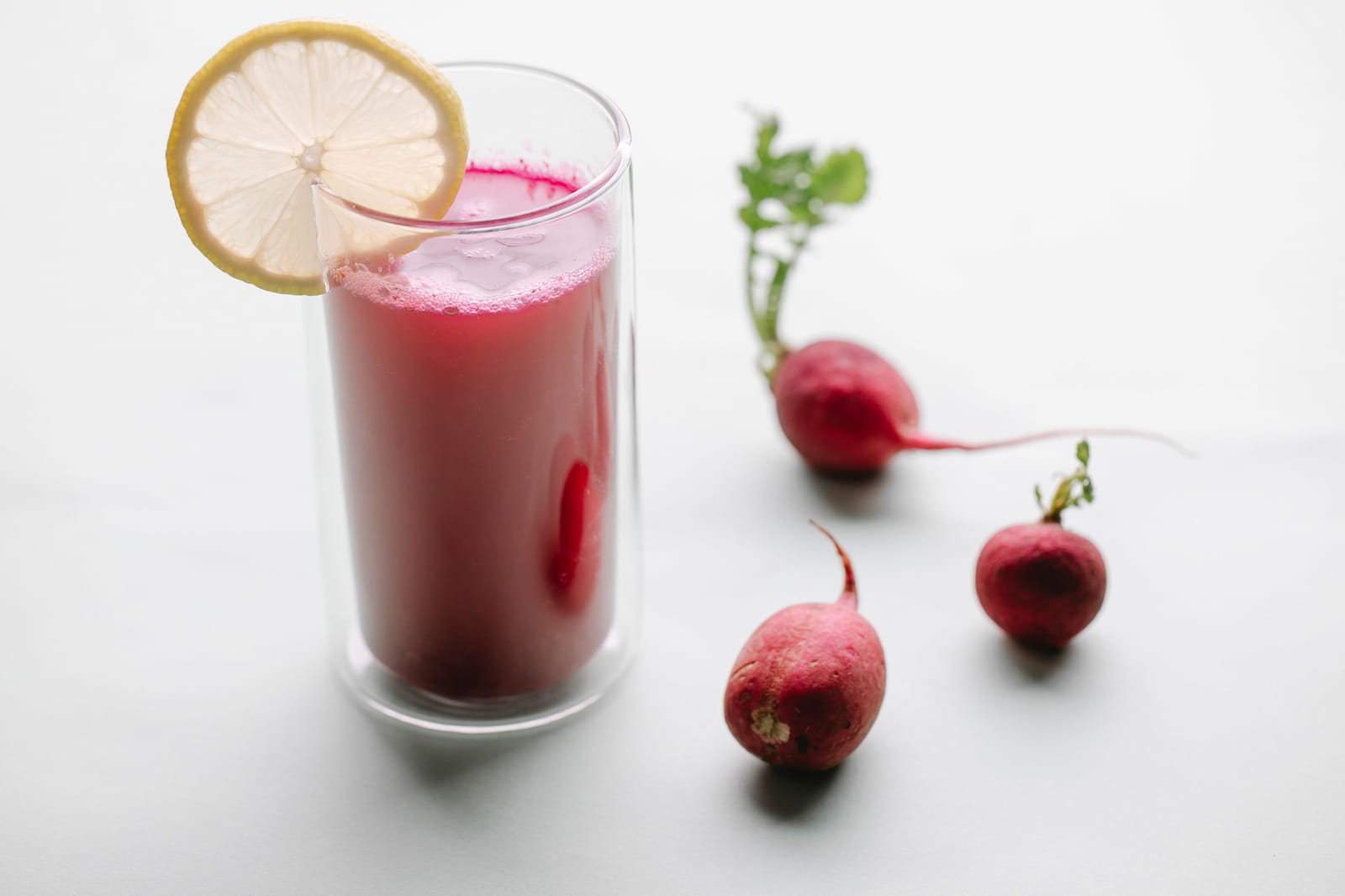
5 Easy Smoothie/Juice Recipes For You
1. Beetroot Celery Juice
Servings: 3 cups
Ingredients
- 1 thumb-sized fresh ginger root
- 10 carrots
- 1 large beet or 2 small beets
- 2 apples
- 3-5 celery stalks
Method:
- Wash the ingredients.
- Cut large produce into smaller pieces.
- Add all the ingredients to the juicer.
- Strain the juice (optional).
2. Beetroot Berry Smoothie
Servings: 2 cups
Ingredients
- 1 cup frozen strawberries
- 1 cup frozen blueberries
- 1 cup orange juice
- 1 (8.8-ounce) package refrigerated cooked beets
- 1 medium banana, peeled
- 1 medium carrot, peeled and sliced
- 1 (½-inch) piece fresh ginger, peeled and grated
Method:
- Combine 1 cup strawberries, 1 cup blueberries, 1 cup orange juice, 8.8 ounces beets, 1 banana, 1 carrot, and ½-inch piece of ginger in a blender.
- Process until combined, about 30 seconds.
- Divide between 2 glasses.
- Serve immediately.
3. Spinach Avocado Smoothie
Servings: 2 cups
Ingredients
- 1 cup nonfat plain yogurt
- 1 cup fresh spinach
- 1 frozen banana
- ¼ avocado
- 2 tablespoons water
- 1 teaspoon honey
Method:
- Combine 1 cup yogurt, 1 cup spinach, 1 banana, ¼ avocado, 2 tablespoons water, and 1 teaspoon honey in a blender.
- Puree until smooth.
- Serve.
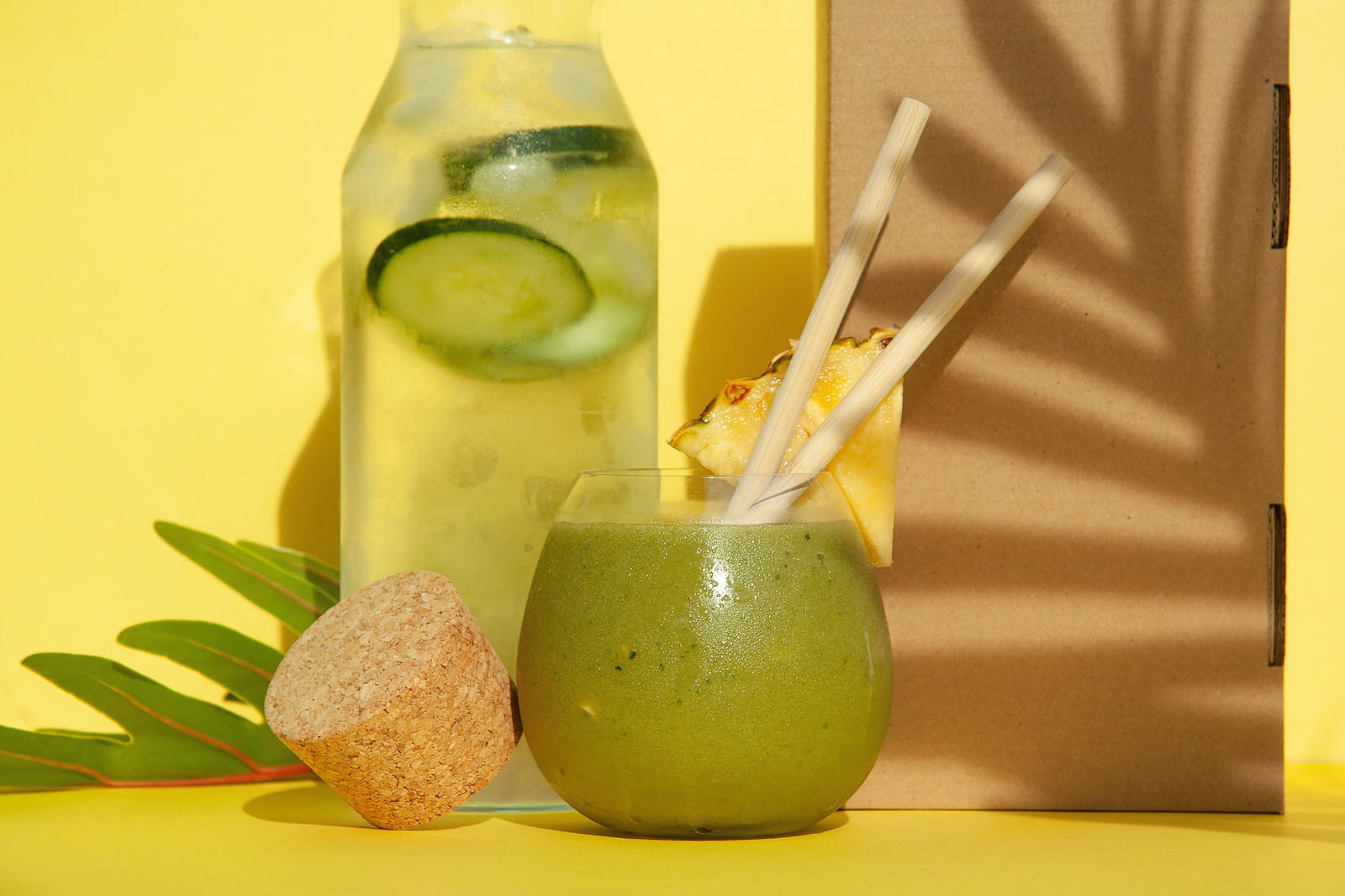
4. Spinach Pineapple Smoothie
Servings: 1 cup
Ingredients
- ½ cup unsweetened almond milk
- ⅓ cup nonfat plain Greek yogurt
- 1 cup baby spinach
- 1 cup frozen banana slices (about 1 medium banana)
- ½ cup frozen pineapple chunks
- 1 tablespoon chia seeds
- 1-2 teaspoons pure maple syrup or honey (optional)
Method:
- Add ½ cup almond milk and ⅓ cup yogurt to a blender, then add 1 cup spinach, 1 cup banana, ½ cup pineapple, 1 tablespoon chia seeds, and 1 to 2 teaspoons sweetener (if being used) to a blender.
- Blend until smooth.
- Serve.
5. Kale Strawberry Nut Smoothie
Servings: 1 serving
Ingredients
- 1 cup unsweetened soy milk
- 1 cup frozen strawberries
- 1 cup chopped kale
- 1 tablespoon natural peanut butter
- 1 tablespoon honey
- 1 teaspoon vanilla extract
- 2-4 ice cubes
Method:
- Combine soy milk, strawberries, kale, peanut butter, honey, vanilla, and ice cubes in a blender.
- Puree until smooth.
- Serve.
Although more research is needed, you may be able to boost your dental health by eating more nitrate-rich foods. While you should certainly talk to your doctor before loading up on leafy greens and root vegetables, it’s easy to include the right foods once you get the go-ahead.