
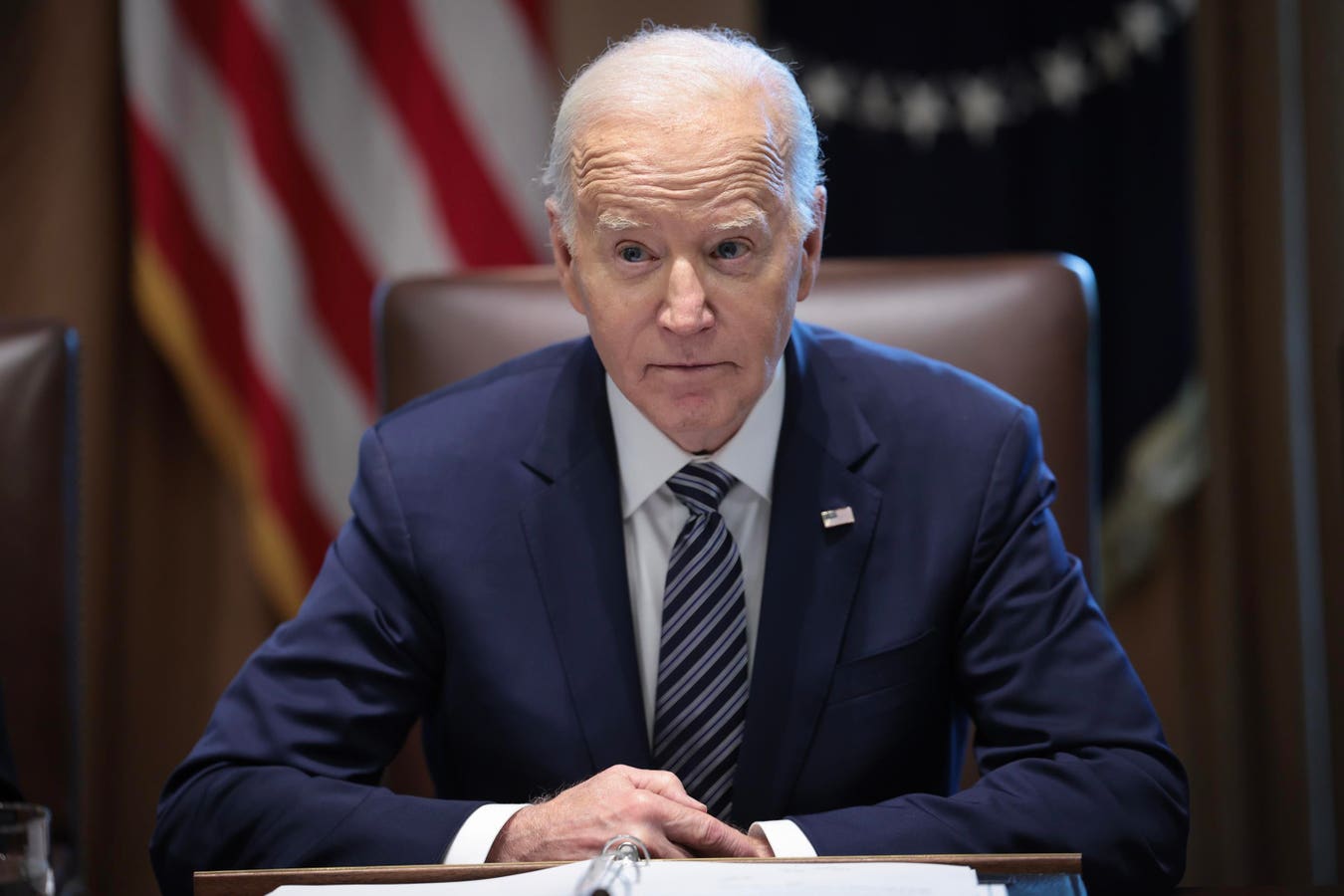

One of the legacies during the Presidency of U.S. President Joe Biden was a policy that pushed back on crypto in many ways. In particular, the ‘debanking’ or lack of banking access to these firms, is now detailed in an official report by Congress.
Getty Images
The House Financial Services Committee released a report on Monday revealing the results of an investigation into ‘debanking’, a seemingly innocuous term with extreme consenquences that describes how you or your company could have your bank accounts shut down because someone in the U.S. Government does not like the line of business you are in. Operation Choke Point 2.0 was coined by Nic Carter, founding partner at Castle Island Ventures, where he based the concept on a series of actions by U.S. Government agencies under the Biden Administration that sadly, was a repeat of policy actions under a first Operation Choke Point under the Obama Administration.
Isued by Chairman French Hill (R-AR) and Oversight Chair Dan Meuser (R-PA), the investigation by Committee Republicans took place over the last four years and examined coordinated efforts by the Biden Administration to debank digital asset businesses and individuals. Republican Committee staff detail how Biden Administration regulators used vague rules, excessive discretion, informal guidance, and aggressive enforcement actions to pressure banks away from serving digital asset clients, resulting in at least 30 digital asset entities or individuals losing access to financial services.
“Targeting Americans over their political views erodes trust in the financial system and undermines the core freedoms our nation was founded on,” said Chairman Hill. “The staff report released today summarizes Committee Republicans’ work and details how the Biden Administration’s regulators worked to debank the digital asset ecosystem. Under the leadership of President Trump, we’ve ushered in a new era for digital assets and look forward to reversing the damage done by the Biden Administration to prevent unlawful debanking.”
Anatomy of Operation Choke Point 2.0
The original Operation Choke Point originates in a speech on March 20, 2013 by the Executive Director of the former Financial Fraud Enforcement Task Force. The speech notes, “The reason that we are focused on financial institutions and payment processors is because they are the so-called bottlenecks, or choke-points, in the fraud committed by so many merchants that victimize consumers and launder their illegal proceeds,” The speech goes on to describe the payday lending industry as a subprime and high-risk business, and instructs banks they “…should consider whether originating debit transactions on behalf of Internet payday lenders – particularly where the loans may violate state laws – is consistent with their BSA obligations.”
Operation Choke Point 2.0 as described by Carter shows agencies taking on similar tones from the first Choke Point in reference to crypto, essentially marking the entire crypto industry as risky. The Biden Administration’s release on January 27, 2023 on mitigating the risks of cryptocurrencies to the financial system demonstrates the similar nature to the first Operation Choke Point. The statement praises banking agencies for issuing “joint guidance… on the imperative of separating risky digital assets from the banking system,” and urges regulators to “continue these efforts… to address and limit financial institutions’ exposure to the risks of digital assets.”
In 2024, Coinbase-affiliated History Associated filed FOIA requests and later complaints seeking FDIC correspondence about crypto activities during this time. Ultimately, documents produced show at least 23 instances where FDIC regional offices asked banks to “pause” or “not proceed” with crypto‑related activities. Additionally, the documents show a coordinated effort to debank crypto companies and even individual employees, culminating as evidence of the existence of Operation Choke Point 2.0.
Exhibit A: Anchorage Digital Bank
There is perhaps no better example of how crypto was targeted than Anchorage Digital Bank, N.A. This is an OCC-regulated and chartered national bank with a trust charter and specifically offers crypto services to clients. The bank has to operate under the same level of prudential supervision that other national banks such as JP Morgan Chase, Wells Fargo, and Bank of America have to manage.
Despite all this, the report shows that Anchorage Digital had been doing business with a bank for two years that handled client fees, payroll and administrative expenses. Suddenly in June 2023, Anchorage Digital was notified by the bank their account “would be closed in thirty days because they were not comfortable with [Anchorage Digital’s] crypto clients’ transactions.
In an email response to the release of the Congressional report, Nathan McCauley, CEO and co-founder of Anchorage Digital said, “It is encouraging to see the House Financial Services Committee is now memorializing the injustice that many in the crypto industry have experienced,” said Nathan McCauley, CEO and Co-Founder of Anchorage Digital.
Due Process and Constitutional Concerns
The investigation raises concerns not just for those in crypto, but for any legal industry, as to what recourse would a firm or individual have should they be ‘debanked’. John Ohlendorf, a partner at Cooper & Kirk, PLLC in Washington, D.C., said in an interview, “When prudential regulators use amorphous terms like ‘regulatory risk’ as a way of choking off lawful but politically unpopular businesses’ access to the financial system, it is a way of circumventing our system of checks and balances and democratic accountability.” Ohlendorf and his firm helped frame and then led litigation by representing payday lenders and trade groups in the landmark Operation Choke Point lawsuit against the FDIC, the Federal Reserve, and the OCC.
“In the case of the first Operation Choke Point, for example, the people’s elected representatives never enacted a law or any formal policy declaring payday lending unlawful. But certain unelected bureaucrats in the Obama Administration didn’t like the industry, so they wielded their vast regulatory powers over America’s banks to try to stifle payday lenders’ access to the basic banking services any business needs to survive,” said Ohlendorf.
Ohlendorf was a c0-author of a report titled ‘Operation Choke Point 2.0:
The Federal Bank Regulators Come For Crypto’ released in March of 2023 that affirmed Carter’s description of ‘Operation Choke Point 2.0’ regarding the similar coordinated efforts against crypto to payday lenders.
“The Committee on Financial Services’ recent report suggests that Biden-era regulators followed the same playbook against the digital asset industry: relying on amorphous regulatory authority to in effect stamp out an industry that has not been, and could not be, formally prohibited. This type of abuse of power violates constitutional rights and structural protections, and we need to make clear that it is unlawful and unacceptable so that it does not happen again,” said Ohlendorf.
What’s Next: Preventing Operation Choke Point 3.0
Except for Star Wars fans, no one likes a trilogy when it comes to the weaponization of the banking system against specific industries or any kind of repeat corruption. The report highlights that since returning to office in 2025, President Trump has framed debanking as a core priority and issued an executive order directing financial regulators to end politicized debanking and remove “reputational risk” and similar vague concepts that enabled Choke Point‑style pressure.
On January 23, 2025, in the first Executive Order on Digital Assets titled ‘Strengthening American Leadership in Digital Financial Technology’ signed by Trump, the third policy listed to support digital assets said, “(iii) protecting and promoting fair and open access to banking services for all law-abiding individual citizens and private-sector entities alike;”.
Trump Administration and regulatory agencies have been taking steps this year to help remove concepts such as ‘reputation risk’ from the repertoire of bank examiner tools and rescind guidance that prevents banks from offering crypto services. In October of 2025, the FDIC and OCC issued a joint Notice of Proposed Rulemaking (NPR) to codify elimination of reputational risk from their supervisory programs and to bar agencies from criticizing, pressuring, or directing banks to close or deny accounts based on customers’ political, social, cultural, or religious views or on lawful but “disfavored” business activities.
Now that the original Operation Choke Point and Operation Choke Point 2.0 have official reports filed in Congress, the question remains as to how as a society, we can stop a future administration from effectively conscripting banks to act as the ‘policemen and judges’ of the commercial world. Perhaps the traditional finance world could actually learn something here from the ethos of crypto, where builders want to create open access to financial rails that minimize surveillance, better preserve individual privacy, and lack the incentive to judge or police how individuals use digital assets.