
Key Takeaways
-
London police hope to benefit from the £3.2 billion Bitcoin seizure.
-
Victims challenge U.K. compensation plan.
-
Court battle over distribution continues.
British police hope that some of the billions of pounds worth of Bitcoin seized from a Chinese fraud network could ultimately benefit London and its residents, even as a legal battle intensifies between victims and the U.K. state over who should receive the windfall.
London Police Seeking Bitcoin Funds
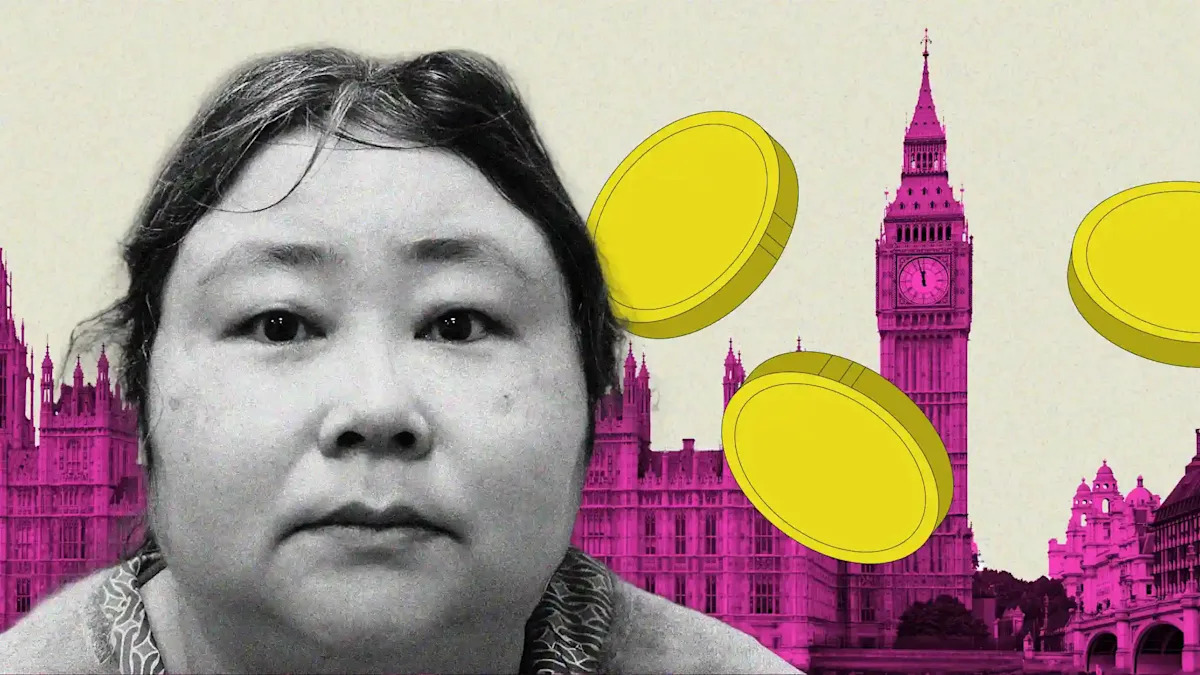
The Met Police recovered around 61,000 Bitcoin, now worth roughly £3.2 billion ($4.1 billion), during a years-long investigation into Zhimin Qian.
Last year, the Chinese fraudster was jailed in London after orchestrating a massive investment scam that targeted more than 128,000 victims in China.
Civil recovery proceedings are now underway in courts to determine how the assets should be distributed, with groups of victims seeking to prevent the British government from retaining much of the crypto’s sharply increased value.
A spokesperson for the Metropolitan Police said the force hopes that some of the recovered assets could eventually be directed toward London.

Police said they had recovered over 61,000 Bitcoin, worth about £5 billion. | Source: Met Police
“Since the Met led the investigation, we hope to see some of the assets recovered go towards London and Londoners,” the spokesperson said in an emailed statement to CCN.
“With a potential future recouping of funds for the Met.”
The statement echoes its previous statement to CCN at the time of the arrest.
The seizure — described by investigators as the largest confirmed crypto recovery by law enforcement — was made from electronic devices found at a mansion in Hampstead, north London.
The value of Bitcoin has surged considerably since the fraud took place between 2014 and 2017.
Victims Challenge U.K. Bitcoin Compensation Plan
Meanwhile, thousands of victims are attempting to claim a share of the assets through the English courts under Section 281 of the Proceeds of Crime Act, which allows crime victims to recover confiscated property.
However, U.K. authorities have proposed an out-of-court compensation scheme that would transfer the funds to China, where an existing redress programme would compensate victims.
The plan could leave the British state holding much of the increase in Bitcoin’s value since authorities seized it — a prospect that some victims and their lawyers are contesting.
Law firm Candey, which represents about 5,700 victims, said the proposed scheme offered insufficient guarantees that victims would receive fair compensation.
“No guarantee has been given as to whether it would be run in accordance with principles of fairness,” the firm said in a statement, adding that victims “could stand to recover nothing without access to justice before the English courts.”
Prosecutors’ Warning Over Funding
Prosecutors have raised concerns that court claims could disproportionately benefit a smaller group of victims and their legal backers, according to the Financial Times.
In written submissions, Martin Evans KC, representing the director of public prosecutions, said the Crown Prosecution Service worried that Section 281 claims could benefit “a small subset of victims and their litigation funders.”
He added that claimants were seeking to recover sums “vastly in excess of those victims’ actual losses to the exclusion of other victims and of the Crown.”
Candey rejected those arguments, saying its contingency-fee arrangements — capped at 18% of any recovery — allowed financially distressed victims to pursue justice.
“The opportunity for the victims to obtain justice must take precedence over the objective of securing the windfall for the Treasury,” the firm said.
Next Stage
A preliminary hearing in July will determine whether English or Chinese law should govern the victims’ claims to the seized assets.
The High Court has also ordered that law firm Fieldfisher act as the lead firm representing claimants for that stage of proceedings, and set a May 22 deadline for victims to submit formal claims.
Meanwhile, police say the fate of the crypto remains uncertain until the courts resolve competing claims.
“This is one of the largest and most complex economic crime investigations we have undertaken,” the Met’s economic crime unit previously said.
The Rise and Fall of Zhimin Qian
Before her arrest, Zhimin Qian lived a life of luxury in Britain funded by the proceeds of a vast investment fraud that targeted more than 128,000 victims in China.
When police first encountered her during a money-laundering investigation in October 2018, Qian was lying in bed at a north London property and claimed that brain and leg injuries had incapacitated her.
Officers left without realising that the woman using a false identity was one of China’s most wanted financial fugitives.
According to court records and the Metropolitan Police, Qian had already siphoned billions of pounds from investors through a fraudulent wealth scheme before fleeing China and relocating to the United Kingdom.
Authorities later recovered more than 61,000 bitcoin linked to the case — one of the largest cryptocurrency seizures ever made by law enforcement.
For several years, investigators say Qian continued living under assumed identities while moving between luxury properties across Britain, including homes in Scotland, York and Hampstead.
She spent heavily on designer watches, jewellery and high-end fashion while exploring plans to purchase multimillion-pound properties in London and overseas.
Prosecutors said the scale of the case highlighted the enormous sums generated by sophisticated financial crime.
Diary entries later reported by British media suggested she dreamed of ruling the self-declared microstate Liberland and building what she envisioned as Europe’s largest Buddhist temple.
Her downfall began when an associate attempted to purchase two luxury homes in Hampstead worth more than £35 million.
Financial checks raised questions about the origin of the bitcoin funds, ultimately triggering the investigation that led authorities back to Qian.
Top Picks for Bitcoin
The post Who Gets the £3.2B Bitcoin Seized From China’s ‘Crypto Queen’? London Police Want Their Share appeared first on ccn.com.