
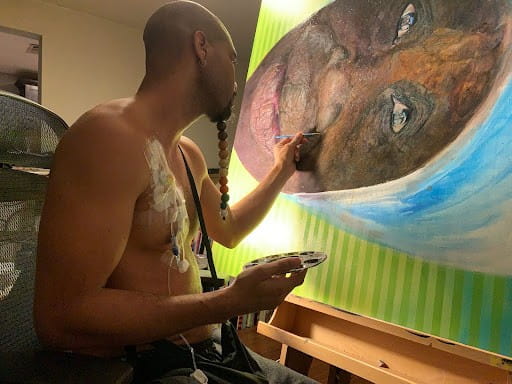

Colorectal cancer has emerged as the leading cause of cancer-related deaths among people under 50. It is a sobering statistic mirrored by a projection that incidence in this younger age group is expected to increase by 90 percent by 2030.
From Food Poisoning to Misdiagnosis
For Dallas-based visual artist Reuben Cheatem, these numbers became a personal reality at the age of 41. However, when he first noticed blood in his stool, the truth was masked by a recent history of travel.
“I was living in Mexico and during that year and a half time, I got food poisoning multiple times. And so when I started to see blood in my stool in 2021, when I was back in the States, I mistakenly attributed it to that—like I was still healing or something,” Reuben tells BlackDoctor.
The symptoms persisted, and after three weeks of continuous issues, Reuben realized he was facing something far more serious than a lingering stomach bug. He sought medical attention, but the path to the truth was not immediate.
“That’s when I was misdiagnosed with diverticulitis,” he recalls.
RELATED: Why Colon Cancer Is Rising in Younger Adults—and What You Can Do
The Waiting Game
Because of localized inflammation, doctors advised against a colonoscopy during that crucial window. Instead, they moved forward with treating him for diverticulitis. By May, the treatment seemed to have worked, offering Reuben a false sense of security.
“I thought that was the correct diagnosis, and I thought the treatment worked,” Reuben adds. “So all summer I felt good.”
However, the reprieve was short-lived. By September, the symptoms returned with a vengeance—abdominal discomfort and stool irregularity. Reuben returned to his doctor to repeat the previous regimen, but the antibiotics and pain medications that had once provided relief were now failing.
“I wasn’t feeling good for so long, and I was kind of just agonizing—probably a lot longer than I should have—thinking that eventually the medication would take effect,” he shares.
The Turning Point
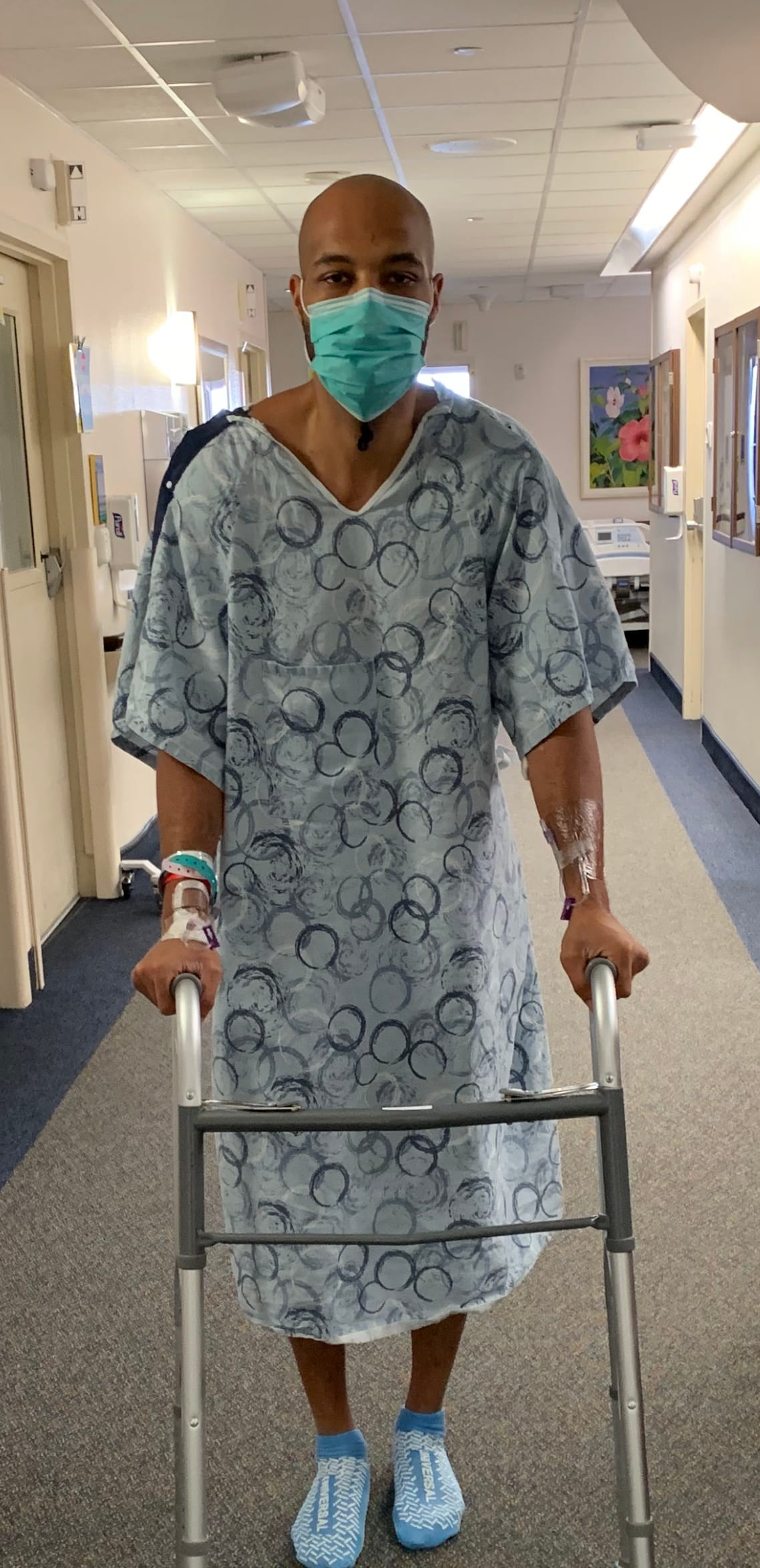
This period of physical and mental agony stretched from late August into October before a fourth CT scan finally revealed the truth: Reuben wasn’t experiencing inflammation; he had a mass that required immediate surgical intervention. He was admitted to the hospital immediately.
“I had a nine-day stay where I only had laxatives—not even water by mouth or anything, only laxatives for nine days straight to flush my colon to prepare for the surgery,” Reuben notes.
He underwent surgery on October 19, 2022. The following morning, pathology results from the removed tumor delivered the definitive cancer diagnosis.
“They removed 19 lymph nodes surrounding the tumor, and only one of those lymph nodes was marked as cancerous,” Reuben says.
In his limited understanding of the disease at the time, he initially underestimated the road ahead. “I was thinking, ‘Oh, so I barely crossed the threshold from Stage II to Stage III. So I’m going to get something simple—probably just some pills that I’m going to have to take for a little while, and then I’m going to be good,’” he explains.
He was completely wrong. Reuben was prescribed a “hardcore” six-month, 12-infusion chemotherapy regimen. The process began on November 28, 2022, and concluded in May 2023. “Since then, I’ve been deemed in remission, and it’s just been monitoring,” he explains.
Infusions, which were part of the grueling treatment cycles, began every Monday and lasted for three days. “It was just really dark for me, and everything was just bringing me down,” he says of those early office visits.
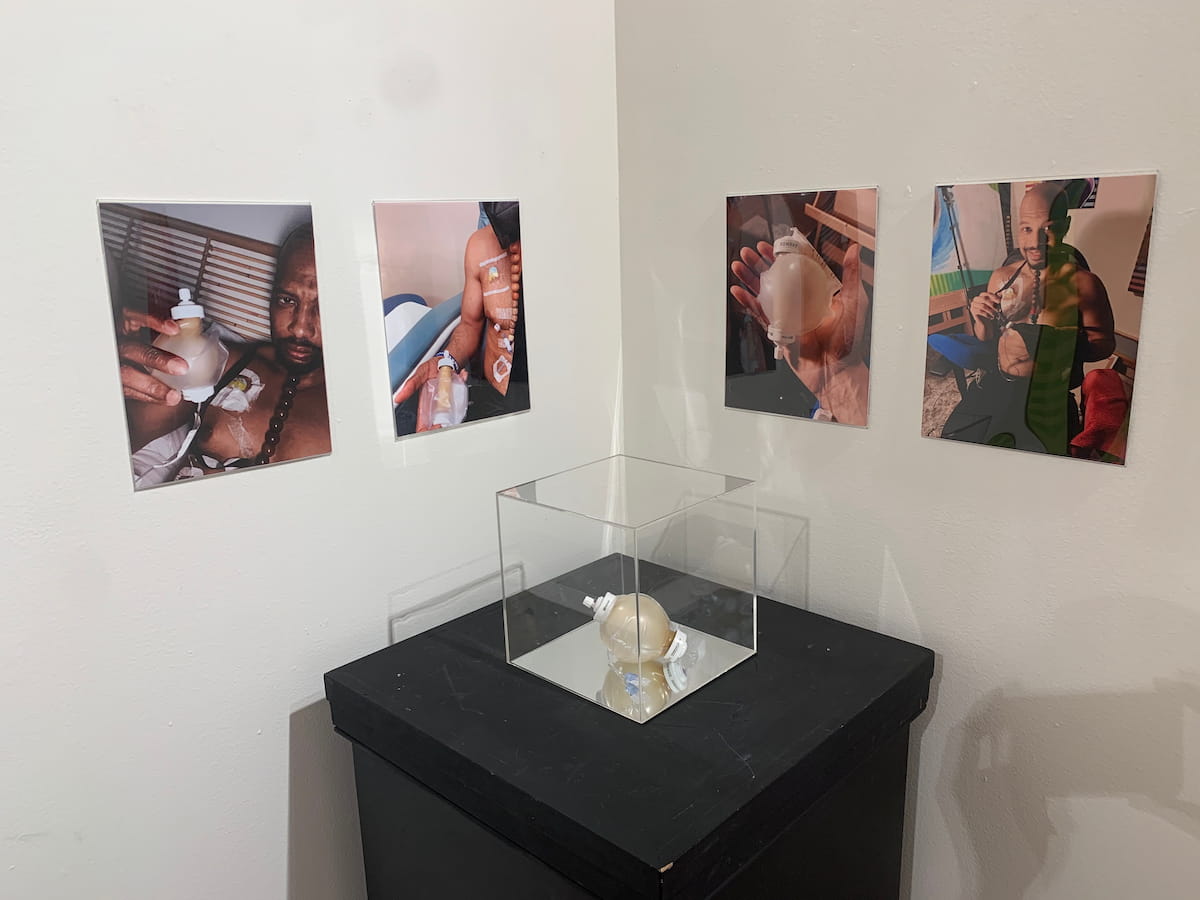
H.E.A.L.E.D.: Processing Trauma Through Art
Already an artist, Reuben found art to be an essential tool during this period. It allowed him to process the emotional ups and downs of his treatment while maintaining his sense of self. After completing chemotherapy, he created a living exhibition titled H.E.A.L.E.D. (Hope, Encouragement and Love Evaded Darkness), which transformed his personal trial into a narrative of inspiration.
The exhibition served as a visual journal of his journey. “My exhibition, H.E.A.L.E.D., transforms that experience into a living artistic narrative. Beyond just the visual reflection of pulling from certain memories and experiences of treatment, it was important for me to also talk about the power of positive communication and affirmations,” Reuben explains.
Throughout his treatment, Reuben used his social media presence to remain transparent. “…I was very vulnerable and very open with the ups and downs of the experience,” he says. The positive feedback he received from his community eventually encouraged him to finalize the H.E.A.L.E.D. project.
Reuben describes a pivotal moment during his first month of chemotherapy when he found himself in a “really dark place.” While dreading an upcoming Wednesday treatment session, a timely 7:30 a.m. phone call from his cousin completely shifted his energy. Even though they didn’t discuss his cancer, the positive nature of the conversation broke his cycle of despair. He credits that single interaction with providing the emotional strength to navigate the remainder of his treatment without returning to that darkness.
“I took that into my exhibition. One example of how I expressed that was I had a jar at the entrance with printed affirmations—short, positive affirmations like ‘You are enough,’ ‘This is your time,’ ‘We appreciate you.’ Just quick, simple things like that,” Reuben says. “Everyone that entered the exhibition, I had them pull one and read it to themselves, just to kind of change the energy of their day. I still have that jar and I keep it at home. Anytime anyone comes to my house, I have them pull one just to kind of get those quick little blurbs. That can really change the energy of a person’s day, and that’s something that I took out of chemotherapy.”
For National Colorectal Cancer Awareness Month in March, Reuben is partnering with the Colorectal Cancer Alliance on a limited-editionshirt featuring his artwork. The collaboration aims to turn his survival story into a call for screening and hope. All profits generated from the sale of the shirt will be dedicated to supporting colorectal cancer research.
“It came at me out of nowhere; it was just an unexpected, great surprise. I’ve been looking for a way to amplify my own voice within this conversation about the importance of colonoscopies and overall colorectal cancer awareness. It was a blessing to get this amplification where they would use my artwork on a limited-edition shirt to push this narrative,” Reuben shares. “My exhibition, H.E.A.L.E.D., has only been seen locally in Dallas, where I live, so this will be a way to amplify my story in helping to bring awareness to the situation. You don’t have to be an artist or a writer to share your own story—just simply be vulnerable with your experiences in the hopes that someone else can connect and realize they’re not the only ones fighting that battle.”
Having been diagnosed at 41, Reuben is a staunch advocate for lowering the recommended screening age. “I think that the age of 45 is too late for the recommended age,” he says. “I really think it should be 40 or earlier, just because cases are becoming more common in younger people. I have a friend who thought he was a healthy person, and he just passed away at the age of 38 from Stage IV colon cancer.”
He also campaigns to remove the stigma surrounding the procedure. “The conversation for a colonoscopy makes it so much more than it really has to be, when really it should just be as common as getting a flu shot—just common practice,” he notes.
Reuben is particularly focused on reaching the Black community, where cultural barriers can lead to delayed diagnoses. “In the Black community, we tend to think that—for a lack of a better way to say it—we can ‘walk it off.’ If it’s not a broken bone or something stopping us from going to work, then we can just kind of power through it. The initial symptoms for colon cancer can feel like you can just kind of get by—indigestion and simple things like that—but if you let it progress too far, then you kind of cross a point of no return. We need to learn the common symptoms and take action as soon as possible, rather than thinking it’s something we can just get by on, especially Black men. That’s something that’s very common with us, and I did it myself,” he adds.
Vigilance in Remission
Today, Reuben is healthy, eating well, and exercising regularly. While his strength is great for his age, he remains cognizant of the need for lifelong vigilance.
“In August of last year, after nearly two years of getting tested and everything coming back good, I was getting to the point where I was like, ‘Well, I can kind of space these tests out. Maybe skip some appointments.’ I felt like I could take a break from the medical rigors I was going through. Right when I was thinking that—the very week I was reaching that point in my mind—I had a CT scan that showed something that needed to be verified. It showed some inflammation or something not quite right, and I had to follow up with an MRI. Even though the MRI came back clear…it still was a reminder that I’m still in the game. It’s still necessary to monitor things because that could have been something. I’m not quite in the clear, even though I feel like I am,” he notes.
His final message to others is simple: take action at the first sign of trouble and do not delay.
“Everything should be urgent because, if it is something, the earlier you can catch it, the better. And if it isn’t something, at least you know that beyond just your own assumptions. At least you have seconded that with expert insight. You’ve seen a doctor, you’ve done the testing. It may confirm what you suspected 100%, but you should at least get that confirmation. That’s a mistake that I wish I wouldn’t have made, but luckily, it wasn’t detrimental for me,” he concludes.
For other ways to get involved this March, visit the Colorectal Cancer Alliance.