
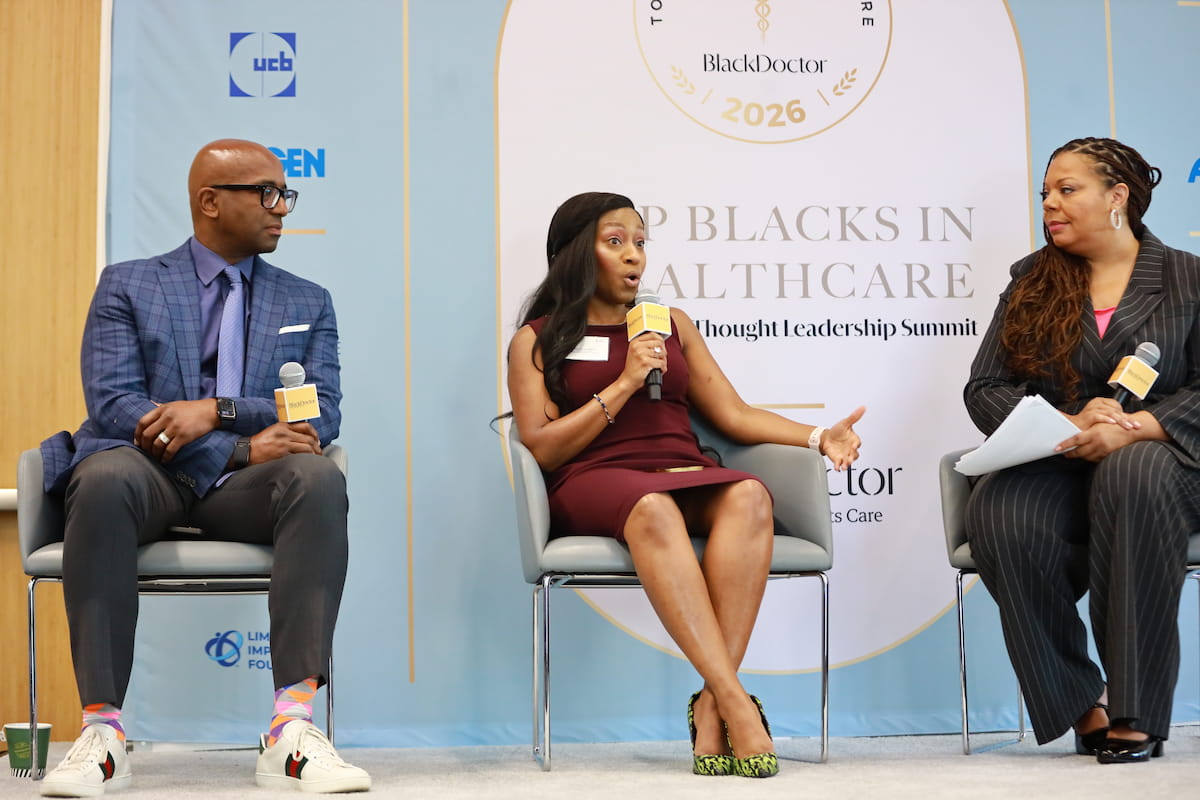
Black Americans continue to experience poorer outcomes in breast, prostate, and colorectal cancers due to barriers such as limited access to specialty care, medical mistrust, low clinical trial participation, and systemic inequities.
In this powerful discussion at BlackDoctor’s 10th Annual Thought Leadership Summit, cancer experts Rodney Gillespie (Novartis) and Kerri Gober (American Cancer Society) addressed the persistent inequities in cancer care affecting Black communities.
Why Cancer Disparities Continue to Affect Black Communities
When it comes to cancer care, Black patients are more likely to face:
- Delayed diagnoses
- Limited access to high-quality care
- Lower clinical trial participation rates
- Poorer survival outcomes
Social determinants of health (SDOH) — the conditions in which people are born, live, work, and age — also play a large role in these disparities. Factors like transportation, economic stability, education, neighborhood conditions, and healthcare access can all affect cancer outcomes.
“Your zip code should not determine how long you live,” Gillespie said.
Where someone lives can affect access to screenings, oncology specialists, and treatment centers. Despite facing poorer outcomes across several cancer types, it’s important to understand that these disparities are systemic, not individual failures.
RELATED: BlackDoctor’s 10th Annual Thought Leadership Summit Tackles Health Inequities and Solutions
Building Trust Between Healthcare Systems and Black Communities
Trust remains one of the largest barriers to improving cancer outcomes for Black communities. Many Black patients are hesitant to engage in cancer treatment, clinical trials, or health systems as a whole due to historical injustices like the Tuskegee Syphilis Experiment, and ongoing experiences with implicit bias and racism in healthcare.
Gillespie and Gober emphasized that if providers want to improve care for Black patients, they need to meet them where they are — rather than expecting them to come to them. “We can’t put all the onus on the Black community — the system needs to step up,” Gillespie said.
“We have to come out of the lab and get into the community,” Gober added.
Researchers and healthcare professionals must work with community leaders, churches, community centers, local events, and advocacy organizations to make an impact. Representation and relationship-building will be key to building trust among Black communities.
Why Conversations About Screening Matter
Early screening and detection can save Black lives, especially for breast, prostate, and colorectal cancers. It’s crucial to normalize these conversations in our families and communities to protect our health.
Gillespie shared a story about encouraging a friend to get his prostate-specific antigen (PSA) levels checked. PSA is a protein produced by the prostate gland found in the blood that can be measured to screen for prostate cancer. Conversations like these can encourage earlier action and awareness — especially among younger generations.
“Please start talking to your children about screening — that’s our next generation,” Gober said.
Innovation Means Nothing Without Access
We constantly hear about the latest advances in modern medicine, yet these innovations are only helpful if communities can actually access them.
Despite new developments across multiple diseases and conditions, Black people continue to face barriers to advanced treatments, specialists, clinical trials, and preventive care.
“What if you have innovation, but can’t bring it to the community?” Gillespie asked.
The panelists emphasized that equity means every community benefits from medical progress — not just those with the most resources.
Changing the Narrative Together
The healthcare system still has a lot of work to do, and panelists stressed that meaningful progress will require collaboration between healthcare professionals, advocates, and communities. Through education, trust-building, early screening, and equitable access to care, we can begin rewriting the narrative around cancer outcomes in Black communities.
“The system needs to change, but we can make that change,” Gillespie said.