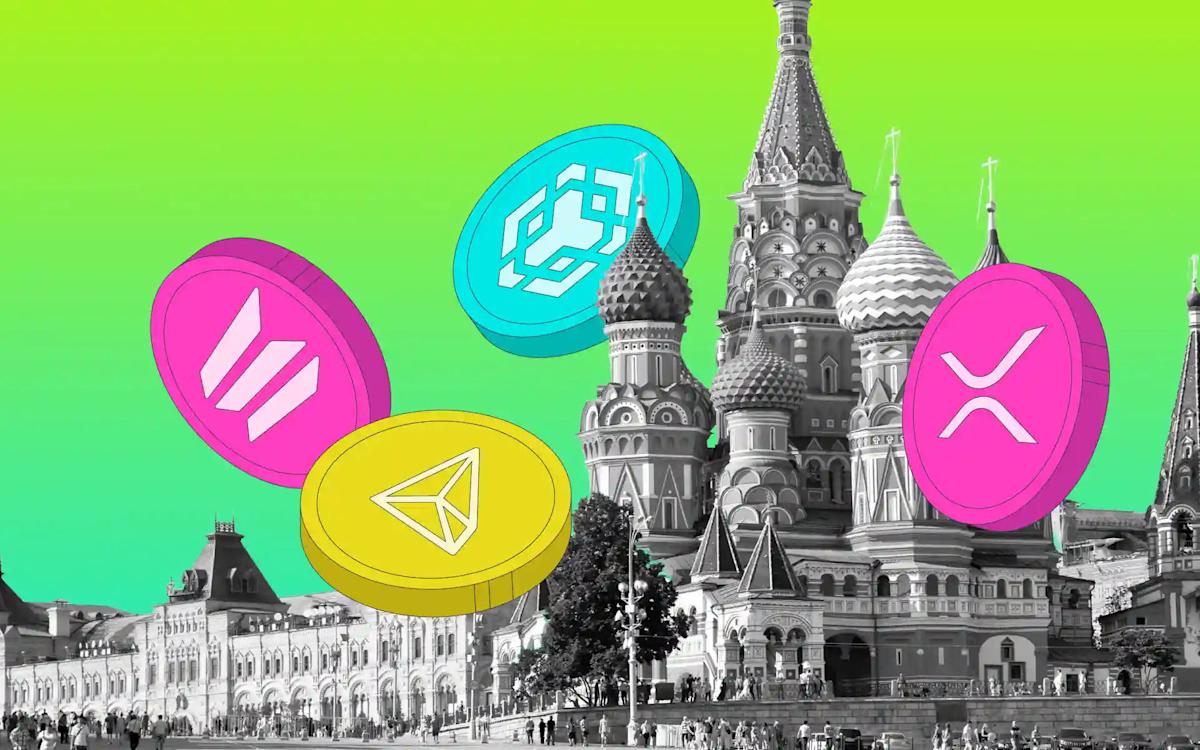
The launch marks a notable expansion of regulated crypto exposure in Russia’s financial system, even as authorities tighten control over how individuals hold and move digital assets.
New Altcoin Benchmarks on MOEX
The new benchmarks—MOEXSOL, MOEXXRP, MOEXTRX, and MOEXBNB—will provide standardized price tracking for some of the market’s largest altcoins.
For institutional participants, that means clearer visibility into performance and a foundation for potential financial products tied to these assets.
MOEX already operates Bitcoin (MOEXBTC) and Ethereum (MOEXETH) indexes.
Expanding into additional tokens signals a shift from a limited pilot phase to a broader crypto benchmarking strategy.
Russian exchange adds multiple crypto indices. Credit: WuBlockchain on X.
This approach is designed to reflect deeper liquidity and reduce the risk of distorted pricing from thinner markets.
At the same time, MOEX is increasing the update frequency of its existing Bitcoin and Ethereum indexes, refreshing them every 15 seconds during trading hours.
The exchange has indicated plans to expand its crypto index suite further, potentially reaching up to 10 benchmarks over time.
For now, any financial products linked to these indexes will be restricted to professional investors, reinforcing a controlled rollout.
Why This Matters
MOEX’s involvement carries weight.
As Russia’s primary exchange for equities, bonds, and derivatives, its entry into broader crypto indexing brings digital assets closer to the core of the country’s regulated financial infrastructure.
For investors, these indexes offer a clearer and more structured way to track crypto markets within a domestic framework.
It also reflects a practical workaround in a constrained global environment.
By relying on international price feeds while hosting the indexes domestically, Russia can build its own crypto market infrastructure without depending entirely on foreign platforms.
While MOEX expands access on the institutional side, regulators are tightening oversight elsewhere.
Authorities are increasingly focused on how individuals hold and transfer crypto, with growing scrutiny around self-custody.
Proposals under discussion include stricter identity verification requirements and limits on transferring assets from domestic custodial platforms to external, non-custodial wallets.
This does not amount to a full ban on self-custody, but it signals a clear direction.
New legislative proposals suggest that transactions conducted outside approved intermediaries could face restrictions or penalties.
Domestic crypto payments also remain restricted, reinforcing a model where activity flows through licensed exchanges and custodians.
Supporters argue these measures strengthen oversight and reduce financial crime risks.
Critics, however, warn that tighter controls could limit user autonomy and push activity toward less transparent channels.
Russia’s Crypto Journey: Steady Progress Under Control
Russia’s broader crypto policy is evolving quickly.
After years of regulatory hesitation, the country is moving toward a more structured framework.
Legislation passed its first reading in April 2026, with key provisions expected to take effect from July 1.
Under the proposed rules, individuals will be able to buy and sell crypto through licensed brokers, exchanges, and trustees.
Retail investors are expected to face annual investment caps, while reporting requirements will apply across the board.
At the same time, crypto mining is already legal, and digital assets are set to play a role in foreign trade settlements—an area where policymakers see practical benefits.
Foreign exchanges may face increasing restrictions, which could shift activity toward domestic platforms.
Meanwhile, the digital ruble pilot continues to expand as part of the country’s broader financial strategy.
A Dual Approach: Expansion With Oversight
The launch of new crypto indexes by MOEX fits into a larger pattern.
On the one hand, Russia is building tools that integrate crypto into its formal financial system, offering institutional investors more structured access.
On the other hand, it is tightening control over how individuals interact with crypto.
With new benchmarks launching, stricter rules on the horizon, and a key regulatory deadline approaching in July, Russia is shaping a distinct path in the global crypto landscape—one defined by gradual adoption, but firmly controlled conditions.