
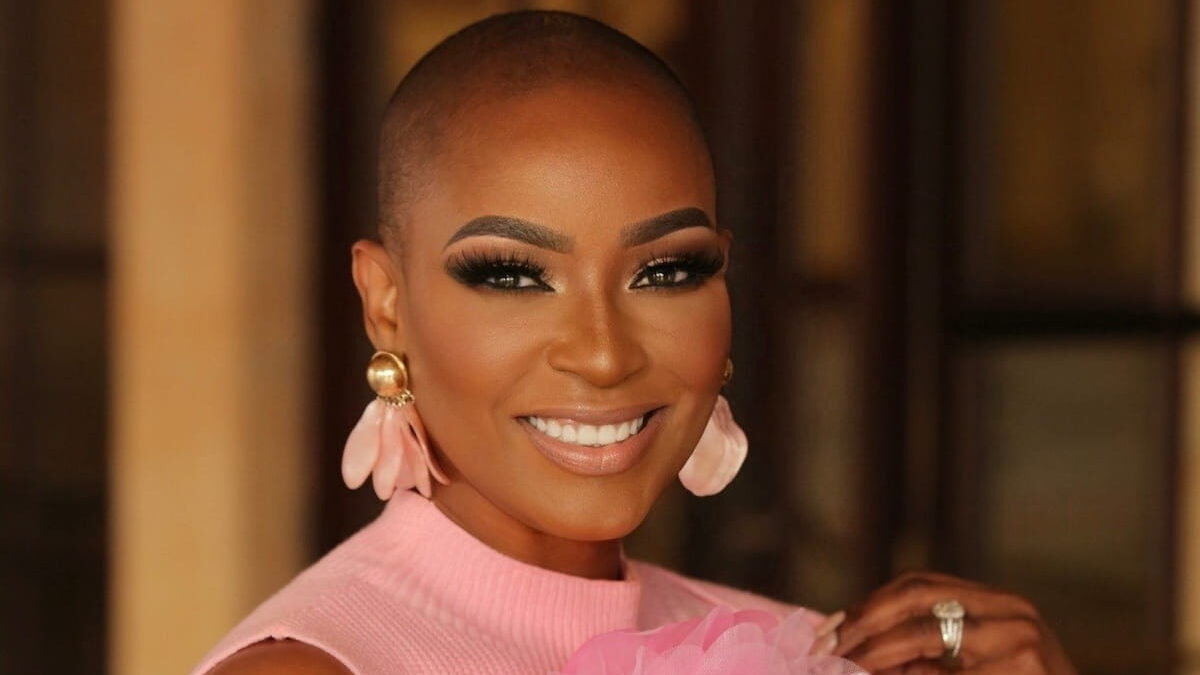
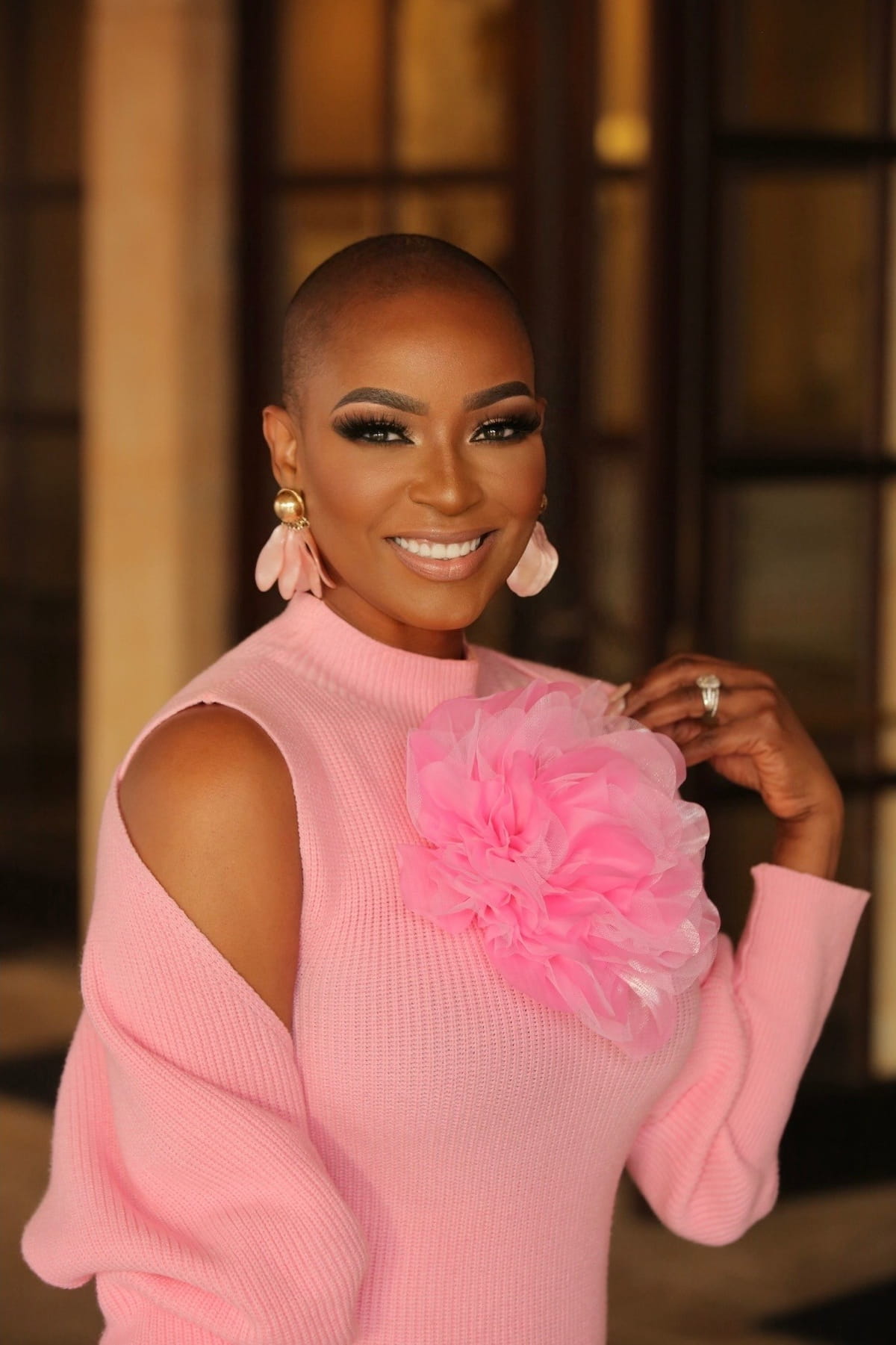
March 2023 marked a pivotal turn for renowned event designer and “The Real Housewives of Miami” star Guerdy Abraira. The 48-year-old will never forget the moment she heard the words: “You have breast cancer.”
“It was quite memorable,” Abraira tells BlackDoctor.
She was on a trip in St. Barth’s when she got the phone call no one wants to receive after going in for a routine mammogram. “I always went to get my mammograms, and this time when I got the phone call, I knew that something was wrong,” she shares. “I heard the words, ‘Just sit down, it’s going to be okay, but you do have a tumor.’”
Understandably, the diagnosis was confusing and shocking. “You just feel like you’re in despair … It was definitely a moment I’ll never forget, but we got through it eventually,” Abraira adds.
A Complex Diagnosis
Abraira’s initial diagnosis was non-invasive Stage 0 Ductal carcinoma in situ (DCIS). According to the Breast Cancer Research Foundation, this is the earliest stage of breast cancer that starts in the cells lining the milk ducts (carcinoma) and remains in the area where it originates (in situ).
Because the cancer was caught so early, her doctor originally assured her she would be fine and outlined a straightforward initial treatment plan. She was told she would likely only need a lumpectomy—the surgical removal of the tumor itself—rather than a full mastectomy.
However, her treatment plan quickly changed. “Once they did an MRI, it ended up being a secondary tumor, which was invasive, and then that one was Stage 1B cancer, which was hormone receptor-positive,” she says.
For Abraira, hearing that she needed chemotherapy was difficult.
“I never wanted to hear a second ‘C-word.’ The second C-word being chemo. I already heard cancer, I did not want to hear chemo,” she shares. “But then once you look at the mathematics of it all, saying, ‘This is what it’s going to help to bring it down to a low percentage of …. it coming back in a different part of my body,’ chemo was then at play for me.”
RELATED: I’ve Survived Cancer Six Times — Here’s How I Turned My Pain Into Purpose
Trusting the Science and Finding Clarity
Now, Abraira is partnering with Abbott, the makers of the Oncotype DX Breast Recurrence Score® test, during Women’s Health Month. “It was honestly a no-brainer for me, because I did use it through my treatment organically,” she shares. Through the partnership, she hopes to help other women better understand their treatment options.
The Oncotype DX test is a personalized test performed on tumor tissue to help HR-positive and HER2-negative breast cancer patients understand how likely cancer will return somewhere else in their body, and if they might benefit from chemotherapy. The test score ranges from 0 to 100. For anyone who scores above 25, Abraira says the test can offer clarity and a plan for what your options are for reducing the risk of the cancer returning in a different part of your body.
The test offers easy-to-digest results, such as “If you do this, the chances of recurrence will be this. If you do this treatment, the chances will be …” This gives patients a chance to discuss these results with their doctor and develop a personalized treatment plan.
“I ended up scoring 29, which is above the threshold. So I ended up … having to do chemotherapy as well as radiation. That was something that was really shocking to me, but I’m thankful for the Oncotype DX test, because if it wasn’t for that, we would have skipped this step potentially of my treatment plan,” Abraira explains. “I’m just very thankful that we got it as low as possible for recurrence.”
“I was very lucky that my doctors wanted to do the test, and they’re the ones who brought it up to me. I had no idea about the test,” Abraira notes.
She encourages other women to make sure they ask for this test, especially those with invasive forms of HR-positive and HER2-negative breast cancer.
Questions to Ask Your Care Team
To help you get the conversation started with your doctors, here are key questions to ask:
- What type of breast cancer do I have?
- What is the stage of my cancer?
- What are the chances that my cancer will come back?
- What are my treatment options?
- Will I need chemotherapy?
- How will we know that the benefits of chemotherapy outweigh the risks?
- Am I a candidate for the Oncotype DX Breast Recurrence Score® test?
- When can I expect my test results?
- How do I get a copy of the pathology report and other test results?
Breaking Cultural Stigmas
The test is also available for people of diverse backgrounds, something that was very important for Abraira.
“I’m from Haiti—my culture is that we base our answer on prayer. It’s like, ‘Oh God, God will do something.’ But there’s science as well, and God created science, and you have to trust the science as well,” she says. “So I like to really get into this cultural community mindset and try to shift it, because my parents would probably be the same way a long time ago and say, ‘Oh no … We’re going to pray.’”
She highlights her father, who is a pastor, but also relied on science to help him treat his prostate cancer. “I’m just so glad he did that in his life to stay here with us today,” she shares.
A Warrior Spirit and a Full Circle Life
Abraira also shared her journey with breast cancer on “The Real Housewives of Miami”, an experience she calls therapeutic.
“It was kind of a purging of the trauma because I felt like I had to face it. So it really was helpful for me and also for the diverse viewers that watch the show,” she says. “Because again there’s a lot of communities—they think that if you have cancer it’s a stigma, go hide, you have the plague. And I wanted to say, ‘No, I know my life was perfect before, but I stand in front of you now with cancer, and I am still standing, and I’m going to continue to stand, God willing, if I use the tools to help me see what is the best option for me to help save my health.’”
The journey sparked a conqueror, warrior spirit in her. Today, she lives a completely different life from the one she did before.
“Before, I had my five-year plan; I knew exactly where I was going to be,” she explains. “And then cancer knocked on my door and said … sit down, let’s have a talk here. So I had to kind of shake this entire perfectionism type of state of mind that I had, and I’m better for it.”
This shift in perspective also changed how she viewed her physical appearance, leading her to embrace a completely new look.
“Now, I still keep my hair shaved because I didn’t even know I had a good head …. it just helped me stay humble. Every Sunday when I shave my hair, it’s just like it’s become a ritual now for me to look at myself and say, ‘This is you, and you don’t need a wig and you don’t need all these things that I thought I needed before.’ And it just stripped me from this facade that I thought I needed to represent in order to be perfect. I still have the husband, thank goodness, I still have my kids, and I still have my health.”
Beyond television, she has also channeled her story into a beautiful new book titled, “From Trauma to Trophies: The Unforeseen Events That Redefined Me”.
“It was a way for me to also memorialize my entire journey. Not just the cancer part; it starts from the beginning as me as a child. So, you know, getting cancer, having some traumatic experiences surrounding that really told me, ‘This is the moment to put it all on paper.’ So the book is really beautiful, of course, and so it talks about my journey from the beginning, pre-cancer, and then cancer, and then post-cancer as well,” she explains.
It’s a full circle moment for Abraira, who is still eagerly embracing her creative side—even though she is no longer doing full-blown, on-site party planning, she continues to consult and create.