
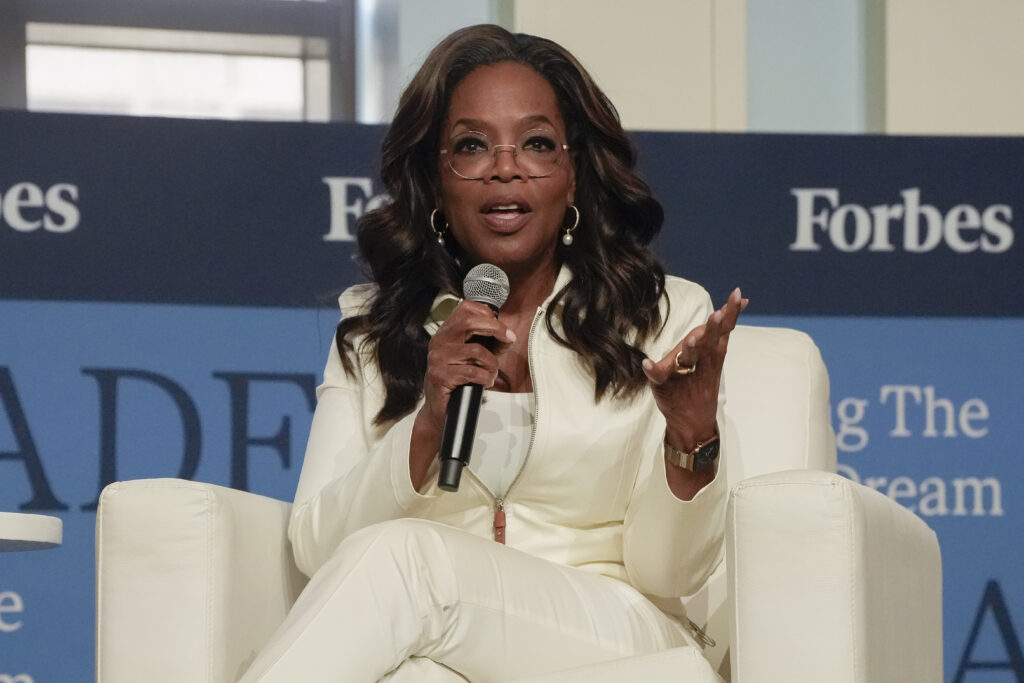
Rodney Williams speaks onstage at the Global Black Economic Forum during the 2026 ESSENCE Festival of Culture (Photo by Arturo Holmes/Getty Images for ESSENCE), Lonnie Johnson, inventor of Super Soaker a large plastic pump-action water gun which he is holding outside his home. (Photo by Thomas S. England/Getty Images), Oprah Winfrey speaks during the Forbes Self-Made 250 Celebration at the Museum of the American Revolution (Photo by Astrida Valigorsky/Getty Images)
Historically Black Colleges and Universities (HBCUs) have always been about more than getting a degree. They’re places where Black students find community, build confidence, and, sometimes, meet the people who become their future business partners. And during this Black Business Month, we’re looking at some of those graduates who have taken that foundation far beyond campus.
Whether it was biotech or beauty, entertainment or finance, these entrepreneurs saw a problem, had an idea and decided to build something of their own. Some became household names. Others are still growing their empires. But they all show what can happen when HBCU excellence meets entrepreneurship–and why Black business ownership continues to matter.
Oprah Winfrey, Tennessee State University

Oprah Winfrey’s journey from Tennessee State University to global media powerhouse is one of the most recognizable HBCU success stories. She built far more than a television career, eventually creating OWN, the Oprah Winfrey Network, while expanding into production, publishing, philanthropy and entertainment. Oprah’s story is especially powerful because she left TSU before graduating, then returned in 1986 to complete her degree, according to the Tennessee State University Newsroom. The lesson? Sometimes the path takes longer than expected, but unfinished business can still become legacy.
RELATED: Why Atlanta Could Lose a Major Black Business Festival
Jewel Burks Solomon, Howard University

Howard University graduate Jewel Burks Solomon saw a problem while working at an industrial-parts company: customers often knew what a part looked like but had no idea what it was called. So she thought, why not just take a picture of it? That idea became Partpic, a computer-vision company that helped people find the right replacement parts, according to her website. Amazon acquired the company in 2016. Today, the Howard University graduate is helping other Black founders through Collab Capital.
Navarr Grevious and Mikáel Pyles, Clark Atlanta University
Navarr Grevious and Mikáel Pyles met at Clark Atlanta University. The fraternity brothers eventually became business partners in 2011, when they realized they had both been thinking about the same thing: making it as easy to order alcohol as it is to order takeout, Voyage MIA reported. They spent years developing the idea before launching QuickLiq, partnering with local liquor stores to bring wine, beer and spirits straight to customers.
Will Packer, FAMU

Will Packer didn’t wait for Hollywood to create opportunities for Black audiences. At Florida A&M University, he began developing his filmmaking ambitions and eventually partnered with Rob Hardy to create Rainforest Films, according to his website. Their early independent projects helped establish a production company that went on to produce major hits including “Think Like a Man,” “Ride Along” and “Girls Trip.” Packer has produced films generating more than $1 billion worldwide. His blueprint: build the audience you believe deserves to be seen.
Jen Nwankwo, Claflin University

Claflin University graduate Dr. Jen Nwankwo is bringing HBCU excellence into one of the world’s most technically demanding fields: biotechnology. She founded 1910 Genetics to use artificial intelligence, computation and biological automation to accelerate drug discovery, Molecule to Market reported. The company’s goal is to develop medicines more efficiently.
Melissa Butler, FAMU

Melissa Butler wasn’t planning to leave Wall Street for the beauty industry. But after finding herself frustrated with the limited availability of products for people of color, she decided to make something different. The Florida A&M University graduate started mixing vegan lipstick in her kitchen while working in finance, according to the university. That side project became The Lip Bar – and even a tough rejection on “Shark Tank” couldn’t stop her. Today, the brand is sold nationwide, proving that sometimes rejection is just fuel to keep going.
Janice Bryant Howroyd, NCAT

Janice Bryant Howroyd started ActOne in 1978 with a few hundred dollars and a loan from her mother. The North Carolina A&T State University graduate transformed that small staffing operation into a global workforce-solutions company, according to Forbes. ActOne grew into a multibillion-dollar enterprise serving clients across industries and countries. Howroyd’s achievement is bigger than the numbers: she became the first African American woman to build and own a billion-dollar company.
Chris Latimer, Howard University

Before HBCU-inspired apparel became a mainstream cultural lane, Howard University graduate Chris Latimer was already building it. In 1991, he founded African American College Alliance, creating clothing that placed HBCU names and logos directly into popular culture, Crain’s New York Business reported. Celebrities including Will Smith, Snoop Dogg, Queen Latifah and Mary J. Blige helped amplify the brand. Latimer understood something important: representation doesn’t have to just live in classrooms or history books. Sometimes you wear your institution – and its legacy – right on your chest.
Kamilah Mitchell, Tennessee State University
Tennessee State University graduate Kamilah Mitchell founded With Meaning, then expanded her entrepreneurial vision through Teas With Meaning, according to the website. What began as a personal exploration of wellness grew into a product company offering organic loose-leaf teas and tea-infused goods. Mitchell also built collaborations with other women and Black-owned businesses, turning her company into part of a broader entrepreneurial ecosystem.
Ryan Glover, Howard University

Howard University graduate Ryan Glover has built businesses across media, entertainment and finance. He founded Bounce TV, the first African American nationwide broadcast television network, which was eventually acquired by Scripps for more than $300 million, Voyage ATL reported. He later co-founded Greenwood, a digital banking platform designed to serve Black and Latino consumers and businesses. Glover’s career reflects a bigger entrepreneurial theme: build institutions that understand the communities mainstream companies often overlook, and create businesses that can turn cultural insight into economic power.
Jacquelyn Rodgers, Clark Atlanta University
Jacquelyn Rodgers, a Clark Atlanta University graduate, founded Greentop Gifts after struggling to find holiday wrapping paper featuring a Black Santa for her son, she told the Eleyae Systems podcast. Instead of accepting the lack of representation, she created her own solution. The company grew into a family-run brand offering multicultural holiday décor, gifts and apparel, including its signature Clarence Claus character. Greentop Gifts later earned recognition from Google’s Black Founders Fund and expanded into major retail channels.
Lonnie Johnson, Tuskegee University

Tuskegee University graduate Dr. Lonnie Johnson turned curiosity into one of the world’s most recognizable inventions. The engineer and former NASA and Air Force researcher invented the Super Soaker, which became a blockbuster toy and generated more than $1 billion in lifetime sales, according to his website. But Johnson’s entrepreneurial story doesn’t end with a water gun. Through Johnson Research & Development and related ventures, he has continued to work on batteries, energy technology and sustainable power.
Farah Allen, FAMU
Farah Allen has always been a creative problem-solver. After graduating from Florida A&M University and building a career in technology, she decided to create something of her own, the Ewing Marion Kauffman Foundation reported. That became The Labz, a platform that helps businesses and creatives build interactive digital experiences without having to be a tech expert. What started with a focus on protecting music creators’ work eventually grew into a much bigger vision. Allen’s story is a reminder that sometimes you don’t wait for an opportunity – you build it yourself.
Rodney Williams, Howard University

Rodney Williams has built his career around one simple idea: find a problem and develop a better way to solve it. After earning degrees from West Virginia University and an MBA from Howard University, he went on to co-found LISNR, a technology company that uses sound to transmit data, WVU Business reported. He later co-founded SoLo Funds, a community-finance platform designed to make access to capital more accessible. Williams’ journey shows how one idea can lead to the next – and how an HBCU education can help turn those ideas into businesses.
Straight From 
Sign up for our free daily newsletter.