After A $1.25B Exit, Birmingham, AL, Founder Shegun Otulana Is Turning Industry Problems Into Portfolio Companies At Harmony Venture Labs – AfroTech

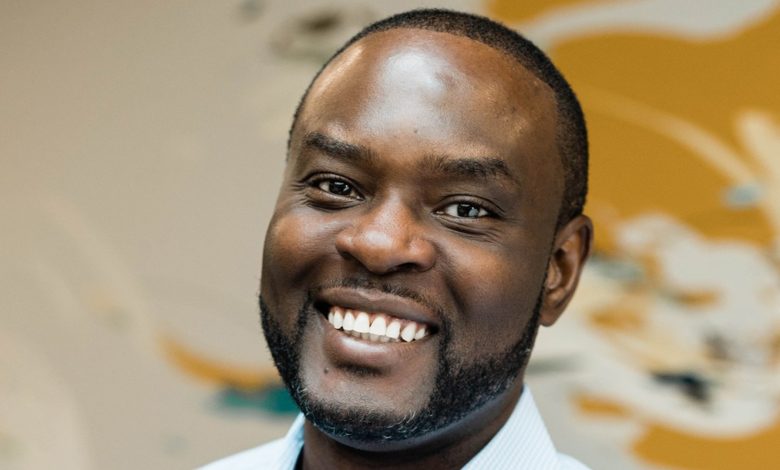
When entrepreneur Shegun Otulana moved to Birmingham, AL, he decided to stay and invest in the city.
Otulana was raised with the belief that he could make an impact. He was also raised by a mother who made an affirmative decision to no longer accept suffering, he shared in an interview with AFROTECH™. Both of his parents were raised in poverty and went on to build businesses in Nigeria. His mother started selling firewood, opened a small grocery shop, later built apartments and a bakery that she rented out, and eventually became an independent gas station owner, with his father working alongside her.
“I was seeing all this growing up. I was there when she was building the gas station. I worked on that gas station. I carried blocks and concrete and sand as a little kid … The businesses are still there, still going,” he told AFROTECH™ during Sloss Tech 2026 in June.
His parents’ sacrifices helped him and his siblings study abroad. Otulana moved to the U.S. to attend the University of Alabama at Birmingham, where he earned a bachelor’s degree in management and information systems in 2003. He stayed in Birmingham after landing his first job through relationships he had built, eventually finding a trusted community and his life partner.
As Birmingham became home, Otulana felt a responsibility to invest in the city.
“I think the other thing I just came to believe, partly driven by my story, is that the places that nobody’s paying attention, the unseen places, the places where nobody’s focusing, sometimes just have the best opportunities,” he shared with AFROTECH™.
Therapy Brands
In 2013, after working at companies in roles such as IT manager and senior systems administrator, Otulana founded TheraNest, a practice management software used by mental and behavioral health providers. The venture scaled into a national platform, Therapy Brands, reaching clinicians nationwide, according to information shared with AFROTECH™.
The venture was a success, as evidenced by its historic $1.25 billion exit in 2021. The sale made history as one of the largest software deals in the Southeast and the largest in Alabama at the time, per information shared with AFROTECH™.
Despite its eventual success, the journey required patience, particularly when raising venture capital.
“It did take 9, 10 months to raise the first dollar, and we raised $250,000. I wish it was a million. So what we raised was $250,000, and that was all we raised to really make the company grow and be very, very profitable,” Otulana recalled. “It was very hard to raise. Everybody said no, but a few people said yes, and that was all the company needed to find success.”
Harmony Venture Labs
After his exit, he turned his attention to Harmony Venture Labs (HVL), an AI-forward venture studio that identifies “high-potential opportunities” and co-builds and co-invests in innovative B2B software companies, including ListedKit.ai, to help them scale.
Founders aren’t required to live in Birmingham to receive support from HVL, but most portfolio companies are headquartered in the city, he noted.
HVL serves as a home for concentrated talent, energy and capital, creating a “nucleus” for building companies and attracting deal flow. The venture studio’s model was designed to address challenges in emerging ecosystems such as Birmingham, where entrepreneurs may not have the same access to talent density or capital networks as those in larger cities.
“I also wanted it to be this place that you could now use as a place to train other entrepreneurs to go build things,” Otulana said. “So HVL for me is this vehicle that’s in my playground to create and build things, a playground to help other founders build things, and a place that is a source of creating new and interesting companies with the talent that we can bring into the studio to help those companies be successful, and kind of aggregate all of that into one place with a ton of energy and then build out from there.”
HVL also partners with corporations and institutions to identify industry problems that could become startups, and then he works with internal or external founders to lead those new ventures.
“Sometimes it’s people on the team that become CEOs, sometimes it’s external founders, to go lead those companies because they also believe in those things,” he said.
The goal for HVL over the next 10 to 20 years will be to seed the city and the South with dozens of thriving startups, Otulana noted.
Beyond its own fund, HVL has partnered with Innovate Alabama on the $10 million Innovate Alabama Venture Studio and Fund, which takes inspiration from HVL’s website tagline, “Turning Problems Into Portfolio Companies” but with a focus on Alabama-based companies.
Companies emerging from the fund include PackPay. It is a startup that helps consumer packaged goods brands recover revenue lost to retailer deductions, according to Jeremy Carter, founder-in-residence, on LinkedIn. Additionally, DealTree, an AI-powered sourcing platform for lower-middle-market dealmakers, and SupplyFlo, an AI ordering assistant for dental practices, are on the HVL website.
“In Birmingham, we are all coming together … and trying to move the place forward, white, Black, it doesn’t matter what it is … We do a lot of things here to just recognize the history so it doesn’t repeat. But as a community, we want to build the future,” Otulana commented.

Cynthia Crutchfield, CEO of Innovate Alabama, told AFROTECH™:
“Innovate Alabama is focused on ensuring entrepreneurs have access to the talent, capital and connections they need to thrive. In Birmingham, leaders like Shegun Otulana are a clear example of what that support can unlock. Our role is to help create the conditions for companies to grow and stay in Alabama, no matter where they are building within the state.”