

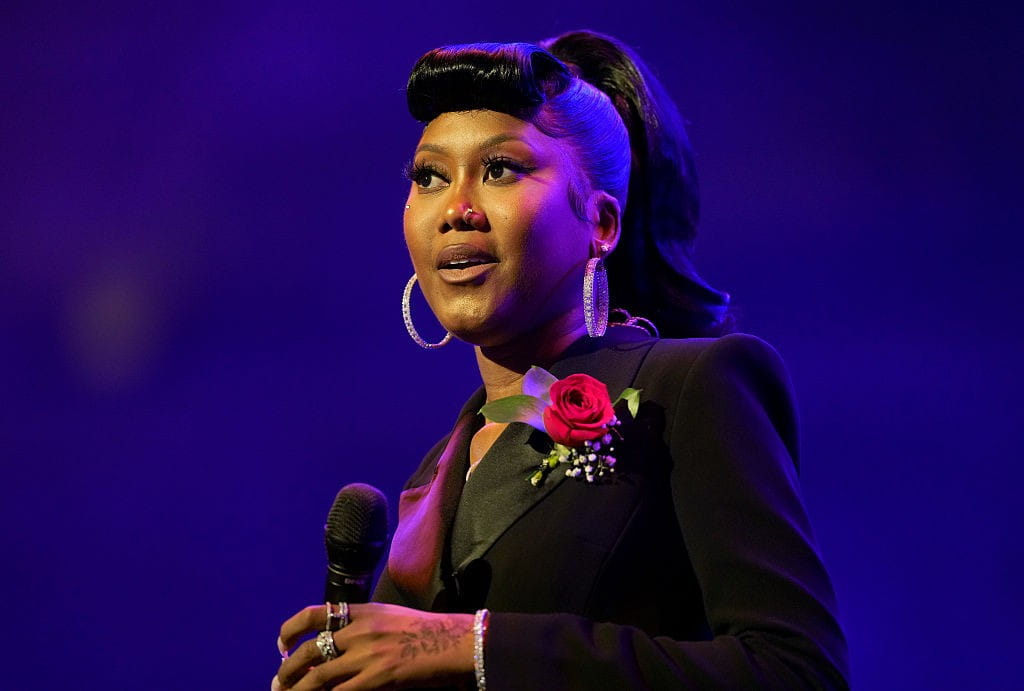
Grammy-winning singer-songwriter Muni Long is sharing details of a health battle that nearly claimed her life. The “Made for Me” and “Hrs & Hrs” singer, 37, recently revealed that she underwent a double lung transplant after doctors informed her she had only one week to live without the procedure.
Long, who was diagnosed with Lupus in 2014, said she spent much of 2025 trying to push through worsening symptoms while opening for Brandy and Monica on their “The Boy Is Mine” tour. What initially seemed like fatigue and illness eventually progressed to pneumonia, severe breathing difficulties, and an inability to perform. During one of her final appearances, she was only able to complete two songs before leaving the stage.
“I was really faced with my mortality,” she told Robin Roberts. “Midway through [the tour] … I got really sick. I got pneumonia, and I had to step away for a few dates.”
Long said she initially felt compelled to return to the tour, but her condition continued to worsen.
“I’ve got to go back,” she recalled thinking. But after performing several more shows, “I couldn’t even get out of the bed to make my call time for the stage.”
During her final performance before announcing her exit, Long said she was “only able to do two songs” before deciding to take a break.
After returning home around Thanksgiving, Long woke up in the hospital surrounded by specialists who delivered devastating news: without an immediate transplant, she likely had only days to live. Doctors gave her a difficult choice — hospice care or a double lung transplant. She chose surgery, motivated largely by the desire to continue being present for her young son and family.
Today, approximately six months after surgery, Long says she is symptom-free, infection-free, and recovering well. While she continues to monitor changes to her singing voice following both lung and vocal surgery, she says her voice may actually be stronger than before.
The Connection Between Lupus and Your Lungs
Many people think of lupus as a disease that primarily affects the joints or skin, but the autoimmune disorder can impact almost every organ in the body — including the lungs. In lupus, the immune system mistakenly attacks healthy tissue, causing inflammation and damage.
Lung complications associated with lupus can include:
- Pleuritis (pleurisy): inflammation of the lining around the lungs that causes sharp chest pain while breathing.
- Interstitial lung disease: scarring and inflammation of lung tissue that makes it difficult for oxygen to move into the bloodstream.
- Pulmonary hypertension: dangerously high blood pressure in the arteries of the lungs.
- Lupus pneumonitis: inflammation of the lungs that can mimic pneumonia.
- Blood clots in the lungs: lupus increases the risk of abnormal clotting.
- Repeated infections such as pneumonia: especially in people taking immune-suppressing medications.
Symptoms that should never be ignored include:
- Shortness of breath
- Persistent cough
- Chest pain
- Wheezing
- Extreme fatigue
- Difficulty exercising or climbing stairs
- Frequent respiratory infections
For some patients, progressive lung damage can become severe enough that a transplant becomes the only option for survival.
What Happens During a Double Lung Transplant?
A double lung transplant is a complex surgery in which both diseased lungs are removed and replaced with healthy donor lungs.
During the operation:
- The patient is placed under general anesthesia.
- Surgeons remove one damaged lung and connect the donor lung to the patient’s airways and blood vessels.
- The process is repeated on the second side.
- The surgery often lasts between 6 and 12 hours, depending on complexity.
- Many patients require temporary support from a heart-lung bypass machine while the new lungs begin functioning.
Once surgery is complete, patients are transferred to the intensive care unit where doctors closely monitor breathing, oxygen levels, circulation, and signs of organ rejection.
Recovery After a Lung Transplant
Recovery from a lung transplant is lengthy and requires lifelong medical care.
Typical recovery milestones include:
- 1 to 3 weeks in the hospital following surgery.
- Several months of pulmonary rehabilitation to rebuild strength and lung function.
- Three to six months before many patients resume light daily activities.
- Six months to one year before returning to strenuous work or athletic activity, depending on overall health and complications.
Patients must also take immunosuppressive medications for the rest of their lives to prevent the body from rejecting the new lungs. These medications can increase the risk of infections, making regular follow-up appointments essential.
For performers like Muni Long, recovery can take even longer because singing places unique demands on breathing muscles, lung capacity, and vocal endurance.
A Powerful Reminder About Health
Long says her experience changed her perspective on life and health. Her message is simple: success, careers, and obligations mean very little if your health is failing.
For the nearly 1.5 million Americans living with lupus — a disease that disproportionately affects Black women — her story serves as a reminder to pay attention to symptoms, advocate for medical care, and prioritize health before a crisis occurs.