
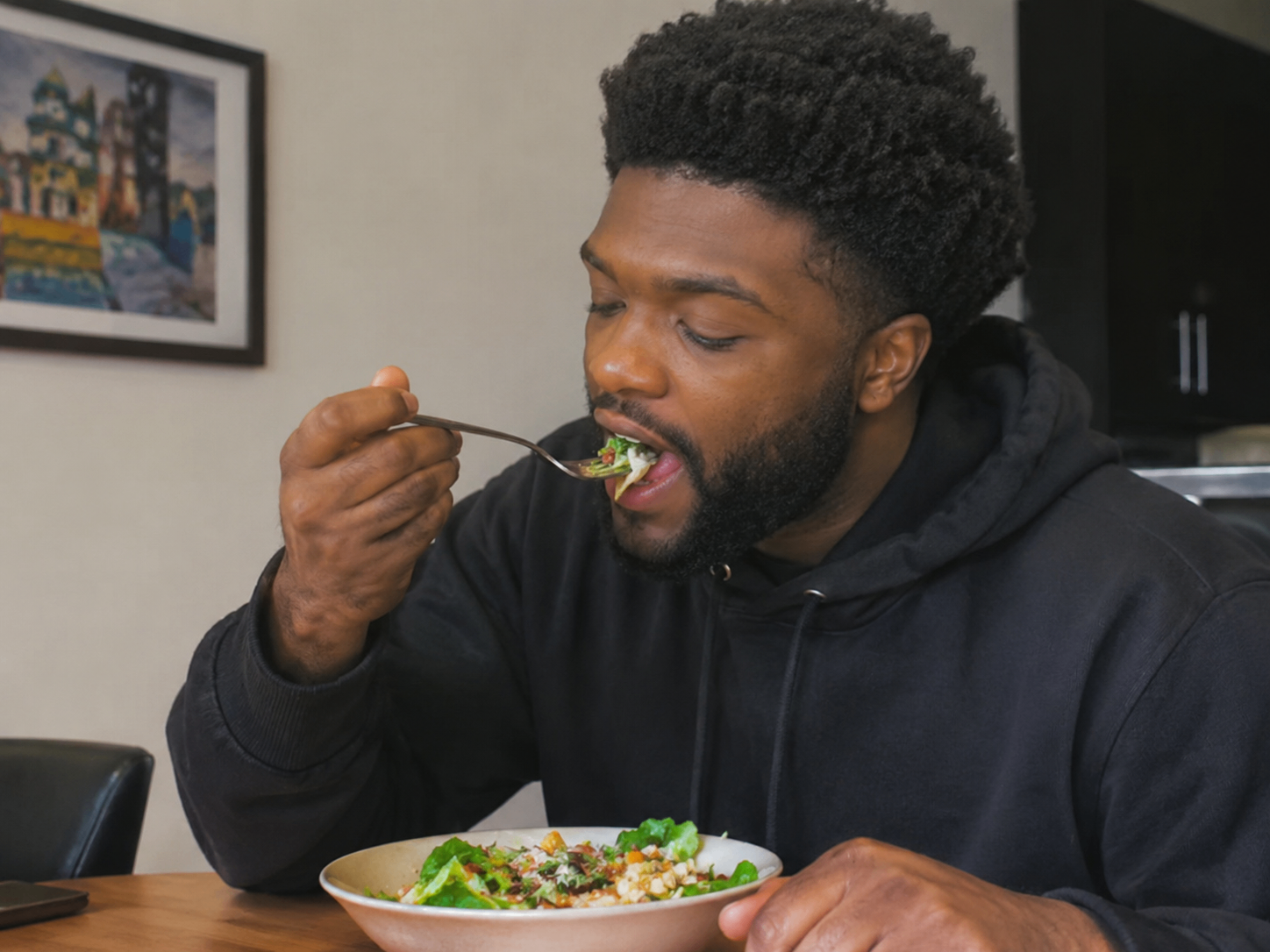
For some Black men, the idea of “going on a diet” may bring to mind restriction, sacrifice and giving up the foods they enjoy. And when healthy eating is framed as something that requires constant willpower, it can be easy to feel like one setback means starting over.
A panel of U.K. men who were overweight or obese said diets are simply too restrictive to stick with, researchers reported Aug. 26 in the journal PLOS One.
While the study did not specifically focus on Black men, its findings raise an important question about how healthy eating and weight loss are discussed with men—including Black men, who face significant health risks associated with conditions such as heart disease, diabetes and obesity.
That doesn’t mean healthy eating has to involve an extreme diet or eliminating favorite foods. For Black men looking to take steps toward better health, small changes—such as adding more vegetables to meals, finding enjoyable ways to stay active and building a support system—can be a practical place to start.
Here’s what the research found about how men approach weight loss, along with simple nutrition strategies that can help make healthier eating feel less restrictive and more sustainable.
RELATED: The Real On Dieting, Carbs & Sugars
Some Men See Dieting as “Something Women Do”
Diets deny people the food they enjoy and require too much sacrifice, the men said.
“I think diet is a very negative word because as soon as you mention the word diet everybody automatically thinks restriction, restriction, restriction,” one participant complained.
“Temptation is normally the thing that breaks you,” another said.
Men also were more likely to reject a diet if it was seen as too female-focused and viewed dieting as something that women do, researchers found.
“I feel women pay more attention to their body, the size of their body, the shape of their body compared to men,” one participant said.
For the new study, researchers interviewed 24 men ages 30 and older who had excess weight. All participants had previously participated in a weight-loss program or were planning to lose weight in the near future.
Willpower and Setbacks Can Make Weight Loss Feel Hard
“Obesity is a major public health issue, so we wanted to evaluate adult male perceptions and experiences of weight-loss initiatives and also understand the support mechanisms used by men when targeting weight loss,” said researcher Justin Roberts, a professor of nutritional physiology at Anglia Ruskin University in the U.K.
Men tended to view dieting as something that requires tremendous effort and willpower.
“There has to be that willpower,” one man said. “As soon as I start to fail, I just give up mentally and then it all falls apart, and then a year later I try again, and it’s just a cycle.”
“Even the slightest setback can bring the whole thing crashing down,” said another.
RELATED: 3 Diet Hacks When You Can’t Commit To Dieting
Competition and Quick Wins May Help
Framing weight loss programs as a competition seemed to help, researchers added.
“We found that for weight-loss programs to appeal to men, they should involve quick-wins, early rewards and a degree of social competitiveness around aesthetic gains, ahead of health-specific requirements,” Roberts said in a news release. “This could involve sport or physical challenges, perhaps focused on strength or stamina.”

Support From Partners Can Make a Difference
Results also showed that men saw their wives or partners as providing important support in their efforts to lose weight.
“My wife structures our meal plan, but she does like 10 days shopping in a row. And she’ll say to me, what do you want to eat on those days?” one man said.
“The snacks she buys me are apples rather than chocolates and stuff like that,” another said. “That’s half the battle.”’
Focus on Adding More Vegetables
Healthy eating doesn’t have to mean simply cutting foods out. Adding more vegetables to your meals can help provide dietary fiber, vitamins, minerals and phytonutrients that support overall health and may help reduce the risk of chronic conditions such as heart disease, diabetes and some cancers.
According to the Academy of Nutrition and Dietetics, you should aim for variety by including dark green, red and orange, starchy vegetables, and beans and peas throughout the week. Adult men should generally aim for about 2½ to 4 cups of vegetables each day, although individual needs can vary.
How you prepare your vegetables matters, too. To help preserve nutrients, wash produce well, leave edible skins on when appropriate and choose cooking methods such as steaming, microwaving, stir-frying or roasting instead of boiling for long periods. Red bell peppers and broccoli, for example, are particularly good sources of vitamin C.
Most importantly, think of vegetables as something to add—not another food you have to give up. Toss spinach into a salad, add roasted vegetables to a sandwich or burger, or pair broccoli and beans with a favorite meal. Small additions can make healthy eating feel more manageable and less restrictive.
How We Talk About Weight Loss Matters
How dieting was discussed also seemed to affect the men, researchers found.
“Terminology should avoid ‘diets’ and ‘dieting’ and instead frame weight loss as a positive personal challenge,” Roberts said. “Our findings also suggest that initiatives aimed at couples could be particularly effective. The support of spouses was found to be especially helpful, while participants also found having a ‘buddy’ or mentor was also beneficial.”
The researchers noted that more investigation is needed involving larger and more diverse groups of men.
Healthy Eating Doesn’t Have to Feel Like a Diet
If you have struggled with the all-or-nothing mindset that often comes with dieting, making healthier choices doesn’t have to mean giving up the foods you enjoy or relying on willpower alone. Small, sustainable changes—such as adding more vegetables to meals, experimenting with different foods and finding enjoyable ways to stay active—can be a more approachable way to support overall health.
The research also highlights the importance of having the right support system. Whether it’s a spouse, friend, workout partner or mentor, having someone in your corner can make healthy changes feel less like a solo challenge.
And remember, eating well isn’t about having a perfect day of meals. It’s about the choices you make consistently over time. So instead of asking, “What do I need to cut out?” try asking, “What can I add to my plate today?” A few more vegetables, a new healthy recipe or a favorite activity can be a simple place to start.