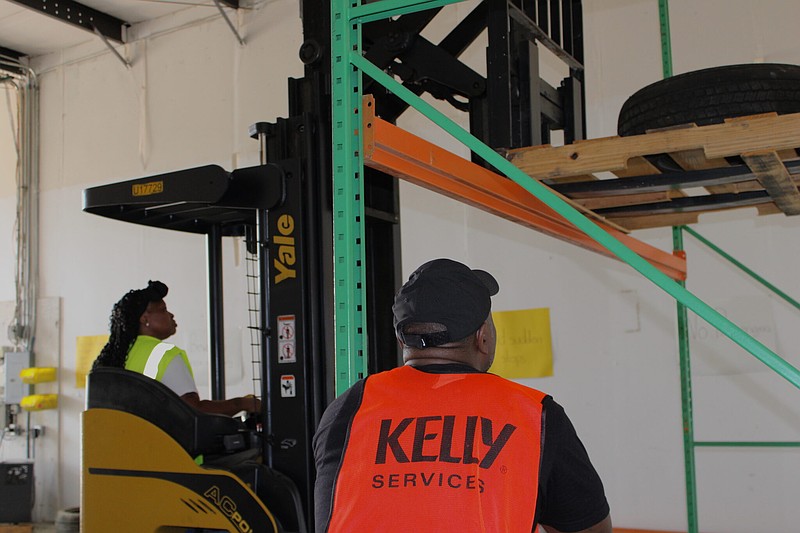
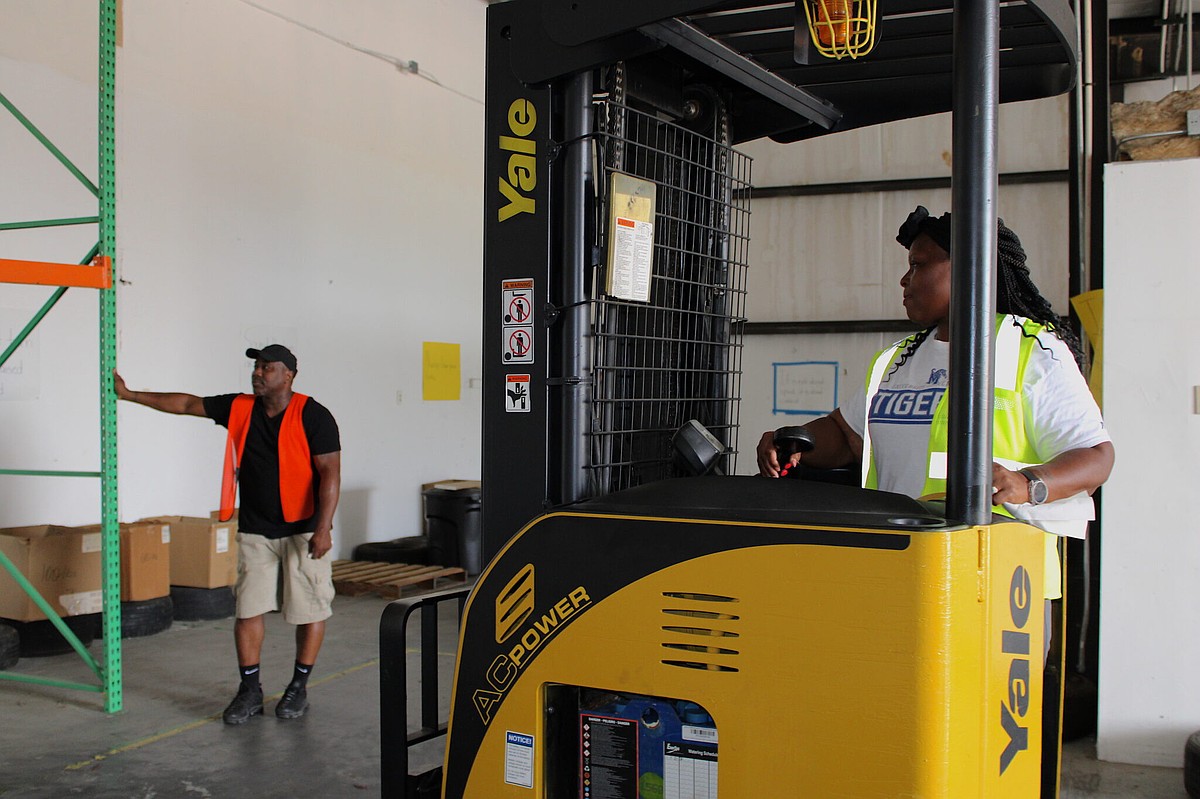
A Black-owned West Tennessee forklift training business has sued the nonprofit in charge of funneling federal workforce training grant funds to students.
The forklift company alleges the nonprofit is discriminating against the business by limiting the number of students who can use grant funds to train there.
Reginald Carrick opened All-Star Training LLC in Memphis in 2016 and started training students seeking forklift certifications. Carrick’s business is an Eligible Training Provider, meaning All-Star Training is certified to teach students using funds from the federal Workforce Innovation and Opportunity Act.
The funds are meant to help people who face barriers to employment develop skills they need for in-demand jobs. Beneficiaries can include veterans, individuals with disabilities, at-risk youth, low-earning adults and people who have been laid off. Nine regional labor boards appointed by local government officials allocate those federal funds in Tennessee.
Carrick has provided training in the Greater Memphis Workforce Development Area, a separate region spanning Fayette, Lauderdale, Shelby and Tipton counties, without any cap on how many students could enroll using the federal funding, according to the lawsuit filed March 23.
He opened his second location in Jackson in 2023, offering the same training to students in Haywood, Madison, Henderson, Chester, Decatur, Hardeman, McNairy and Hardin counties.
“I expanded here to help the community,” Carrick said in an interview with the Lookout.
Then things changed.
In 2024, the Southwest Tennessee Workforce Development Board started limiting the number of students who could use federal funds to receive training at Carrick’s business.
From 2024-26, the board determined that All-Star Training can receive federal funding for a maximum of nine students per year.
The lawsuit claims the cap is “arbitrary” and “extreme.”
Carrick and All-Star Training are represented by Brazil Clark, a Nashville-based firm specializing in civil rights litigation.
Forklift operators fall under the Transportation and Material Moving Occupations sector, according to the U.S. Bureau of Labor Statistics, as do commercial truck drivers.
Carrick’s business is the only approved forklift training center in the Southwest Tennessee region. Other white-owned businesses in the area that provide commercial driving training aren’t restricted by the same cap as forklift students, the lawsuit states.
A representative for Workforce Innovations Inc., the Southwest Tennessee Workforce Development Board’s fiscal agent and the defendant named in the lawsuit, declined to comment, pointing to records of previous complaints Carrick made to the state and later appealed with the U.S. Department of Labor.
The state’s oversight committee determined Carrick’s complaint was “unsubstantiated,” and the Department of Labor upheld the state’s decision.
The Southwest Board’s documents state that funding limits for commercial driving students are higher because demand for commercial drivers outpaces demand for forklift operators in the area.
But Carrick’s lawsuit states that he has collected letters from warehouses in Southwest Tennessee expressing their need for more forklift operators, and his business has more than 60 potential students on its waitlist.
“The only barrier to these students receiving training with All-Star Training LLC is access to funding,” the lawsuit states.
FUNDING CAP
The Southwest Board institutes funding caps for each sector based on labor market projections due to limited funding, according to board documents.
The panel limited funding to nine forklift students per year because labor market information projected 36 new forklift jobs would be created between 2024 and 2027 in the panel’s eight-county area, according to a January 2025 state complaint determination letter.
“All-Star is the only forklift trainer on the (Eligible Training Provider List) and as such has been approved for the available forklift ITA funds,” the determination letter states.
Data provided by the Southwest Board shows an estimated increase of 39 “heavy and tractor-trailer truck drivers” each year through 2027, indicating up to 39 students per year may be granted funding through the Workforce Innovation and Opportunity Act. Another 12 jobs are projected per year for industrial truck and tractor operators. The data provided does not include a standalone projection for forklift operators.
Southwest Board documents state that the funding cap for students seeking commercial drivers licenses is higher because labor market information indicates that commercial driver licenses are in higher demand based upon future new growth than forklift jobs.”
Carrick’s lawsuit argues that there is ample demand for forklift-certified employees. The Tennessee Department of Labor’s 2024-27 West Tennessee Regional Plan lists forklift use among employers’ top-requested technological skills, and transportation and warehousing is the second-largest industry sector in the region.
More than 100 students applied for training from All-Star Training in 2025, according to the lawsuit, and 11 applied between January and March this year.
While Carrick’s numbers show current job openings for forklift operators, Southwest Board documents concede, he did not provide evidence to refute the forklift operator job projections from 2024-27. A determination letter issued by the U.S. Department of Labor in May 2025 states that All-Star Training is not restricted from seeking other funding sources to enroll students in training.
The lawsuit contends that Workforce Innovations “employs a discriminatory system of caps against Black-owned businesses like All-Star Training LLC in order to exclude them from the marketplace in favor of white-owned businesses.”
The lawsuit points to two other Black-owned businesses that were similarly capped, including a barber school that was removed from the Southwest Tennessee Eligible Training Provider list in 2025 because the Southwest Board determined the school did not have enough job growth or demand or align with “regional priority sectors.”
Attorneys representing Workforce Innovations Inc. filed a motion to dismiss the case April 17, arguing that the lawsuit fails to “plausibly allege” that the decision to impose a cap is “fairly attributable to the state,” because the nonprofit is a private entity designated by the county to administer Workforce Innovation and Opportunity funds and is not itself a “state actor.”
The court had not ruled on that motion as of Wednesday.
The lawsuit was filed in U.S. District Court in the Western District of Tennessee.
–––
Read more at TennesseeLookout.com.