
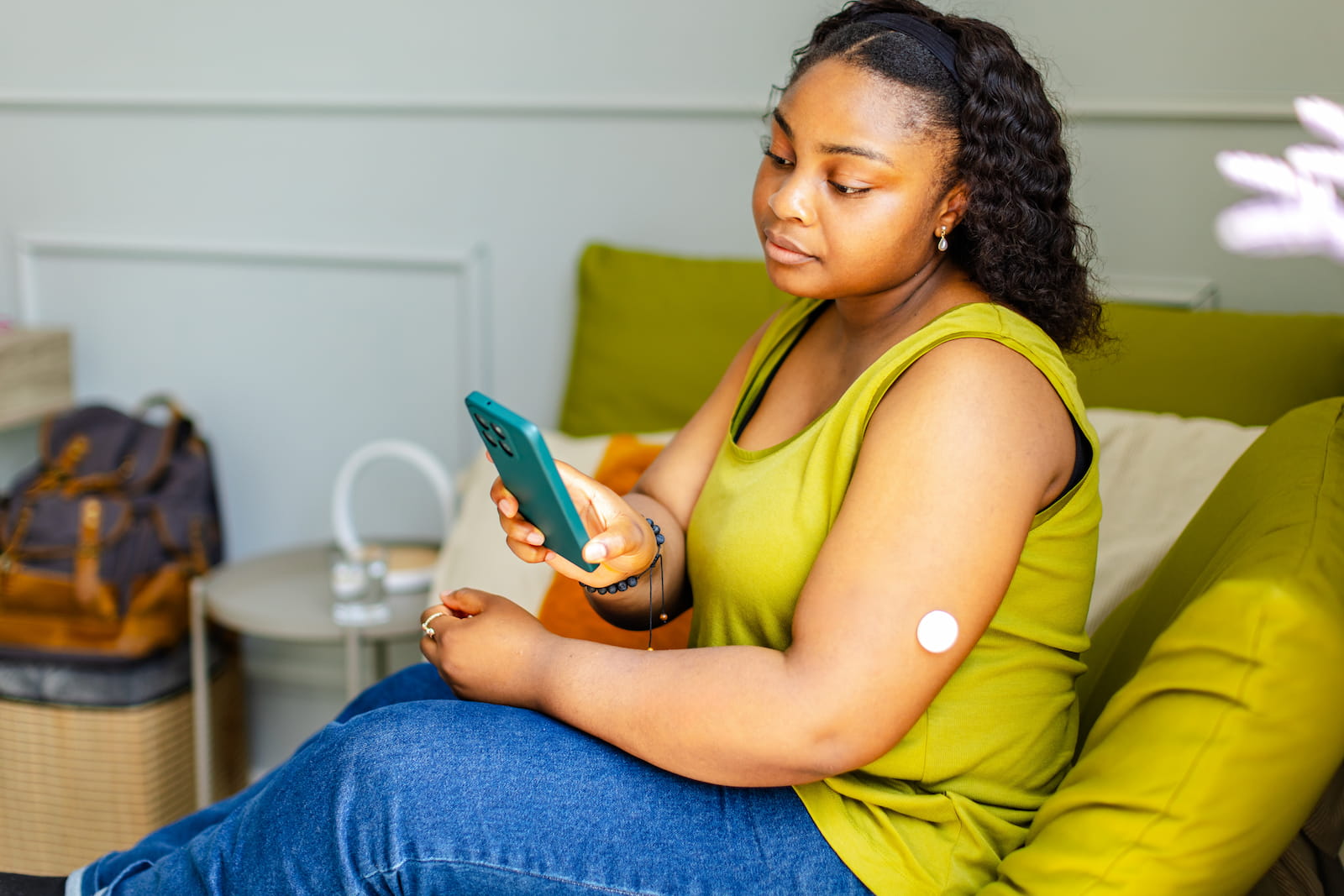
If you wear a continuous glucose monitor (CGM), it’s easy to get caught up with the numbers. One meal sends your glucose up. A stressful afternoon changes your reading. Your favorite breakfast suddenly gives you a different result than it did last week. Before long, you may start looking at every number as “good” or “bad.” But that’s not the point of a CGM.
A continuous glucose monitor is a small device that tracks glucose levels throughout the day and night. Instead of showing only one moment in time, it helps you see patterns and how your glucose changes. According to the Centers for Disease Control and Prevention (CDC), CGMs can make diabetes management easier by providing regular glucose readings and alerts when levels are too high or too low.
The information can be useful, but your CGM isn’t giving you a grade. A number doesn’t mean you ate a “bad” food or failed at managing your health. It’s simply information you can use with your healthcare team to learn more about your body.
For Black users, having access to that information can be especially valuable, but access to diabetes technology hasn’t always been equal. The American Diabetes Association (ADA) reports that Black Americans and people with lower incomes have faced greater barriers to getting CGMs. If you have access to one, here’s how to use the information with interest rather than fear.
Look for Patterns, Not Perfect Numbers
One of the biggest benefits of a CGM is being able to see how your glucose levels change throughout the day. You may notice that your glucose rises after certain meals, drops during exercise, or changes overnight. You can also see how quickly it rises or falls. These patterns give you information that a single finger-stick reading can’t always provide.
For example, you might notice that the same breakfast affects you differently depending on whether you slept well the night before. Or maybe a walk after dinner changes how your glucose responds afterward. The goal isn’t to keep your glucose perfectly flat all day. Glucose naturally changes, especially after eating. Instead of asking, “Was that number bad?” try asking, “What can I learn from this pattern?” Your medical provider can help you understand which patterns matter for your individual diabetes care plan.
RELATED: Diabetes And Heart Disease: 4 Numbers You Should Know
Don’t Let One Reading Make You Afraid of a Food
Seeing your glucose rise after eating can sometimes create food anxiety. Maybe you eat rice and notice a spike. Your first thought might be, “I can’t eat rice anymore.” Not necessarily. Instead of immediately removing foods from your diet, your CGM may give you a chance to experiment.
You might try a smaller portion the next time. You could pair a carbohydrate with protein, fiber, or fat. You might change when you eat it or take a walk afterward if that’s safe for you. Then look at what happens. The goal is to learn what works for your body, not to create a growing list of foods you’re afraid to eat.
Your cultural foods don’t automatically have to disappear either. Foods like rice, sweet potatoes, grits, cornbread, beans, or other family favorites may still fit into your eating plan. A registered dietitian or diabetes care and education specialist can help you find portions and combinations that work for your health needs. CGM data should help you make knowledgeable choices—not make you feel guilty about eating.
Your Reading Isn’t Only About Food
It’s easy to blame every glucose change on your last meal, but food isn’t the only thing that affects blood sugar. Stress, sleep, and exercise can matter. Illness, medications, hormones, hydration, and your normal daily routine may also affect your readings. That’s why context is important.
Imagine your glucose is higher than usual one morning. Before blaming breakfast, think about what else happened. Did you sleep poorly? Are you sick? Were you under a lot of stress? Did you exercise differently?
Even the U.S. Food and Drug Administration (FDA) notes that glucose may change quickly during situations such as eating, exercising, illness, and stress. Adding simple notes in your CGM app or phone can help. You might write:
- “Didn’t sleep well.”
- “Stressful meeting.”
- “Walked after dinner.”
- “Feeling sick.”
- “Tried a smaller portion.”
Over time, those notes can help you and your healthcare provider make more sense of the numbers.
RELATED: Diabetes Management: Glucose Meters & Test Strip Safety
Don’t Turn Your CGM Into a Full-Time Job
Having glucose information available around the clock can be helpful—but it can also feel like a lot to manage. You may find yourself checking the app every few minutes. You may worry whenever an arrow points up or feel proud only when the graph looks exactly the way you want. Some people also become tired of alerts and alarms. Remember: you are supposed to use the CGM. The CGM isn’t supposed to control your day.
Ask your healthcare provider which numbers matter most and how often you should check your readings. If alerts interrupt your work or sleep, ask if they can be safely adjusted. And if checking your numbers starts causing stress or guilt, talk with your provider. Your mental health matters too.
Give Your Skin Some Attention Too
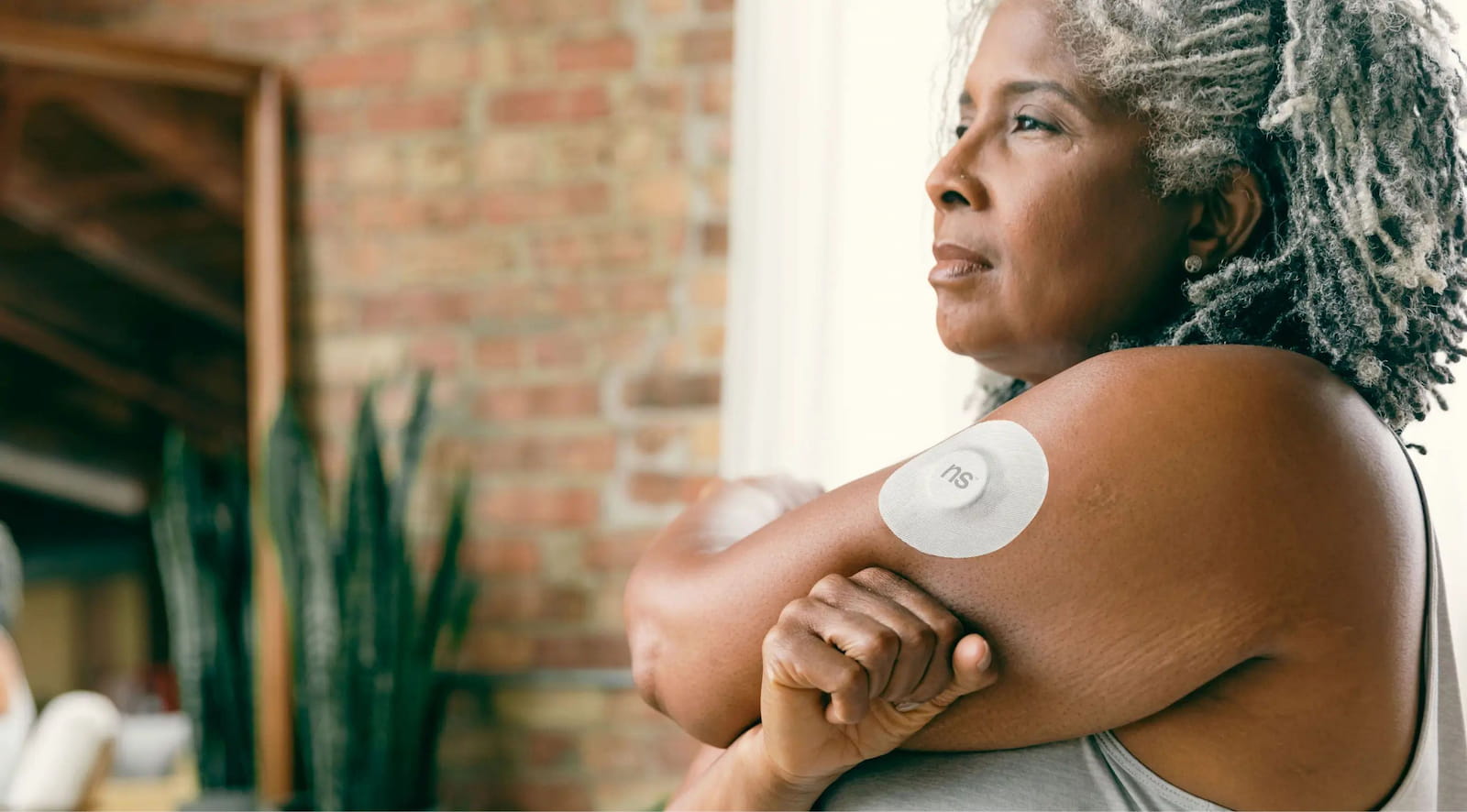
CGMs stay attached to the body, so your skin matters. The American Diabetes Association’s Standards of Care notes that skin irritation and allergic reactions can occur with devices that attach to the skin. If you’re experiencing itching, redness, discoloration, swelling, blistering, or another reaction around your sensor, let your healthcare provider know.
For Black users, skin irritation may not always look red. On darker skin, it may look purple, gray, darker than usual, or simply different from the surrounding skin.
Where you place your CGM matters too. Depending on your device, the sensor may go on areas like your arm or stomach. Always follow your device’s instructions. Also think about your daily routine. Clothes, exercise, sleep, and hairstyles can affect where the sensor feels most comfortable. For example, long braids or locs may catch on an arm sensor. Your healthcare provider can help you choose a safe spot that works for you.
If adhesive keeps irritating your skin, don’t simply cover the area with random products. Ask about skin barriers, alternative adhesives, or other options that are safe for your particular device.
RELATED: Continuous Glucose Monitors (CGMs): Which One is Best for You?
Access Isn’t Equal
For many people, the biggest challenge with a CGM isn’t learning how to read it. It’s getting one in the first place. Cost and insurance coverage remain major barriers. The American Diabetes Association reports that people with lower incomes, older Black and Brown adults, and people covered by Medicaid have historically had less access to CGMs. ADA research has also found that Black Americans with diabetes face particularly large barriers to CGM access.
Insurance coverage for CGMs can vary. If your doctor recommends one, ask your insurance company:
- Does my plan cover a CGM?
- Which CGMs are covered?
- Do I need approval first?
- How much will I have to pay?
- How often can I get new sensors?
- What can I do if coverage is denied?
The ADA recommends clearer coverage policies and appeals processes so more people who could benefit from CGMs can access them. Your doctor’s office, pharmacist, or diabetes educator may also be able to help you comprehend coverage requirements.
Online diabetes communities can be extremely useful. You can find meal ideas, sensor tips, encouragement, and people who understand what it’s actually like to live with diabetes. But unusual glucose readings aren’t the time to rely only on TikTok, Facebook, Instagram, or Reddit.
If your readings are repeatedly much higher or lower than the target range your healthcare provider gave you, contact your care team. You should also know what to do when the number on your CGM doesn’t match how you feel.
The FDA advises people using CGMs to confirm with a finger-stick blood glucose meter when symptoms don’t match the CGM reading, and to follow their device and care plan instructions. For example, if your CGM says your glucose is normal, but you’re experiencing symptoms that feel like low blood sugar, don’t simply ignore your body.
Your medical professional can tell you when a finger-stick check is appropriate for your particular CGM. Seek urgent medical care when you have severe symptoms, extremely abnormal readings, confusion, fainting, difficulty staying awake, or another situation your diabetes care plan identifies as an emergency.
Bring the Patterns to Your Appointments
Use your CGM readings to help guide conversations with your healthcare provider. Instead of asking, “Are my numbers good?” ask questions like, “What patterns do you see?” “Should I worry about my overnight readings?” “What do the arrows mean?” or “What changes should I focus on first?”
“Do you see anything here that might explain why I’m feeling tired or shaky?” CGM reports can give your healthcare provider information about how often your glucose is within your target range, how much it varies, and when highs or lows tend to occur. That information can help guide decisions about food, physical activity, medications, insulin, sleep, and other parts of your care.
RELATED: Q&A: What Do Cholesterol Numbers REALLY Mean?
A CGM can tell you that your glucose went up, but it can’t tell you that you failed. It can show that one meal affected you differently than another, but it can’t tell you that you’re a “bad” patient. And it can alert you when your glucose moves outside your target range, but it can’t replace the guidance of a health care provider who understands your complete health history.
The American Diabetes Association describes CGM as an important tool that can help people with diabetes manage their glucose and reduce episodes of high and low blood sugar. But like any health technology, the information works best when you understand it in the context of your individual care plan.