
- Key insight: Senate Banking Committee Democrats put forward a bill that would ban bank regulators from approving bank charters for entities connected to the president.
- Forward look: While the bill has no chance of passage in this Congress, its cosigners show that Democratic sentiment toward President Donald Trump’s ethics considerations related to crypto and banking is hardening.
- What’s at stake: Bankers want the CLARITY market structure bill to pass in general terms, but have lobbied hard for stricter language banning stablecoin firms from offering yield-like products.
WASHINGTON — Lead Democratic negotiators have signed onto a bill that would ban bank regulators from approving charter applications closely linked to the president.
Processing Content
On Friday, the Office of the Comptroller of the Currency conditionally
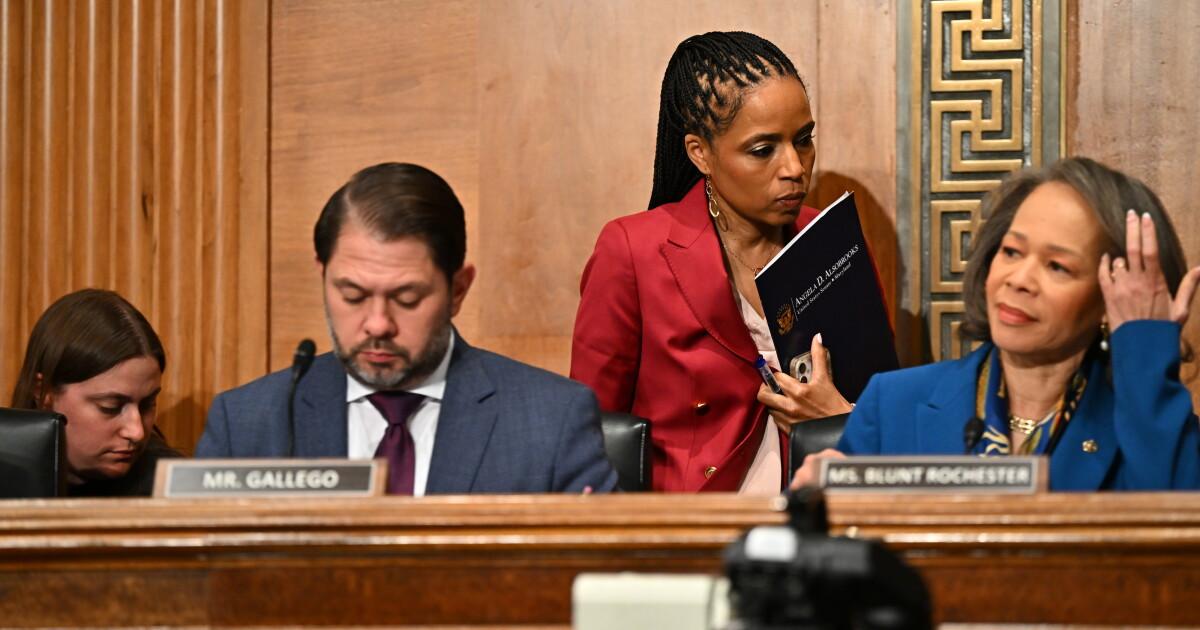
The legislation itself is unlikely to gain any Republican support this Congress, which would be necessary as Republicans control both chambers of Congress. But the cosigners of the legislation include Sens. Ruben Gallego, D-Ariz., and Angela Alsobrooks, D-Md., who are leading negotiations for Democrats on the crypto market structure bill, CLARITY Act.
For CLARITY to pass, 60 senators will have to agree to invoke cloture and end debate for the bill to proceed to the floor for a final vote. Republicans hold 53 seats, meaning a number of Democrats will have to sign onto the bill for it to pass. Senate Majority Leader John Thune has queued the bill up for a cloture vote on Sep. 15, but now that the August recess has already begun, Democrats will be hesitant to join Republicans to pass crypto legislation if voters
The inclusion of those two lawmakers on the post-World Liberty Financial bill underscores the remaining challenges to passing the CLARITY Act. While bankers are
Alsobooks and Gallego have said they won’t vote in favor of the crypto package unless it includes enforceable restrictions on the president’s ability to profit from the crypto industry. They’ve zeroed in on giving state attorneys general power to enforce the ethics provisions, fearing that the Department of Justice won’t be able to effectively police the White House when the president can fire the head of the agency at will.
That’s proven to be a bridge too far for Republicans, and it’s questionable if Trump would sign anything that meaningfully restricts his ability to profit off the crypto industry.
The World Liberty Financial approval hardens that math.
“Both are [Gallego and Alsobrooks] Democrats who have been working with Republicans to find an ethics compromise for CLARITY,” said Jaret Seiberg, a financial policy analyst at TD Cowen. “We view the OCC’s approval of the trust charter and their sponsorship of the Warren bill as making that task more challenging as they are now on record saying Trump’s crypto holdings should not include a bank.”