
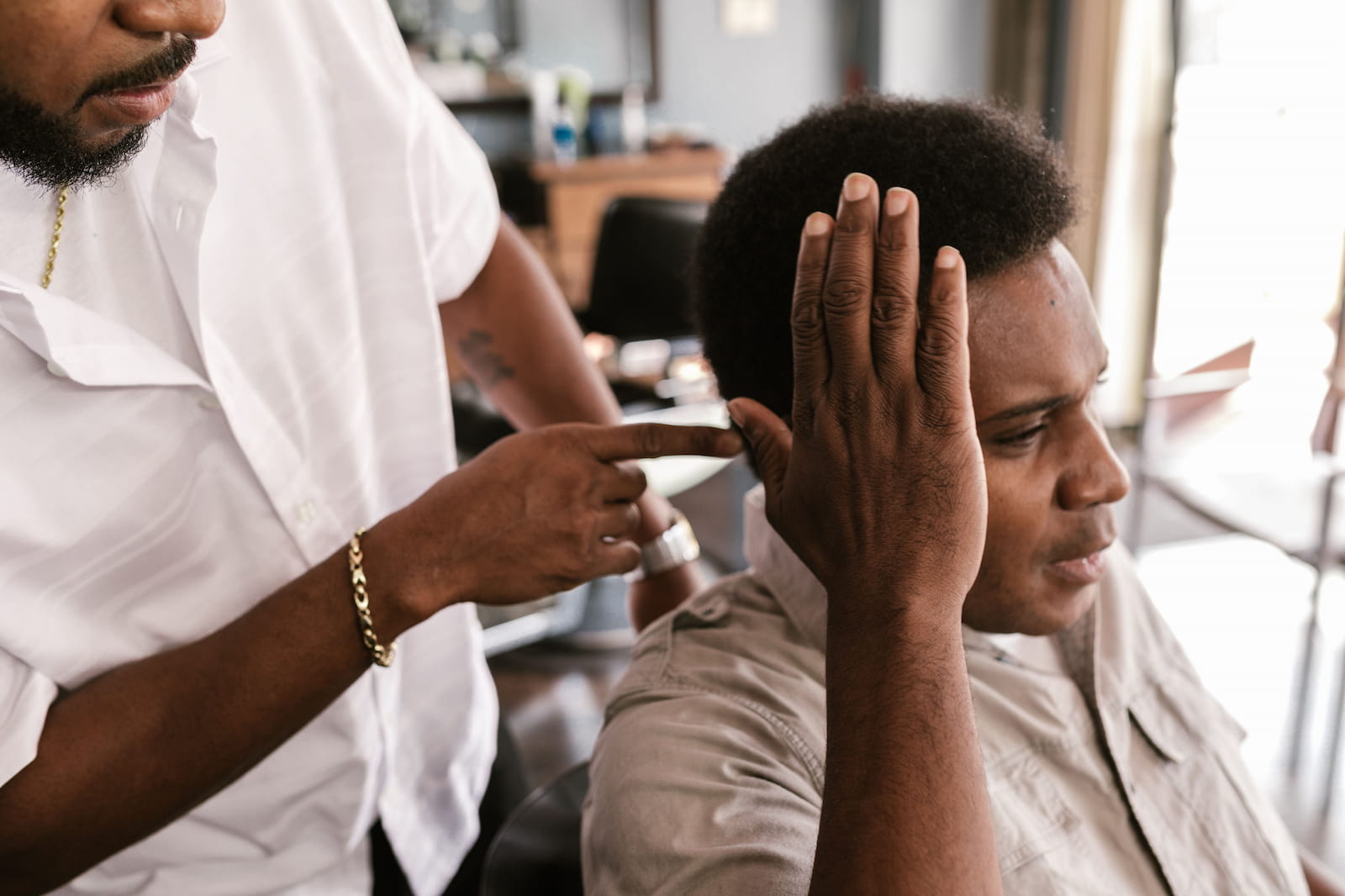
Going to the barbershop isn’t just about hair.
It’s about a whole new feel and look. A cool new style, a fresh new clip, just something to change it up after a period of the same old – whatever the motivation, when you sit down in the stylist chair, you’re hoping for something good.
But what happens when a new cut or new braids don’t feel good?
Normally a place of care, conversation, and renewal, the barbershop can suddenly feel different, depending on the day. For people living with scalp psoriasis, that same chair can become a source of dread.
Tight tension, heavy products, vigorous scrubbing? If that sounds like you, even the simple inability to explain your condition can turn a routine visit into a flare.
Because scalp psoriasis often appears differently on darker skin and textured hair, Black Americans face unique, underappreciated challenges. Scaling, itching, and inflammation can be more severe, and less frequent washing can complicate treatment.
Ready to adapt good grooming so it works with your scalp, not against it?
Let’s cover everything you need to know…
RELATED: Psoriasis and the Barber Chair: What Black Men Should Know
Exact Language to Use with Barbers and Stylists
Bringing up scalp psoriasis can be tough, especially when you just want a nice cut and to be on your way. But unfortunately, not bringing it up is usually a bad idea. Not disclosing the condition can make things much harder for your stylist and may even worsen your psoriasis.
So, take a deep breath. And keep it simple.
Clear, calm communication prevents most misunderstandings. You don’t need to give some long, complicated medical explanation. Short, specific statements are almost always better.
Here are some helpful phrases to consider:
- “I have scalp psoriasis — it’s not dandruff, so scrubbing or picking will actually make it worse.”
- “Please stick to light tension only. Tight braids or pulling around the edges triggers flares for me.”
- “Can you avoid heavy gels, greases, or oils that sit on the scalp?”
- “Can we just keep the braids or twists larger and looser? That way, I can still treat my scalp.”
If a barber or stylist seems uncomfortable or dismissive, don’t feel like it’s your fault. It’s not. It’s perfectly acceptable to leave or reschedule with someone more experienced. It can take some time, but many Black folks with scalp psoriasis eventually find a professional who understands textured hair and skin conditions; the search is certainly worth it!
Protective-Style Adjustments That Reduce Tension
If you still want to keep protective styles in your routine, you can. However, modifications matter. Many styles that tug at the hairline, like tight cornrows, small box braids, and heavy extensions, can all commonly aggravate psoriasis.
Your best bet is larger, looser braids or twists. For example, crochet styles that minimize direct scalp tension, low-manipulation buns, or well-ventilated wigs are all meaningful choices.
Just limit wear time—many dermatologists and patients find that two to four weeks is safer than longer periods.
Also, avoid heavy product buildup underneath any styles. To reduce irritation, opt for lightweight, fragrance-free options. These are less likely to trap scale and irritate inflamed skin, and you can pair them with intentional breaks for optimal recovery.
Timing Treatments Around Appointments
Managing scalp psoriasis is an ongoing effort, so it’s important to coordinate medical treatment with your grooming schedule. For example, if you use a medicated shampoo, foam, or topical steroid, apply it in the days leading up to your appointment so your scalp is calmer.
You may even try washing with your prescribed product a day or two before braiding or cutting. A little experimentation is okay and, alongside your dermatologist’s recommendations, can help you strike the balance that works for you.
As a rule of thumb, keep things gentle after a new style is installed. Resume gentle cleansing and treatment as soon as the style allows, and if the style completely blocks access to the scalp, choose a shorter wear time.
Sometimes, a different method (such as a wig) can help until the flare settles.
For many people with darker skin, the ‘vehicle’ also matters. In other words, some people opt for oil-based or foam preparations rather than alcohol-heavy lotions. The main reason for this is that oil and foam are often more compatible with textured hair.
When to Reschedule Versus Modify
How do you and your doctor rate the severity?
Is it mild scaling or itching that can be managed with the adjustments above? Or are you experiencing cracking, bleeding, intense pain, or draining?
If you’re struggling with any of these, by all means reschedule. This is usually the wiser choice, especially given that installing a tight style over open or severely inflamed skin can increase the risk of infection – and more flares!
So, ask yourself: Can I tolerate light touch today? Will there be significant pain?
If the answer is no, protect your scalp first and foremost. Book the appointment once symptoms ease; there’s no rush. Most barbers and stylists will understand the need to reschedule when you explain it’s due to a scalp condition.
Overall, going to the barbershop and/or salon is more than a visit to change your hair. It’s honestly a cultural ritual of sorts, and one that preserves a special kind of place. Identity, community, and self-care all woven into one. This is why scalp psoriasis can feel so disempowering, especially if it keeps you from enjoying that cherished place.
But don’t lose hope. If you can implement the strategies in this article – with precise language, lower-tension styles, thoughtful timing of treatments, and the willingness to pump the brakes – when your scalp isn’t cooperating, then you stand a much better chance of turning things around.
It doesn’t always happen overnight, and it can be distressing and disruptive, but by listening to your body and working closely with your healthcare team, you can make a meaningful difference.
No need to jump in the deep end all at once. Start with one smaller change at your next visit, keep your stylist and doctor in the know, and don’t be afraid to voice any concerns and/or questions clearly and confidently.
While these adjustments may feel strange or foreign, they can become routine over time. And when that happens, the chair can once again feel like a place of care rather than a source of anxiety.
Yes, your scalp and sense of style can coexist. Now it’s time to make it happen…