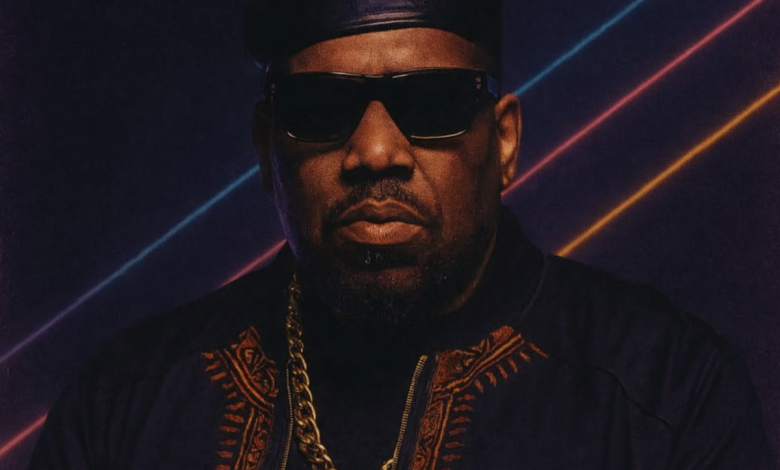
Hip-hop pioneer, Afrika Bambaataa, whose notable hit, “Planet Rock” ruled the 1980’s airwaves, has passed away at 68.
TMZ reported he died from complications of cancer early April 9, just days away from his April 17 birthday, in Pennsylvania.
The DJ and Bronx-native played a pivotal role in shaping hip-hop through his mix of music styles and delivery. He collaborated with many innovative funk artists, from James Brown and John Lyndon to George Clinton.
The Early Life of a Cultural Pioneer
Born Kevin Donovan in the Bronx, New York, Afrika Bambaataa emerged from one of the most pivotal environments in modern cultural history. Growing up in the 1970s, during a time of economic decline and rising gang activity, he witnessed firsthand the struggles of urban communities.
Instead of contributing to the violence, Bambaataa redirected that energy into creativity. A former gang member himself, he transitioned into a community leader, using music as a unifying force. This decision would ultimately help shape what we now know as hip-hop culture.
The Birth of Hip-Hop and the Zulu Nation
Afrika Bambaataa is widely recognized as one of the founding figures of hip-hop, alongside pioneers like DJ Kool Herc and Grandmaster Flash. But what set Bambaataa apart was his vision.
After a trip to Africa, he founded the Universal Zulu Nation, a collective aimed at promoting peace, unity, love, and having fun—core principles that became foundational to hip-hop culture.
Through the Zulu Nation, Bambaataa helped formalize the elements of hip-hop:
- DJing
- MCing (rapping)
- Breakdancing
- Graffiti art
The imagery of the Zulu Nation has varied at times as well. During the 1970s and the 1980s, Afrika Bambaataa and the Zulu Nation members would often clothe themselves in costumes representing different cultures of the world.
Since the early 1980s, the Zulu Nation has established autonomous branches in Japan, France, the UK, Australia, Canada, South Korea and the Cape Flats in Cape Town South Africa.[citation needed]
From the late 1980s, at the height of the Afrocentric movement in Hip Hop (when artists such as KRS-One, Public Enemy, A Tribe Called Quest, Native Tongues, and Rakim hit success), the movement seemed to be incorporating many doctrines from the Nation of Islam, the Nation of Gods and Earths, and the Nuwaubians. In the mid-1990s, some members began to break off, starting their own projects or organizations such as “Ill Crew Universal.”
Musical Innovation and Global Impact
Bambaataa’s influence extended far beyond the Bronx. His 1982 track “Planet Rock” revolutionized music by blending hip-hop with electronic sounds inspired by European acts like Kraftwerk.
This innovation:
- Helped launch the electro-funk genre
- Influenced early electronic dance music (EDM)
- Expanded hip-hop’s global reach
His sound proved that hip-hop wasn’t confined to one style—it was a constantly evolving art form.
Black Men and Cancer
While we don’t know what kind of cancer Bambaataa suffered with yet, we do know the ongoing history of cancer and Black men.
Black men in the United States face a disproportionately high cancer burden, characterized by higher incidence and mortality rates for several cancers compared to other racial and ethnic groups. While overall cancer death rates for Black men have declined significantly—49% between 1991 and 2022—they still experience a 16% higher mortality rate than white men.
Prostate Cancer
- Structural Racism: Systemic racism in housing, education, and healthcare leads to reduced access to high-quality care, timely screenings, and treatment, resulting in later-stage diagnoses.
- Socioeconomic Status: Lower socioeconomic status, which is often linked to race, is associated with increased cancer risk factors (e.g., obesity, smoking) and lower survival rates.
- Biology: Research indicates potential biological differences, such as increased androgen receptor signaling, shorter CAG repeats, and higher rates of BRCA2 mutations, which may contribute to more aggressive prostate cancer in men of African descent.
- Medical Mistrust: Historical injustice has led to a lack of trust in the healthcare system, reducing participation in clinical trials and preventive care.
Cultural Influence Beyond Music
Afrika Bambaataa wasn’t just a DJ—he was a cultural architect. His work helped transform hip-hop from a local movement into a global phenomenon.
His influence can be seen in:
- Youth empowerment programs
- Global hip-hop communities
- The use of music as a tool for social change
For many, he represented the idea that art could be a pathway out of hardship.