
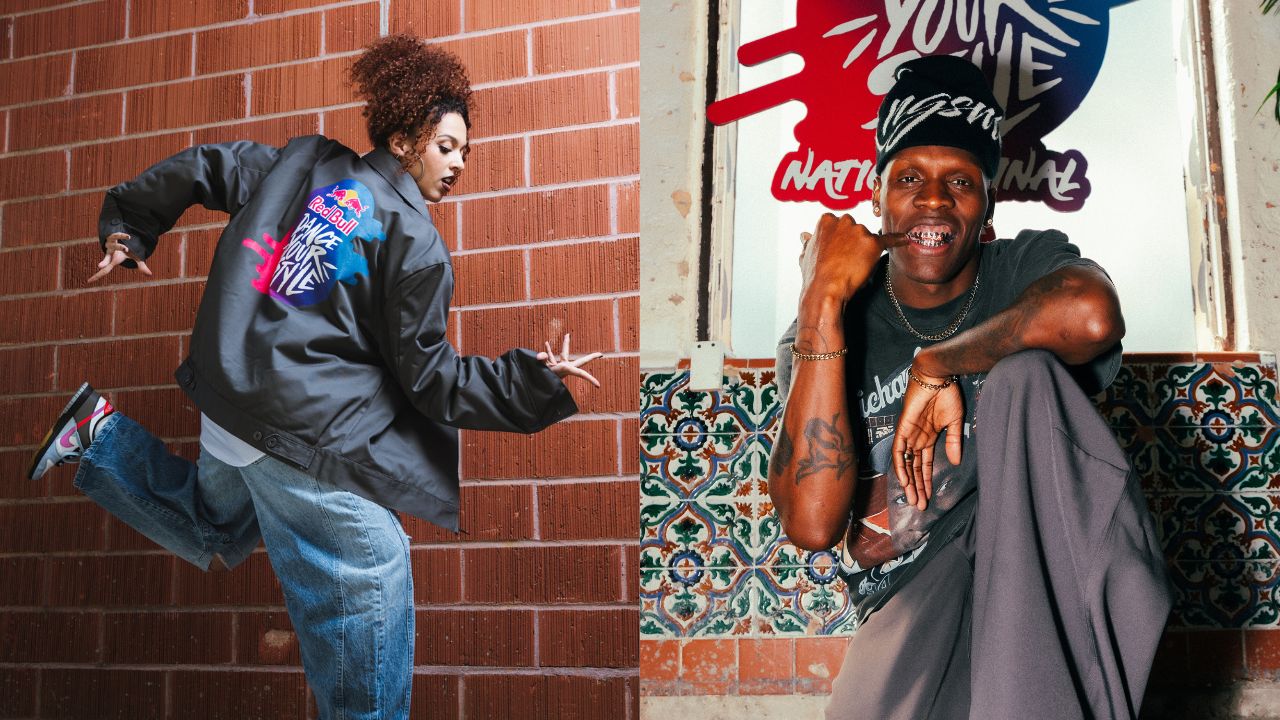
Black dancers are using the internet to build audiences, land paid work and make dance a career.
“For me, it’s about honoring the music that I’m listening to,” dancer Marlee Hightower told AfroTech when asked what it means to dance her style. “I think, also, just honoring what I like to do authentically within movement.”
Hightower has built a loyal following online.
“Having a balance of being honest and vulnerable with the audience, bringing people into my process as a dancer. I think the biggest thing that I’ve always told myself when it comes to running my social media is to be the person that the little girl in me needed,” she said. “That’s how I like to carry myself online.”
The role of the internet in dancing
Hightower and Kidd the Monster both competed in this year’s Red Bull Dance Your Style national finals in Tampa, Florida. The global street dance competition was first held in 2018. Kidd the Monster reached the final round and has been dancing since before social media became a way to discover dancers.
“I think it’s gorgeous,” he said. “I think at the time where I was growing up before social media, until now. You can look at this as a negative or a positive. I should never look at it as a negative, always a positive. If I could get more people to see my work, and this is the new avenue, let’s work through it. I think it’s a genius idea, and we’re part of the greatest generation when it comes to just getting your name out.”
“I think the digital culture definitely hits a lot of the big scenes overseas, even in Asia sometimes, especially from dancers who they usually wouldn’t ever see, or whose style is a little different or more unique,” said Jaden “Capjay” Mosby, a hip-hop dancer and Red Bull Dance Your Style ambassador from Southern California who has earned wins and recognition in countries including France and Belgium.
“So those types of dancers get pushed a lot out there, which makes them want to see them in person,” he continued. “It’s always a good thing, especially because, for us over here, we’re so far, and obviously it costs a lot to travel over there and things like that. When you get seen online, especially a frequent amount of times, they always want to drop some money to send you over there to just watch you. I think in that type of setting, the digital content is lit.”
On getting paid to be your authentic self
Kidd the Monster went from battle culture to a resident Cirque du Soleil dancer.
“What I refuse to compromise on is my identity,” he said. “I try to make sure, no matter where I’m at, whether it’s a battle performance, even a street show, whatever it is, that I don’t lose sight of who Kidd the Monster is.”
“For me, I’m always big on originality. I’m from the hood. I’m from the ghetto. I’m from Pompano Beach, Florida. And one thing about me that’s going to set me apart is my identity,” he continued.
He says he wants to show others that dance can be lucrative.
“I’m a soloist every night,” he said of his role as a Cirque du Soleil dancer. “Out of a 90-minute show, I’m only in five minutes, doing a solo, getting paid a lot, and I’m super thankful for that.”
Kidd the Monster added, “I feel like in certain aspects, Cirque du Soleil is one of the only companies that pays super well. I can work a 9-to-5 and make that consistent money as a dancer, but I also feel like we still have to volunteer when it comes to careers and things of that sort. I remember in middle school, there was this test, and if you put in your career, it showed you your network. I used to put in dancer slash choreographer, and it was like $30,000 a year. And to be transparent, I’m making over $100,000 a year doing this. So, I want people to know it’s very much possible, but at the same time, it’s just more like, where can you go and fit that in? Because it’s still a slept-on profession.”