
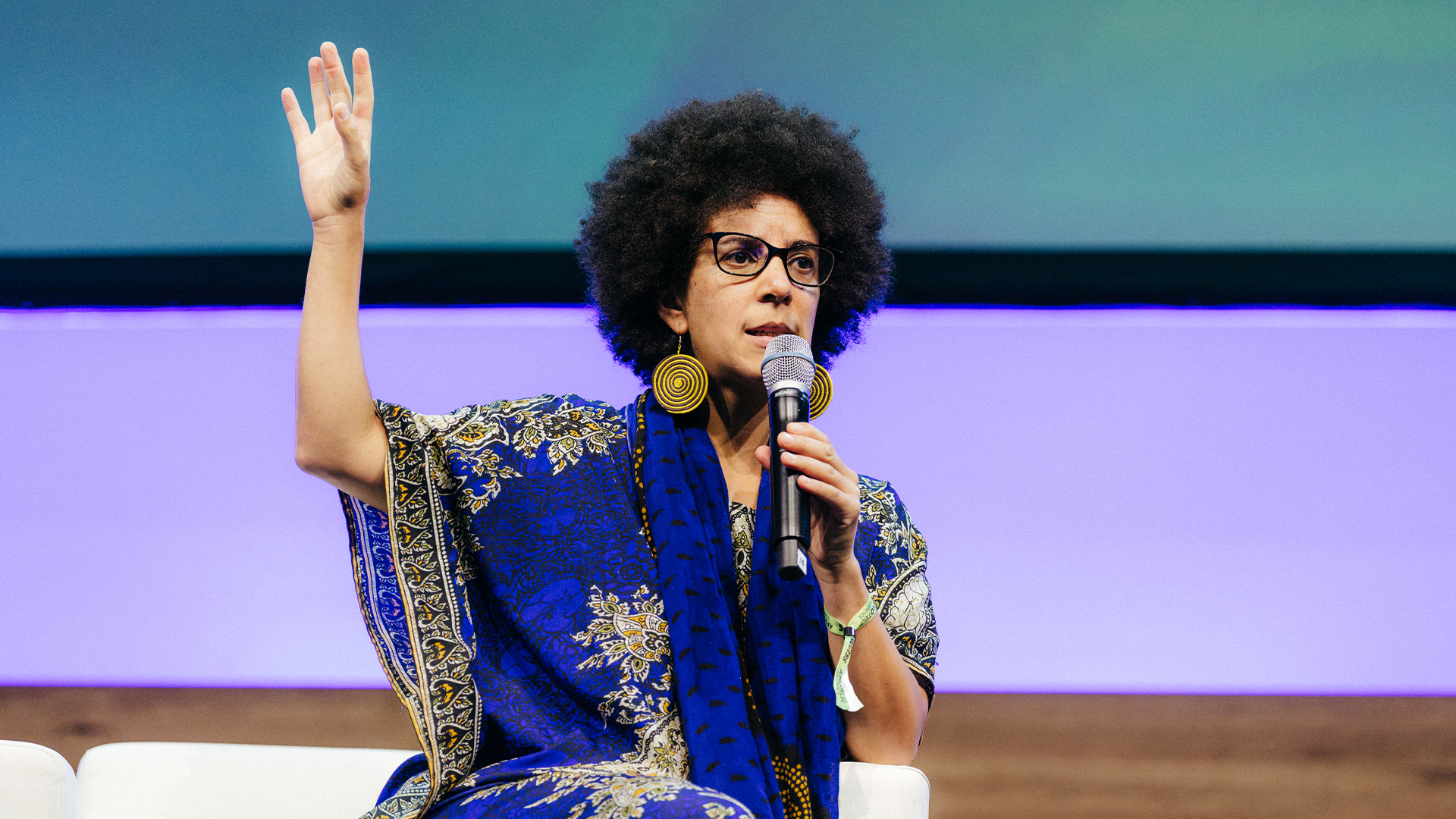
Dr. Timnit Gebru believes Black people should not be devalued in the pursuit of tech innovations, particularly in AI.
Gebru is the founder and executive director of the Distributed Artificial Intelligence Research (DAIR) Institute, author of the memoir “Deep Unlearning,” and a co-author of the research paper “On the Dangers of Stochastic Parrots: Can Language Models Be Too Big?” The paper, which examined the dangers and implications of large language models, led to her being fired from Google in 2020, where she had co-led its Ethical AI Research Team, according to MIT Technology Review.
X Eyee, a partner at Offline Research, moderated a panel featuring Gebru on the Main Stage at the 2026 AFROTECH™ Conference. X Eyee noted that the Stochastic Parrots paper was cited 18,000 times and became “one of the most influential papers in computer science.”
“Quality did not pass the quality bar,” Gebru told the audience.
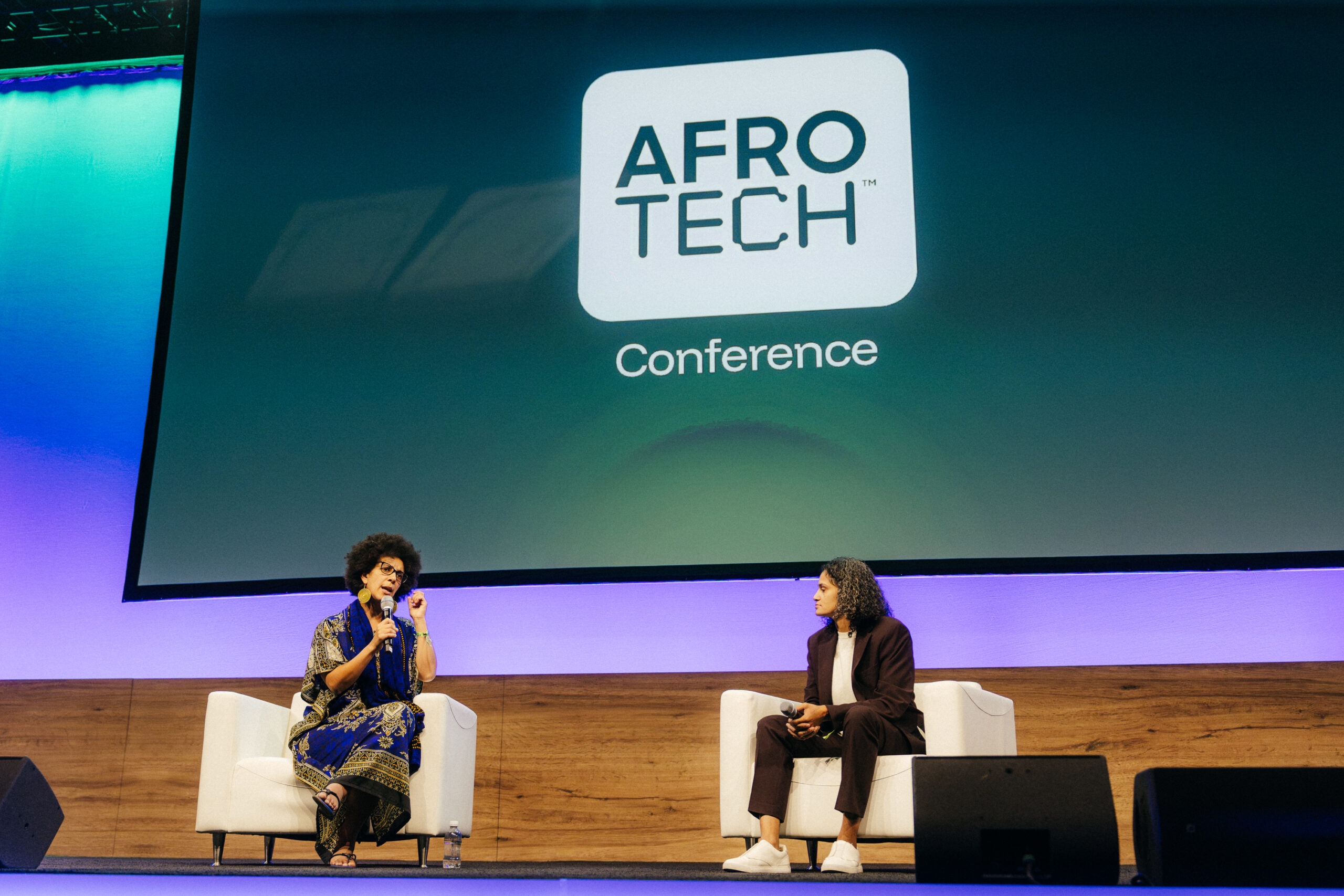
Gebru spoke Tuesday, Nov. 3, in the session “The Human Cost Of Smarter Systems” at the AFROTECH™ Conference, which is celebrating its 10th anniversary in Houston. The conference runs through Friday, Nov. 6, and tickets are still available for the rest of the week.
Gebru also addressed misunderstandings surrounding how AI systems are built. She said AI is a marketing term coined by “white dudes in 1956″ and that when people claim to use it, their likelihood of securing venture capital funding increases by 15% to 50%.
“There have been what are called AI summers and AI winters. AI summers are times when a lot of money is thrown into AI and everybody’s excited about it … It wasn’t quite the AI summer yet so I identified myself as a computer vision researcher. However, at some point I realized, I’m an AI researcher because that’s what gets you money. That’s what gets you fame. And right now we’re in one of the probably, perhaps, the biggest AI summers ever … Because of that, do you know what some people do? People literally hire what we call AI impersonators to pretend to be chatbots. So my institute, DAIR, works with some of these AI impersonators. This is the kind of space we’re in right now,” she explained to the AFROTECH™ audience.
Additionally, she noted that datasets play a critical role in AI systems, with hundreds of millions of data workers globally building datasets by creating, supplying, cleaning, and labeling them. Yet, many of them, she says, live in vulnerable communities and aren’t paid $1 an hour and are “very traumatized” by “the way content moderators are.”
“It was a Black man who was the first person to be wrongfully accused of a crime based on face recognition systems in Detroit,” Gebru said. “…This was because of the datasets that were used … No one wants to tell you that the dataset is the most important part of the whole system because it doesn’t sound very novel or smart or exciting … If you’re just gonna scrape the internet, which is how all of these companies are making their money, often not compensating artists, not compensating all the people that they’re taking data from, you’re not carefully thinking about what is in your dataset.”
Accountability
She urges the community to demand transparency about the datasets used to train AI models and the risks companies are taking in their pursuit of innovation. She encourages people to ask where the information comes from and argues that narratives about AI models going rogue distract from accountability and that companies are improperly testing.
Separately, she urges Black communities to “not accept any kind of devaluing of our own people.” She points to data centers in Memphis, TN, which she says are causing asthma among Black residents, as an example of the harm communities should not have to accept.
Gebru’s overarching argument is that “technology needs to work for us.”