
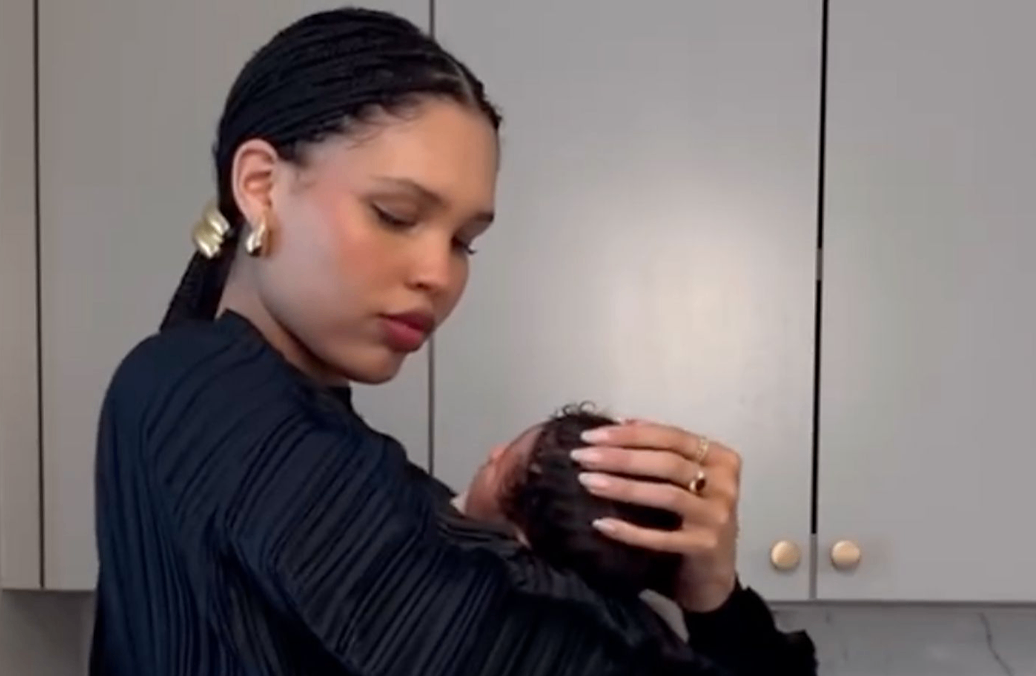
Content creator and model Nara Smith said her and fellow model Lucky Blue Smith’s 2-year-old daughter Whimsy Lou is battling cancer.
Whimsy Lou was diagnosed with cancer “late last year,” Nara Smith said in a July 1 Instagram video. She did not specify what type or stage.
“There is no easy way to say this or to talk about any of this,” the 24-year-old woman said.
The model, who has over 16 Million followers, is popular online for her elaborate cooking videos, said Wednesday that her daughter was diagnosed with a type of cancer late last year.
“When we saw something suspicious on her, we took her to the ER and they didn’t quite know what to make of it,” the content creator recalled. “When we took her into our pediatrician, I just remember him going really quiet and calm.”
She remembered her “heart dropped in that moment,” adding that she didn’t know “whether it was my gut telling me something or just a mom’s intuition, but the first thing that I felt was she has cancer.”
Nara Smith has been married to her husband, Lucky Smith, since 2020. They share four children (Getty)
Smith said the pediatrician recommended they take her to a nearby children’s hospital. “After a lot of X-rays, ultrasounds, and finally a biopsy, they immediately called us and said that she had cancer…It had spread and that she needs to come and start chemo treatments immediately.
Smith did not disclose what type of cancer Whimsy has, nor her current health status.
Unlike adult cancers, childhood cancers are usually not linked to lifestyle choices or long-term environmental exposures. Instead, they often develop because of changes in developing cells and tissues during growth.
The Most Common Childhood Cancers
1. Leukemia
Leukemia is the most common childhood cancer, accounting for roughly one-third of all pediatric cancer diagnoses. It begins in the blood-forming tissues of the bone marrow and causes abnormal white blood cells to crowd out healthy blood cells.
Most common age:
- Ages 2 to 5 years for Acute Lymphoblastic Leukemia (ALL)
- Acute Myeloid Leukemia (AML) can occur at any age during childhood but is more common in younger children and teenagers.
Symptoms may include:
- Frequent infections
- Fatigue
- Easy bruising or bleeding
- Bone pain
- Fever
- Pale skin
2. Brain and Central Nervous System Tumors
Brain tumors are the second most common childhood cancer and can develop in different parts of the brain or spinal cord.
Most common age:
- Most frequently diagnosed between ages 5 and 10, although some forms occur in infancy and adolescence.
Symptoms may include:
- Morning headaches
- Vomiting
- Vision changes
- Balance problems
- Personality or behavior changes
- Seizures
3. Lymphoma
Lymphomas are cancers of the lymphatic system and include both Hodgkin lymphoma and Non-Hodgkin lymphoma.
Most common age:
- Hodgkin lymphoma is more common in teenagers aged 15 to 19.
- Non-Hodgkin lymphoma tends to occur in children between ages 5 and 15.
Symptoms may include:
- Swollen lymph nodes
- Night sweats
- Weight loss
- Persistent fever
- Fatigue
4. Neuroblastoma
Neuroblastoma develops from immature nerve cells and often starts in the adrenal glands above the kidneys.
Most common age:
- Primarily affects children under age 5.
- Most cases are diagnosed between 1 and 2 years old.
Symptoms may include:
- A lump in the abdomen
- Bone pain
- Loss of appetite
- Swelling around the eyes
- Difficulty walking
5. Bone Cancers
The two major childhood bone cancers are osteosarcoma and Ewing sarcoma.
Most common age:
- Osteosarcoma most often occurs during growth spurts in ages 10 to 19.
- Ewing sarcoma is typically diagnosed between ages 10 and 20.
Symptoms may include:
- Bone pain that worsens at night
- Swelling around a joint
- Limping
- Unexplained fractures
Which Childhood Cancers Are Most Common Among Black Children?
Overall, Black children have lower rates of childhood cancer compared with White children, but several cancers show unique patterns in the Black community. Leukemia, brain tumors, and lymphomas remain the most commonly diagnosed cancers among Black children simply because they are the most common pediatric cancers overall.
However, researchers have found that Black children and adolescents have a slightly higher incidence of osteosarcoma, the most common form of bone cancer, particularly during the teenage years. This makes bone cancer an especially important diagnosis to recognize among Black adolescents experiencing persistent bone pain or swelling.
Interestingly, Black children are diagnosed with Acute Lymphoblastic Leukemia (ALL) at lower rates than White children, especially between the ages of 2 and 7, though it remains one of the most common childhood cancers within the Black population due to its overall prevalence in children.
Why Early Detection Matters
Many symptoms of childhood cancer resemble common childhood illnesses, which can delay diagnosis. Parents should speak with a healthcare provider if a child experiences:
- Persistent fevers without explanation
- Unexplained bruising or bleeding
- Frequent infections
- Ongoing bone or joint pain
- Severe or recurring headaches
- Unexplained weight loss
- Swollen lymph nodes that do not improve
- A lump or swelling anywhere on the body
- Changes in vision or balance
While these symptoms are usually caused by something far less serious than cancer, persistent or worsening symptoms deserve medical attention.
The encouraging news is that treatments for childhood cancer have improved dramatically over the last several decades. Today, more than 85% of children diagnosed with cancer survive at least five years after diagnosis, and many go on to live full and healthy lives. Early diagnosis, access to pediatric cancer specialists, and participation in clinical trials continue to improve outcomes for children of every background.
Nara noted that she has spoken with several other parents and families at the hospital and browsed numerous forums dedicated to parents going through similar situations. “All of that combined really brought me a lot of comfort and alleviated the feeling of loneliness for me,” she said. “Processing this and navigating all of this as a family has been really hard.”
Smith explained that trying to juggle hospital visits, raising her other children, being postpartum and work has been “really challenging,” which is why she has been posting less frequently.
“Some days are a little easier,” she said of finding a balance with all her priorities. “Some days are really hard, and all I can do is try my best and show up in all those areas in the best way that I can.”