

For millions of R&B fans, Freddie Jackson’s voice was inseparable from love.
Whether it was the opening notes of “You Are My Lady,” the slow groove of “Rock Me Tonight (For Old Times Sake)” or the unmistakable energy of “Jam Tonight,” Jackson helped create the soundtrack for romances, weddings, family gatherings and quiet nights at home for more than four decades.
Now, the R&B world is mourning the loss of one of its most recognizable voices.
Freddie Jackson passed away Monday, October 5, 2026, just days after celebrating his birthday. His family announced his death in a statement shared through his official social media account. Jackson was 70, according to several major reports.
“Freddie was more than a legendary voice,” his family said in announcing his passing. They remembered him as a kind and generous man who deeply loved his family, friends, fans and music.
As of October 6, Jackson’s family has not announced an official cause of death.
However, his passing comes approximately two years after Jackson publicly revealed that he had been diagnosed with kidney disease—a health battle he ultimately decided to share with the world. His family has not said that kidney disease caused or contributed to his death.
From Harlem Gospel Singer to R&B Superstar
Jackson’s journey began far from the platinum records and sold-out concerts that would eventually define his career.
Raised in Harlem, New York, Jackson developed his voice singing gospel at White Rock Baptist Church. It was there that he met Paul Laurence, who would eventually become an important songwriting and production partner in his career.
After school, Jackson performed on the New York club circuit before relocating to the West Coast and singing lead with the R&B group Mystic Merlin. He eventually returned to New York, recorded demos and worked as a backup singer for R&B star Melba Moore.
Then came 1985.
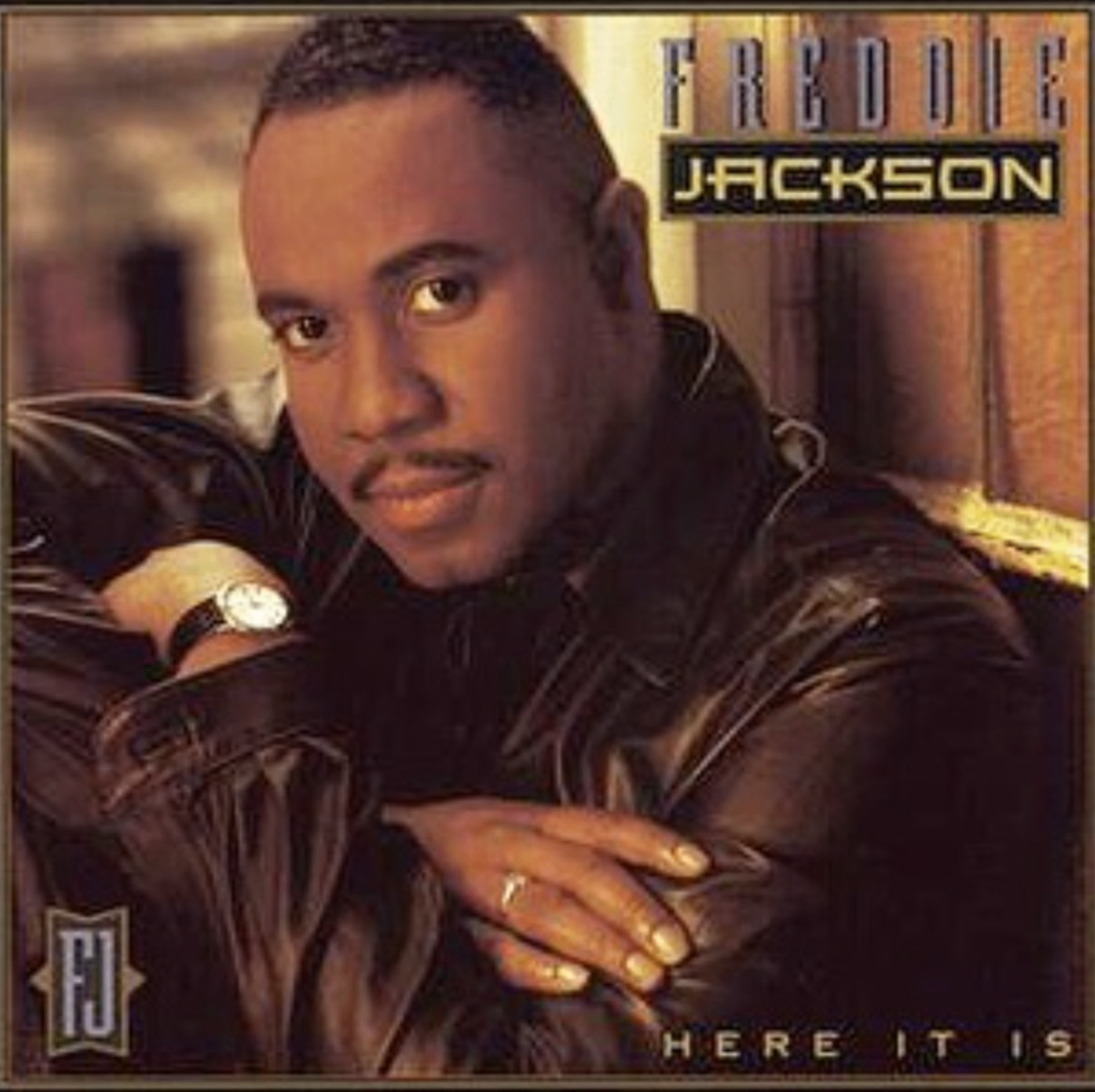
Jackson signed with Capitol Records and released his debut album, Rock Me Tonight.
The album transformed him into a star almost immediately.
“Rock Me Tonight (For Old Times Sake)” spent six weeks at No. 1 on the R&B chart. “You Are My Lady” followed it to the top of the R&B chart and became Jackson’s biggest crossover pop hit, reaching No. 13 on the Billboard Hot 100.
The album went platinum.
Jackson wasn’t finished.
His follow-up album, Just Like the First Time, produced another collection of songs that became staples of Black radio and R&B: “Tasty Love,” “Have You Ever Loved Somebody” and “Jam Tonight” all reached No. 1 on the R&B chart.
Jackson would ultimately score 10 No. 1 R&B hits, while seven of his songs crossed onto the Billboard Hot 100. His early success also brought two Grammy nominations: Best New Artist and Best Male R&B Vocal Performance for “You Are My Lady.”
At a time when artists including Luther Vandross, Anita Baker and Peabo Bryson were helping define sophisticated adult R&B, Jackson carved out his own lane.
His specialty was romance.
His songs weren’t simply about attraction. They were about longing, commitment, heartbreak and the kind of grown-up love that made slow jams an essential part of Black music during the 1980s and early 1990s.
Freddie Jackson’s Past Health Issues
Behind the music, Jackson eventually began dealing with health concerns.
Over the years, some fans had questioned Jackson’s health after noticing significant changes in his weight. In a 2017 interview, however, Jackson pushed back against speculation that his weight loss at that time was caused by a serious illness.
Jackson explained that he intentionally wanted to lose weight because he didn’t want to be performing love songs onstage while struggling to catch his breath.
Years later, however, Jackson acknowledged that he had experienced health challenges.
In a 2023 interview, Jackson talked about a problem that is familiar to many men: ignoring warning signs and postponing visits to the doctor.
He recalled experiencing aches and pains and admitted that men can sometimes behave as though they are “supermen” who don’t need medical attention. Jackson also indicated that protecting his health was one reason he had reduced his performance schedule.
Then, in September 2024, Jackson made his most significant health announcement.
He revealed that he had been diagnosed with kidney disease.
“This journey has had its challenges but I’ve decided to face it with openness and resilience,” Jackson said at the time.
Rather than keeping his diagnosis private, Jackson partnered with the National Kidney Foundation and began using his celebrity to encourage greater awareness of kidney health.
He wanted his diagnosis to become more than a personal struggle.
He wanted it to help somebody else.
What Kidney Disease Does to the Body
The kidneys are small organs with an enormous job.
They continuously filter the blood, removing waste and excess fluid while helping regulate blood pressure, minerals and other important functions.
When the kidneys become damaged, they gradually lose their ability to perform those jobs.
That’s what makes chronic kidney disease particularly dangerous: a person can have significant kidney damage without realizing it.
In its early stages, kidney disease may produce few noticeable symptoms. As the disease progresses and waste begins accumulating in the blood, complications can include anemia, high blood pressure, bone problems, poor nutrition, nerve damage and an increased risk of cardiovascular disease.
Eventually, kidney function can deteriorate to the point of kidney failure.
At that stage, dialysis or a kidney transplant may be necessary to keep a person alive.
Importantly, Jackson never publicly disclosed enough medical information for anyone outside his healthcare team to know the severity or exact stage of his kidney disease. There has also been no confirmation that kidney disease was responsible for his death.
Why Kidney Disease Is Especially Important for Black Americans
Jackson’s decision to speak publicly about kidney disease carried particular significance for the Black community.
Kidney disease does not affect every community equally.
Black Americans face a disproportionately high burden of kidney failure. Several factors contribute to that disparity, including higher rates of two of the biggest risk factors for chronic kidney disease: high blood pressure and diabetes.
Other risk factors can include heart disease, obesity, smoking, a family history of kidney disease, previous acute kidney injury and long-term or excessive use of certain medications, including some nonsteroidal anti-inflammatory drugs (NSAIDs).
Kidney disease can also be frighteningly silent.
More than 1 in 7 American adults is estimated to have chronic kidney disease, and as many as 9 out of 10 people who have it may not know it.
That’s why screening can matter long before symptoms develop.
Two relatively simple tests can help doctors evaluate kidney health: a blood test used to calculate estimated glomerular filtration rate, or eGFR, and a urine albumin-creatinine ratio, or uACR, which looks for albumin in the urine.
For people living with diabetes, high blood pressure, heart disease or a family history of kidney problems, talking with a healthcare provider about kidney screening can be particularly important.
Symptoms of Advanced Kidney Disease Shouldn’t Be Ignored
Because early kidney disease may cause no obvious symptoms, routine medical care can be more important than waiting until something feels wrong.
As kidney function worsens, people may experience symptoms including:
- Unusual fatigue or weakness
- Swelling in the feet, ankles or legs
- Changes in urination
- Shortness of breath
- Nausea or loss of appetite
- Difficulty concentrating
- Persistent itching
- Muscle cramps
These symptoms can have many different causes and don’t automatically mean someone has kidney disease. But persistent or unexplained changes should be discussed with a healthcare professional.
Jackson’s own comments about men sometimes avoiding doctors offer a powerful reminder: feeling healthy isn’t always the same thing as being healthy.
A Voice That Became Part of Our Lives
Freddie Jackson’s career stretched far beyond his extraordinary run of hits in the 1980s.
He continued recording and performing for decades. He appeared on television, collaborated with other artists and recorded “Love Survives” with Irene Cara for the 1989 animated film All Dogs Go to Heaven.
But statistics don’t fully explain Jackson’s impact.
For a generation, Freddie Jackson represented a particular kind of R&B—elegant, romantic, unapologetically soulful and deeply connected to Black musical traditions.
His records played at weddings.
They played at cookouts.
They played during date nights.
They played on quiet-storm radio after dark.
And somewhere, someone undoubtedly heard “You Are My Lady” and thought immediately of the person they loved.
Jackson once explained his philosophy about music through an old saying from his family: what comes from the heart can reach another person’s heart.
His music did exactly that.
And later in life, when his health became part of his story, Jackson attempted to use that experience the same way—turning something deeply personal into something that might help other people.
For the millions who grew up with his music, Freddie Jackson leaves behind much more than a catalog of hit records.
He leaves behind memories.
He leaves behind a voice that could make a love song feel personal.
And he leaves behind a reminder that even while celebrating the lives of the artists we love, we should pay attention to our own health—especially the conditions that can quietly progress before we ever know they’re there.
Freddie Jackson’s voice helped provide the soundtrack to countless love stories.
Now, those songs will help keep his own story alive.