


Is your hectic schedule causing your sex life to take a back seat? You may be surprised by how a lull in intimacy can influence your physical and mental health. From immunity to mood, here’s what science says about the effects of having less sex.
Think about your sex life. Are you too busy for sex? Practicing celibacy?
Here’s what can potentially happen to your body when work, school, or life, in general, gets in the way of a little “bow-chick-a-wow-wow.”
You’re more susceptible to catching a common cold.
Spending less time engaging in sexual activity may decrease your exposure to certain pathogens; however, it can also mean missing out on immunological benefits associated with sexual intercourse, such as enhanced production of immunoglobulin A (IgA), which plays a key role in the body’s defense against infections.
But you can also miss out on the immune-boosting benefits of lovemaking, experts say.
In fact, according to a study conducted by researchers at Wilkes University in Pennsylvania and published in the journal Psychology Reports, individuals who engaged in sexual activity once or twice a week experienced a 30 percent increase in immunoglobulin A (IgA)—one of the body’s primary defenses against viruses—compared to those who had sex less frequently.
You may feel more anxious.
Scottish scientists found that those abstaining from sex had trouble coping with stressful situations, including “public speaking and verbal arithmetic,” when compared to people who had intercourse at least once over two weeks.
“For a fortnight, 24 women and 22 men used daily diaries to record PVI, masturbation and partnered sexual behavior in the absence of PVI. Persons who reported PVI (but no other sexual activities) had better stress response (less reactivity and/or lower baseline levels) than persons reporting other or no sexual behaviors,” the study reads.
Your risk of prostate cancer spikes.
For the fellas, there’s a study presented to the American Urological Association that shows some uplifting results. It found that men who knocked boots on a consistent basis saw a 20 percent decrease in their risk of prostate cancer.
This is due to the removal of potentially harmful substances found in the prostate by way of ejaculation.
Oddly enough, further research in the journal BJU International found that the more a man masturbates during his 20s, 30s, and 40s, the greater his risk for prostate cancer.
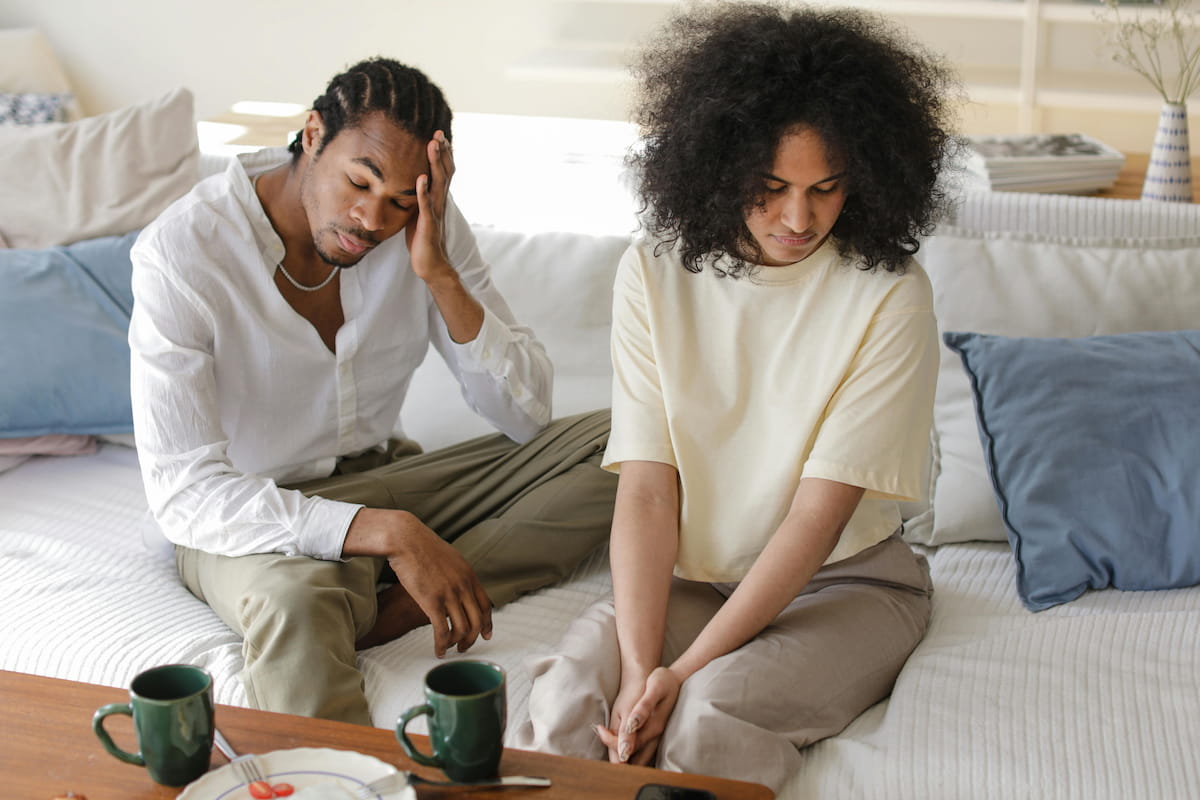
Erectile dysfunction becomes a serious problem.
Regular sexual activity – once a week or more — protects against erectile dysfunction.
Men who abstain from intercourse are twice as likely to experience the inability to achieve or keep an erection firm enough to enjoy sex, a study published in the American Journal of Medicine reports.
You may experience depression.
For the ladies, the longer you go without sex, the more down in the dumps you may feel.
This research was found in a study in the journal Archives of Sexual Behavior. According to experts, this is because semen contains compounds such as melatonin, serotonin, oxytocin – all of which apparently boost mood in women who don’t strap up during sex.
However, it’s important to note that this is not an endorsement NOT to practice safe sex!
However, there is an upside that shows less sex doesn’t always lead to more problems.
Your risk of UTIs decreases by nearly 80 percent when you’re not sexually active. UTIs are bacteria that get trapped in the vagina within 24 hours of sex.
“Frequency of sexual intercourse is the strongest predictor of recurrent urinary tract infections,” one study reads. Drinking plenty of fluids (especially water) to flush bacteria from your urinary tract is an easy way to combat UTIs. But practicing safer sex (ahem, using condoms) is your best defense against the infection.
Although a decrease in sexual activity can negatively impact aspects of both physical and mental health, it may also reduce certain health risks, such as urinary tract infections. By weighing these potential benefits and drawbacks, individuals can make more informed decisions about their sexual health and overall well-being.