OP-ED: Black Women Are Starting More Businesses Than Anyone Else. So Why Aren’t They Scaling? – Essence

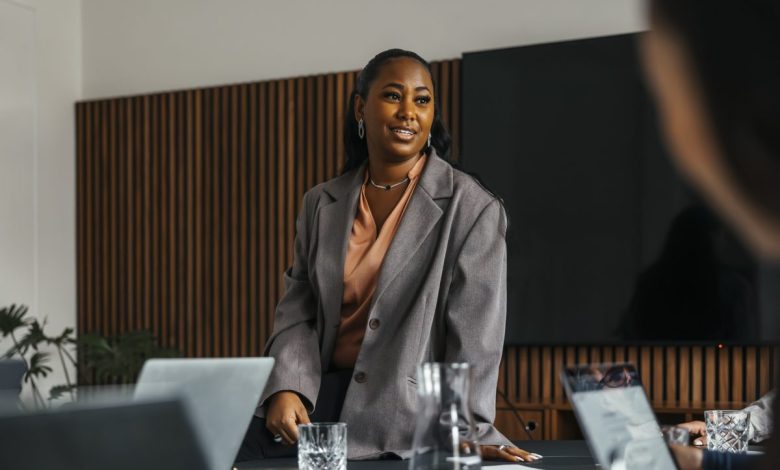


Black women are consistently reported as the largest group of founders starting or running small businesses. Yet only a small fraction of those businesses scale into employer firms and build sustainable wealth. It cannot be said that this is due to a lack of ambition, innovation or work ethic. Rather, it is a systemic barrier known as the “concrete ceiling.”
The concrete ceiling is a “unique, compounded barrier that women of color face.” It is “much tougher to break than glass” and is “also impossible to see through.” Unable to advance in corporate America, many Black women turn to entrepreneurship for stability and independence.
In the first half of 2025, nearly 300,000 Black women exited the U.S. labor force. This wave of departures was attributed to policy changes in both the public and private sectors, which largely affected the roles they held. In response to the sudden job loss, many Black women launched small businesses at an overwhelming rate. But starting a business and scaling one are two very different challenges.
Despite the surge in Black women launching small businesses, they struggle to scale their businesses into employer firms and generate annual revenue comparable to that of their counterparts. In 2025, Black women-owned employer firms had the lowest average revenue at $650,000, as reported in the 2026 Wells Fargo Impact of Women-Owned Businesses report (IWOB).
The report points out that Black women-owned employers generate lower revenue because they are unable to scale their businesses into employer firms. Their inability to scale is due to systemic barriers, including unequal access to capital, differences in industry concentration and weaker professional networks.
Without the infrastructure necessary to grow, too many promising ventures remain small, undercapitalized, and overextended. To reduce or eliminate these challenges, business support organizations (BSOs) such as incubators, accelerators, and entrepreneurship centers have established collaborative ecosystems that introduce initiatives to provide technical assistance, mentorship and equitable access to capital.
The Morehouse Innovation & Entrepreneurship Center (MIEC) in Atlanta offers one example of how these ecosystems can work in practice. For more than two decades, MIEC has been part of a collaborative, data-driven ecosystem of BSOs that equip adult and student founders with vital resources and knowledge to scale their businesses into employer firms.
Recognizing that isolated programs are not enough, in 2023, the MIEC launched an 18-month community engagement research initiative involving more than 60 Atlanta-based business support organizations, entrepreneurs and civic partners. The Building Black Business Report 2024 is the result of that initiative. The report highlights a critical insight. Capital may start businesses, but collaboration sustains them.
The research also uncovered a significant operational gap. Seventy-two percent of the surveyed firms in the report lacked essential business operations systems, including accounting infrastructure, human resources processes and digital tools. Without these foundations, even strong businesses struggle to scale. Shared service delivery models, pooled infrastructure and coordinated mentorship can bridge these gaps, ensuring entrepreneurs spend less time struggling with back-office burdens and more time building their businesses.
To strengthen the small business ecosystem nationwide, MIEC calls on peer BSOs and community partners to adopt principles that foster equity and inclusion, resilient networking, financial and digital acuity and collaborative, centralized resources.
To help Black women grow employer firms, BSOs must build transparent support systems that foster fluency in capital management and technology adoption, create opportunities for long-term peer learning beyond one-time initiatives, and partner to eliminate redundancy and create seamless pathways for founders support. These ecosystem strategies mark a paradigm shift in supporting entrepreneurship. Collaborative networks build collective strength, resilience and innovation.
Black women entrepreneurs are among the fastest-growing business owners, generating jobs and strengthening communities. Yet growth will remain limited if structural barriers persist. Will our systems evolve to support their success?
Breaking the concrete ceiling requires coordinated investment, collaboration, and commitment to building growth infrastructure—far beyond individual effort.
When that happens, the impact will extend far beyond individual founders. It will strengthen communities, expand opportunity, and reshape what entrepreneurship in America can look like.
Dr. Tiffany Bussey is the Founding Executive Director of the Morehouse Innovation & Entrepreneurship Center (MIEC) in Atlanta, Georgia. For over two decades, she has led research and initiatives advancing minority entrepreneurship, including the 2024 Building Black Business Report, a national study on ecosystem collaboration and small business growth.