
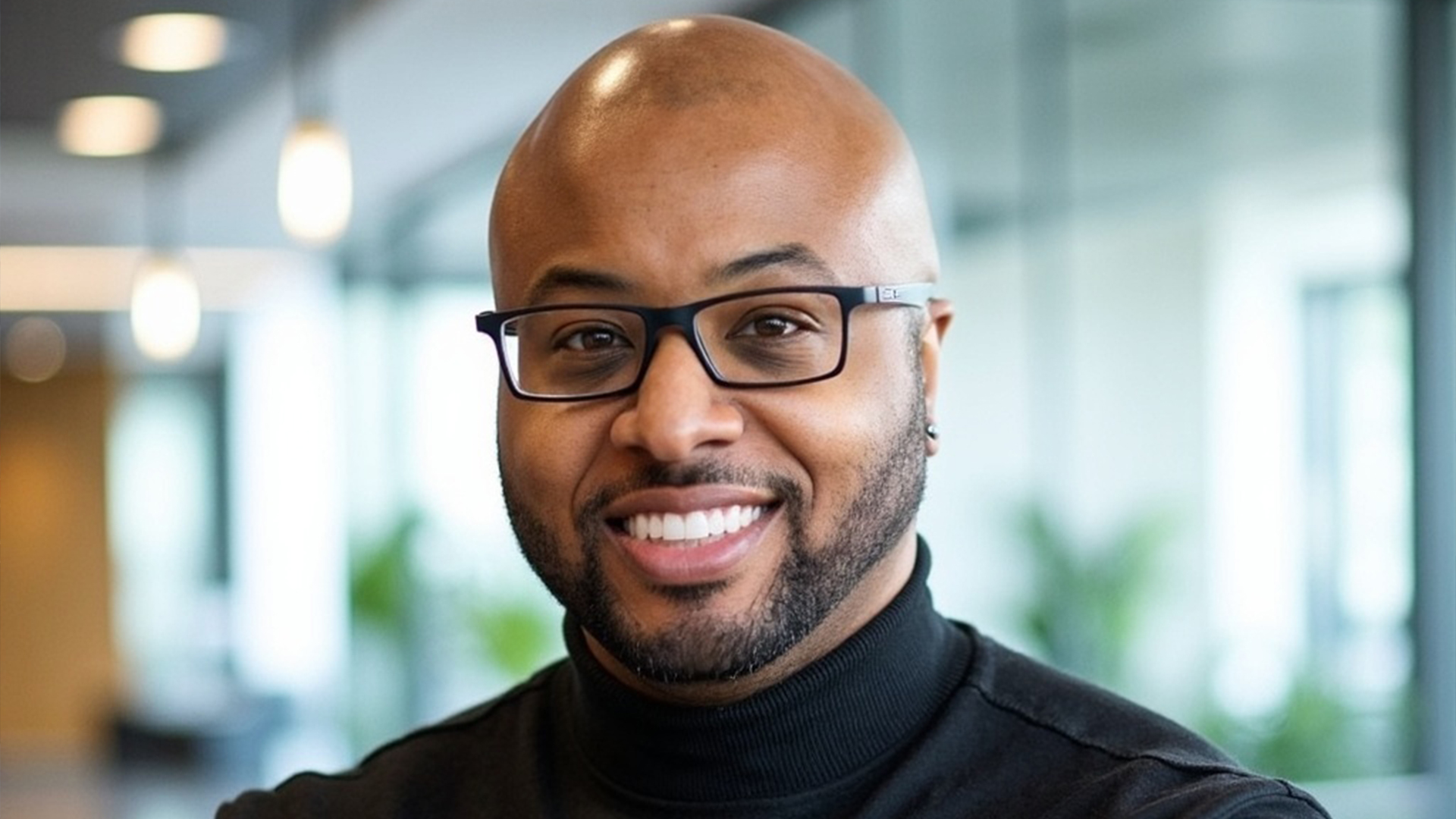

Dr. Charles R. Rogers wants to ensure Black communities are informed about colorectal cancer (CRC).
In 2009, the year after beginning his master’s degree in statistics from Kennesaw State University, Rogers was attending a family reunion. He and his family noticed that Aunt Joann had lost a lot of weight, initially assuming it was due to healthier habits. However, by the fall, she became sick and was misdiagnosed multiple times across health care systems in North Carolina. At 52 years old, she was diagnosed with Stage 4 CRC and passed away from the disease in 2016. At the time, Rogers was less informed about CRC.
“Colorectal cancer historically takes five to 10 years to grow … Her Stage 4 colorectal cancer could easily start developing at age 42 … I’ve been shouting to the rooftops ever since,” he told AFROTECH™.
After completing his master’s degree, he enrolled at the University of Minnesota, where he earned a Ph.D in health education, according to his LinkedIn. He also participated in the University of Michigan’s Michigan Institute for Clinical and Health Research (MICHR) immersion program, which focused on health disparities. During the program, he visited Flint, MI, and learned Black people had the highest rate of CRC in comparison to every other racial and ethnic group, and Black men had the highest rate across the board and the greatest risk of death from the disease. Despite these findings, Rogers observed that Black people were being diagnosed at more advanced stages of the disease or at ages older than the recommended screening age, which more organizations have increasingly shifted from age 50 to 45 since 2018, according to the American Cancer Society.
Over the years, Rogers’ research and observations about CRC reveal hot spots of early-onset CRC mortality across the country in areas like the Central Southeast, Southern Mississippi River, Eastern Texas, and Southern to Central Appalachia.
He also shared that early-onset CRC, which the Global Colon Cancer Association defines as colon or rectal cancer diagnosed before the age of 50, is the leading cancer among everyone, both males and females, in the U.S., and has been rising 2% to 3% every year since the mid-nineties.
CRS is also rising in young populations, debunking the myth that CRC is an “old people’s disease.” Research from the American Cancer Society shows that 60 Americans in their 40s or younger are diagnosed with CRC daily, which amounts to one young person every 25 minutes. Additionally, incidence among Americans aged 20 to 39 is projected to increase by 90% by 2030, according to the organization.
“Early onset should be a conversation that we have with our kids. Just like we have the conversation with our Black kids about law enforcement, because that’s how urgent it is,” he said.
While there is no single cause of early-onset CRC, Rogers said, leading theories point to changes in diet, the gut microbiome, metabolic health, early-life exposure, and high-fructose corn syrup. Environmental exposures to chemicals and toxins, including microplastics found in water bottles and released from some plastic containers when heated, are factors that are suspected to increase the risk of developing CRC.
“The plastics actually get into what you’re drinking. So you consume those and then your body reacts to those in ways that are usually not good,” he explained.
Other factors mentioned were obesity, smoking, alcohol consumption, diet — especially increased consumption of ultra-processed foods, lower fiber intake, and red meat — as well as lack of physical activity and stress, Rogers said.
“Stress will kill you quicker than disease any day … Stress is making it harder for the blood to pump to certain parts of the body. So your body starts shutting down,” he explained.
Native American and Black communities are disproportionately diagnosed with CRC, Rogers told AFROTECH™. For these communities, Rogers said cost, medical mistrust, structural racism, lack of culturally responsive care, fear of screening, limited awareness of prep options, and gaps in family health history can prevent people from seeking potentially lifesaving CRC screenings.
“Colorectal cancer is actually one of the cancers we like to say that’s preventable, treatable … with screening. The colonoscopy actually can remove a polyp before it turns into cancer. You can’t do that with any other of the cancers that are there,” Rogers noted.
Self-advocacy is essential, and patients should remember they are not bound to a single provider, as no one knows their body better than they do.
In 2026, it is projected that nearly 108,860 people will be diagnosed with CRC, and nearly 55,230 of those individuals will die from the disease, according to the American Cancer Society.
Through the Colorectal Cancer Equity Foundation, which Rogers founded and serves as president, people ages 18 to 75 can receive free stool-based testing. The foundation also travels across the country with a large-scale, immersive inflatable colon to inform the masses about CRC.