For some time now, Cali plate hash has established itself as a benchmark in the world of high-end hashish. Its name immediately evokes California, premium quality and a certain idea of modern know-how applied to cannabis resin. However, behind this attractive label lie realities that are not always well known. What exactly is Cali plate hash, and why does it attract so much interest among enthusiasts?
A term inspired by Californian cannabis culture
The term Cali is now much more than a simple geographical reference. In the cannabis world, it symbolises a culture of excellence, forged through decades of innovation, advanced genetic selection and increasingly sophisticated production techniques. Cali plate hash fits into this dynamic, adopting the aesthetic and qualitative codes associated with the Californian scene.
However, this is not an official designation nor a guarantee of origin. A Cali plate hash can be produced outside the United States, but it aims to reproduce a high quality standard, both visually and in terms of aroma and sensory experience.
Hash Cali Plate: a recognisable and carefully crafted presentation
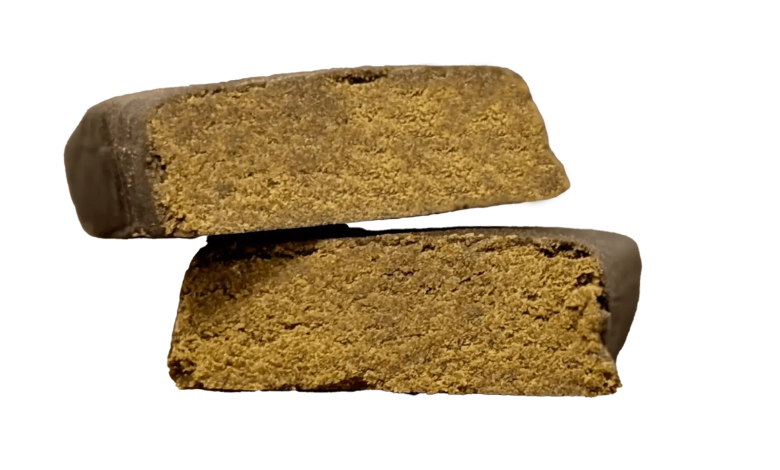
Cali plate hash stands out first and foremost for its format. It is generally presented in the form of flat, thin plates, regular in shape, easy to handle and cut. This presentation is reminiscent of premium resin slabs and contributes to its high-end image.
Visually, the resin displays shades ranging from light brown to darker brown, sometimes with golden highlights. The surface may appear slightly shiny, a sign of a high concentration of trichomes and well-controlled pressing.
Most Cali plate hashes are obtained through dry sifting, a traditional method that mechanically separates the trichomes from the plant material. When carried out precisely and using high-quality flowers, this process results in a clean, rich and highly expressive resin.
Pressing also plays a fundamental role. Performed at low temperature and with controlled pressure, it allows the resin to be compacted without degrading the terpenes. The result is a living hash whose texture evolves with heat and over time.
Texture and aromatic profile of Cali Plate
To the touch, Cali plate hash is usually malleable and greasy, becoming more flexible with the warmth of the fingers. This texture is highly appreciated by connoisseurs, as it indicates a well-preserved and properly worked resin.

Aromatically, these hashes stand out for their notable intensity. The most common profiles recall very popular modern genetics, with earthy and kush notes, sometimes creamy, sweet, fruity or slightly gassy. Terpene richness is one of the main factors explaining the enthusiasm surrounding this type of product.
Thanks to a high concentration of trichomes, Cali plate hash is usually potent. Its effects are often described as deep and enveloping, with a gradual onset followed by marked body relaxation. Depending on the genetics used and the level of resin maturation, the experience may be more cerebral or more physical, but in most cases it is aimed at a public with some degree of experience.
A sometimes misused term that reflects the evolution of the market
It is important to maintain a critical perspective when it comes to this designation. The success of the term Cali has led to its overuse, and not all hashes sold as Cali plate truly meet the expected standards. The lack of an official framework means that quality can vary considerably.
A true premium hash is recognised above all by its natural aroma, its lively texture, the finesse of its flavours and the quality of its burn. The name alone is not enough to assess a product.
Cali plate hash perfectly illustrates the evolution of the hashish market. Consumers are increasingly seeking better-crafted, more aromatic products with greater transparency regarding their production methods. This trend brings the world of hash closer to that of modern extractions, without losing its connection to traditional methods.