What is Temple Ball Hash? History, tradition and how to make it at home- Alchimia Grow Shop

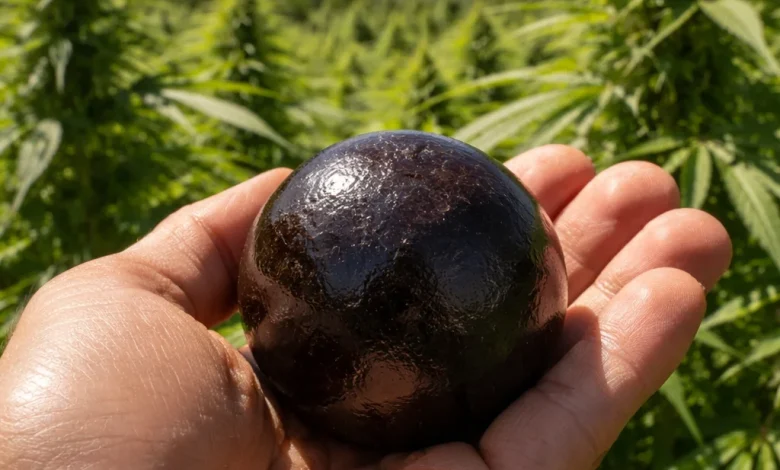
Have you ever held in your hands a dark, shiny, aromatic sphere that seemed to concentrate centuries of cannabis wisdom? If you’ve heard of Temple Ball Hash but never delved into its history, how it’s made or why hash connoisseurs place it at the very top of the concentrates pantheon, you’re in the right place. Today we invite you on a fascinating journey that begins on the slopes of the Himalayas, passes through the artisan workshops of a legendary French artist and ends in your own kitchen—or rather, in your own hands.
Get ready, because the Temple Ball is not simply a piece of hashish with a pretty shape. It is, without exaggeration, the oldest and most revered cannabis concentrate in the world.
What exactly is Temple Ball Hash?
Temple Ball Hash is a solventless form of hashish, made from cannabis plant trichomes that are compressed and hand-shaped into a sphere. Its appearance is unmistakable: a dark, slightly shiny exterior, almost lacquered, with a lighter, creamier interior that reveals less oxidised resin at the core. To the touch, a well-crafted Temple Ball is firm yet slightly yielding, sticky from the warmth of your palm and incredibly aromatic.
What sets the Temple Ball apart from other types of hashish is not just its spherical shape, but the production process, the ageing it undergoes and the richness of its terpene profile. While many modern concentrates pursue raw potency through chemical extraction, the Temple Ball focuses on purity and complexity: a full spectrum of cannabinoids and terpenes, preserved and concentrated with nothing more than cold, water, gentle heat and the maker’s hands.
The raw material is the trichomes—those tiny resin glands that coat cannabis buds and contain THC, CBD, terpenes and an extraordinary variety of active compounds. Harvesting them, cleaning them and shaping them into a sphere is an art that demands time, patience and skill. And the results are well worth it!
The soul of the Temple Ball: charas and its origins in the Himalayas
To understand the Temple Ball, you need to travel through time and space. Nepal, northern India and Tibet are the cradle of this tradition—a region where cannabis grows wild at altitudes above 3,000 metres, bathed in intense sunlight and hardened by the cool mountain air. These extreme conditions produce extraordinarily resinous plants with unique terpene profiles that are hard to replicate at other latitudes.
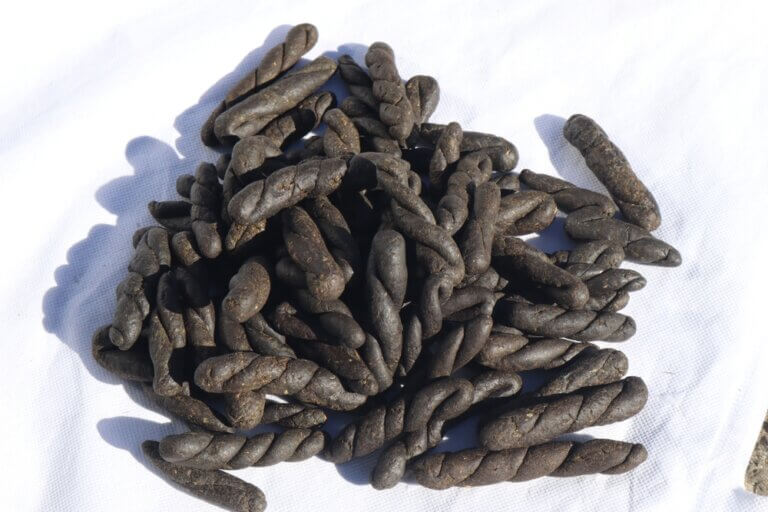
Charas: the origins of hashish
Today we tell you all about the oldest type of hashish in history, charas. As you will see, it is a traditional way of separating the vegetable matter from the resin that is still used today in some areas of the planet such as Nepal or northern India. Discover all its secrets with us, from its origins to the best known types of charas!
For centuries, local makers have collected the resin from these plants using a technique called charas, which literally means “resin” in Hindi. The process is as simple in appearance as it is complex in execution: after washing their hands thoroughly and letting them dry in the sun, the harvesters gently rub the flowering tops of living female plants between their palms. The natural heat of the skin gradually melts the trichomes, which stick to the hands forming a dark, sticky layer. After several hours of patient work, this resin is scraped from the palms and rolled between the fingers until small, compact, shiny spheres are formed: the first Temple Balls in history.
The name is no coincidence. These resin balls had a sacred use in Hindu temples, where they were offered to Shiva, the deity associated with cannabis in the Vedanta tradition. The plant even appears in the Atharvaveda, one of the world’s oldest sacred texts, as one of the five plants that liberate from anxiety. They’ve been at this for millennia!
During the 1960s and 70s, the famous Hippie Trail—that mythical route connecting Europe with Nepal via Turkey, Iran, Afghanistan and India—put the Temple Ball on the radar of an entire generation of Western travellers. Those who reached Kathmandu or the Himalayan valleys were literally fascinated by the potency, the aromatic complexity and the depth of effect of these resin spheres. That is how the Temple Ball began to build its legend beyond Asia.
A tradition from country to country: Nepal, India and beyond
Although Nepal and northern India are the great traditional heartlands of the Temple Ball, the custom of making hashish in spherical form has variations throughout the Himalayan region. In Nepal, the technique of charas by rubbing live plants is the norm; the result is a full-spectrum hashish with the most volatile terpenes intact, precisely because the plant has not been dried or cured before extraction.
In other regions such as Afghanistan or Morocco, the hashish tradition is based on dry sieving—separating the trichomes from the dried plant using screens. The resulting resin is then pressed into tablets or slabs, not spheres. The technical difference matters: Nepalese charas also collects lipids and waxes from the plant along with the trichomes, giving it a unique texture and maturation profile with slow chemical transformations that only occur inside the sphere thanks to the near-total absence of oxygen at its core.
This ageing quality is one of the Temple Ball’s great secrets. Just like a fine wine or an artisanal cheese, a well-made sphere improves with time. Inside the anaerobic environment of the ball, reactions between cannabinoids and terpenes generate new compounds, some of them extremely rare, such as hashishene—a terpene found only in aged hashish and which does not exist in the fresh plant. Isn’t that mind-blowing?
The modern revolution: Frenchy Cannoli and the bubble hash Temple Ball
If the Temple Ball has an ambassador in the modern era, it is undoubtedly Frenchy Cannoli. This French-born artisan, based in California, devoted his entire life to understanding and perfecting the art of hashish. His journey began as an apprentice to Moroccan master hash makers, where he learned the ancestral techniques of sieving and hand-pressing. Armed with that knowledge, Frenchy became obsessed with bringing the Temple Ball into the 21st century without betraying its essence.
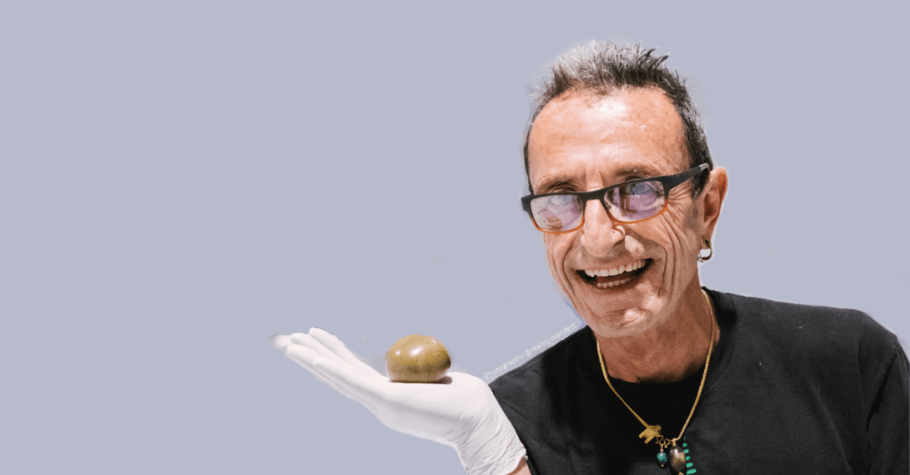
RIP Frenchy Cannoli, master hashishin
To talk about Frenchy Cannoli is to talk about passion for cannabis and hashish. Sadly, our favourite hashishin left us suddenly on July 18, so today we’d like to pay him a little tribute with this article.
His great contribution was adapting the traditional spherical form to a modern extraction process: bubble hash, or ice water hash. Instead of rubbing live plants, Frenchy started with top-quality plant material, which he placed in ice water to separate the trichomes from the plant cleanly and efficiently. Microfiltration bags of different sizes, especially those in the 73 to 120 micron range corresponding to the best mature trichomes, yield material of extraordinary purity and potency.
The resulting hash, known as 5- or 6-star full melt (the highest on the quality scale), is dried slowly at low temperature and then pressed and rolled following Frenchy’s signature method: wrapped in food-grade cellophane, it is worked with a hot water bottle at around 80–90°C, pressing and turning the resin for 20–30 minutes over repeated sessions. The gentle heat partially activates the cannabinoids (decarboxylation) without destroying the terpenes, melts and homogenises the mass and creates that characteristic dark, shiny outer crust that seals the interior like a natural parchment.

Frenchy Cannoli was also a generous educator. He shared his technique through workshops, interviews and videos with a global community of hashishins who adored him. His disciple Cherry Blossom Belle, of Heritage Hash Co., continues teaching his method today, keeping alive the flame of a tradition that links the 17th-century Himalayas with 21st-century artisan labs in California. What an incredible legacy!
How to make your own Temple Ball Hash
Before getting started, there’s something very important to keep in mind: the quality of the Temple Ball depends directly on the quality of the flowers you work with. Look for organic, well-cured marijuana flowers with a rich, aromatic terpene profile. The better the starting material, the more complex and satisfying the final result will be. There are no shortcuts here!
Materials needed
To make your homemade Temple Ball, you’ll need to gather the following items:
- Quality marijuana flowers (between 50 and 100 grams to start with a manageable amount).
- Ice water extraction bags or bubble bags in different mesh sizes (73, 90, 120 and 160 microns at a minimum).
- A bucket or large container for the extraction.
- Plenty of ice and very cold water.
- Silicone spatulas or scrapers to collect the resin.
- Parchment paper or food-grade cellophane for pressing.
- A hot water bottle or a rolling pin you can heat with water at 80–90°C.
- A thermometer to monitor the water temperature.
- Nitrile gloves (never latex!) for handling the resin.
And, of course, plenty of patience and a willingness to learn.
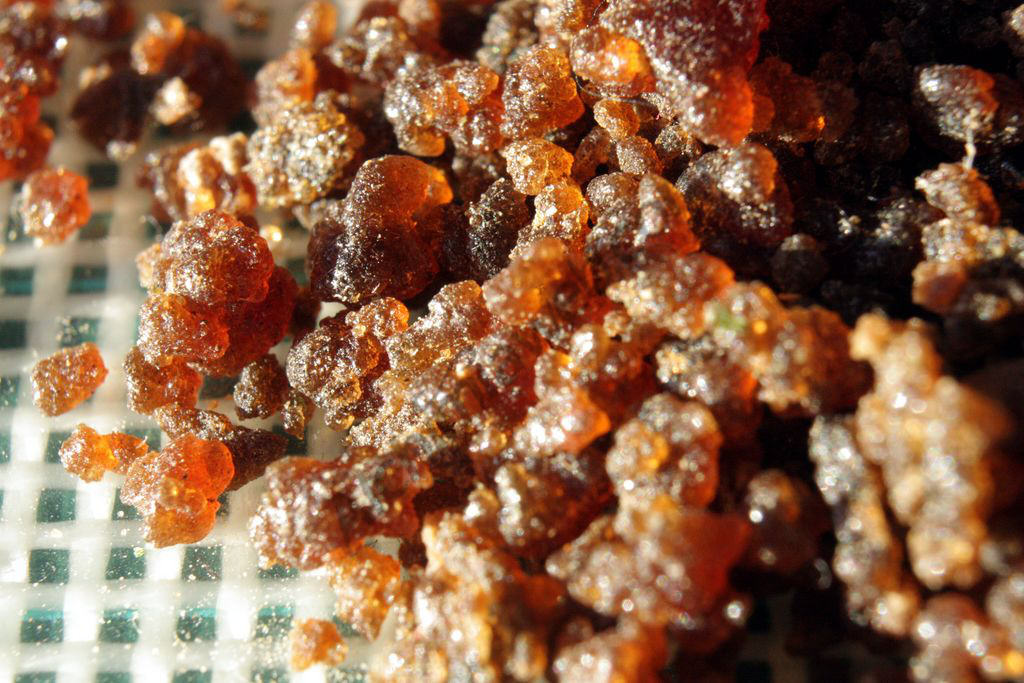
In this post we tell you the basics for making top grade ice water hash easily at home. Cannabis concentrates are becoming more and more popular, and hashish is probably the safest, besides being the favourite extract of many connoisseurs.
The step-by-step process
Step 1 — Preparation and freezing the material: Marijuana flowers work best when they are very cold. You can lightly freeze them before extraction so the trichomes become more brittle and detach more easily on contact with the ice water. If you’re working with fresh, just-harvested material, even better: the charas technique works wonderfully with live or freshly cut plants.
Step 2 — Ice water extraction: Place the extraction bags inside the bucket, from smallest to largest mesh size, starting with the finest on the outside and the coarsest on the inside. Add the flowers, cover them with ice and very cold water and stir gently for 10–15 minutes. The cold makes the trichomes brittle, causing them to separate from the plant material and become trapped in the different meshes according to their size. This step is the heart of the technique: take your time and handle with care!
Step 3 — Collecting and grading the trichomes: Lift the bags one by one, letting the water drain, and collect the resin trapped in each mesh using a spatula. The trichomes from the 73–120 micron meshes will be the highest quality—the ones that will form the core of your Temple Ball. Those from coarser meshes are second and third grade and can be used to add bulk or set aside.
Step 4 — Drying the resin: This step is critical and calls for patience. The resin must dry very slowly, ideally between 10 and 15°C, in a dark, well-ventilated place. Rushing the drying at a high temperature ruins the terpenes and can cause unwanted fermentation. The minimum recommended time is several days, until the resin has a dry, crumbly consistency to the touch while still retaining its intense aroma.
Step 5 — Pressing and shaping the sphere, Frenchy Cannoli style: This is where the magic begins. Place the dry resin on a piece of food-grade cellophane and fold it around the resin like an envelope. Heat the bottle with water to around 80–85°C. Using the hot bottle, press and slide over the cellophane parcel for several minutes, applying even pressure. The gentle heat will fuse the trichomes together, creating a cohesive, homogeneous mass. Repeat the process several times, letting it cool and pressing again, for a total of 20–30 minutes spread over 3 sessions. When the resin forms a compact, shiny, elastic sheet, remove it from the cellophane and roll it between your palms in circular motions until you achieve the characteristic spherical shape.
Step 6 — Curing and ageing: Don’t consume the Temple Ball on the first day! Store it in an airtight glass container in a cool, dark place and give it time to mature. With a minimum of two to four weeks, the difference is remarkable: the aroma gains complexity, the texture settles and the effect profile becomes more balanced. The most patient enthusiasts cure them for months or even years, as if they were a prized cellar treasure.
Tips for a perfect result
Always use the coldest water possible during extraction: the colder it is, the better the trichomes detach and the less plant material contaminates the resin. Don’t skimp on ice.
The pressing temperature matters enormously. Too much heat destroys the most volatile terpenes and leaves you with a less aromatic product. Keep the water in the bottle between 80 and 90°C and work with purpose but without overheating.
Food-grade cellophane (not regular kitchen cling film, but the specific PVC-free type) is the material preferred by leading hash makers because it doesn’t interact with the resin or impart any foreign smells or flavours.
When you notice that your Temple Ball smells like a complex perfume, with earthy, floral and spicy notes intertwined, and that pressing it lightly causes it to yield without crumbling, you’ll know the process has gone well. That’s the moment to celebrate!
A concentrate with history, a process with soul
Temple Ball Hash is much more than a cannabis concentrate: it is a cultural artefact, a piece of craftsmanship, a direct link with centuries of tradition in the Himalayan mountains. Making it at home is a way to connect with that history, to understand cannabis from its deepest roots and to develop a genuinely artisanal skill that few people master.
At Alchimia Grow Shop you’ll find everything you need to embark on this adventure: from top-quality marijuana seeds to complete ice water extraction kits, along with the best accessories to make your first Temple Ball something to be proud of. Because learning to make real hashish is one of those pleasures that, once discovered, you never forget. Will you join us on this journey?
Happy harvesting!