
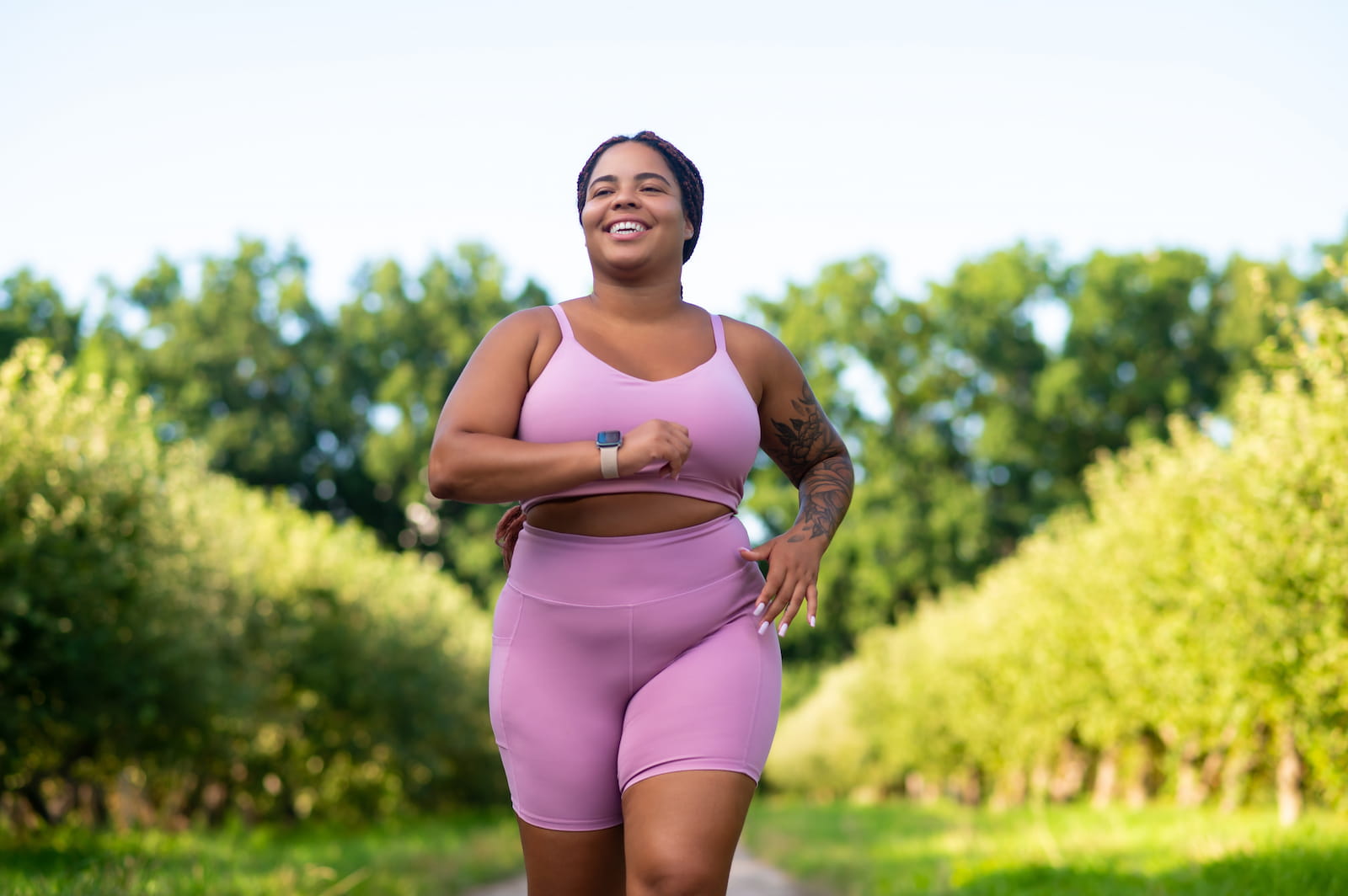
It’s typical for health professionals to recommend regular exercise as part of weight management. It’s meant to complement a balanced diet, good sleep habits, and effective stress management. Beyond helping with your weight, being physically active can also bring a range of benefits. These health benefits can include reduced anxiety, lower blood pressure, and improved sleep in the short term; over time, they can also reduce your risk of illnesses such as cardiovascular disease, type 2 diabetes, and high blood pressure. For plus-size women, though, the plan to exercise may be thwarted before they even begin because of one seemingly simple thing: finding the right clothes. Here’s how to deal with that.
How Finding the Right Clothes Can Affect Your Motivation to Exercise
According to an online survey of 130 women who wore size 14 clothing and above and exercised twice per week, what they wore could influence their workout. When they were satisfied with how their exercise clothes fit and looked, they experienced better body image and had more confidence in their appearance. If they weren’t happy with what they were wearing, however, they felt less confident and more likely to avoid working out.
While these surveys have limitations, the responses suggest that finding the right exercise clothing matters for staying motivated. The question now is: where do you start?
RELATED: Fashionable and Comfortable: Your Guide to Dressing Well After Major Weight Loss
Top 5 Tips for Finding Your Best Fit
1. Know Your Measurements
You may already know that clothing sizes aren’t always the same across styles and brands. That’s true for exercise clothing, too. Even if a brand says its clothing is plus size and lists the sizes it offers, that doesn’t mean it’s best for you. Taking your measurements can ensure that you’re choosing clothing that fits–especially if you’re shopping online.
Here’s the right way to take your various measurements.
How to measure your waist:
- Find the bottom of your ribs and the top of your hips, and place the tape measure around your middle halfway between them (usually just above the belly button).
- Breathe out naturally and take your measurement.
How to measure your hips:
- Stand straight with legs together.
- Position the tape measure around the widest part of your hips.
- Breathe out naturally, then take the measurement.
How to measure your chest or bust:
- Wrap the tape measure under your armpits at the fullest part of your chest.
- Stand straight and don’t puff out your chest.
- Take the measurement.
How to measure your mid-upper arm:
- Hang your arms loosely by your side.
- Find the tip/point of your shoulder on the non-dominant side and then mark with a cross.
- Flex your arm to a 90-degree angle and mark the tip of your elbow with a cross.
- Using a measuring tape, measure directly from one cross to the other and mark the halfway point between these points.
- With your arm now relaxed and by your side, wrap the measuring tape around this midway point to obtain the measurement for your mid-upper arm circumference.
How to measure your mid-thigh:
- Stand in a relaxed position with your weight evenly distributed on both feet
- To identify the length of the upper thigh, first find the hip bone and mark it with a pen.
- Next, find the knee bone and mark it with a pen.
- Using a tape measure, find the midpoint between the hip and knee bone and mark it with a pen.
- Wrap the measuring tape around this midpoint to get the measurement for your mid-thigh circumference.
How to measure your neck:
- Place the tape measure around your neck about an inch below your larynx.
- Place two fingers between the tape measure and your neck.
- Take the measurement.
How to measure your inseam:
- Stand up straight with your feet shoulder-width apart.
- Measure from the inside of your leg to the ankle bone.
2. Know Your Body Type
Your measurements aren’t the only factor that can determine how well your clothing fits. Even clothing that matches the numbers can fit poorly if it doesn’t match your body type. While there can be variations, these are the most common body types:
- Apple – Your body is rounder in the middle, which usually means a larger tummy.
- Pear – Your body has a fuller bottom half, which usually means larger hips.
- Inverted triangle – Your body is wider in the shoulders and chest with a narrow waist and bottom.
- Ruler or rectangle – Your body is fairly straight from top to bottom.
- Hourglass – Your body has proportional chest and hips with a smaller midline.
You can then use this information to choose clothes that may complement your shape. For example, someone with an apple body type may be more comfortable in oversized T-shirts and high-waist leggings that don’t highlight a fuller waist. If you have a pear shape, consider flared pants or joggers that balance your lower-body proportions. Pair these with fitted shirts. Compression leggings may also define your bottom half without making it look wider, if they suit the activity you’re doing.
Oversized shirts also work well for those with an inverted triangle shape, while someone with a rectangular shape may look best in sculpted leggings and wrap-over tops that create the illusion of curves. Finally, if you have an hourglass shape, high-waist leggings can help to define your curves. Medium to high-impact sports bras can also support you as you work out.
3. Choose the Right Materials
When you’re working out, you don’t just want to look good. You want to be comfortable, too. That means choosing exercise clothing made from the right materials. Generally, this means clothing that’s breathable and keeps moisture away from your skin as you sweat. Common options include cotton, bamboo viscose, nylon, and polyester. Depending on your activity, cotton or polyester spandex helps your clothes stretch with your movements, making it less likely for your skin to chafe.
Of course, if you have sensitive skin or any skin conditions, it’s best to be guided by what usually irritates your skin.
4. Match Your Exercise Needs
Another factor that can complicate exercise clothing is the type of exercise you’re doing. When shopping, make sure that you’re looking at clothes that match your needs. For example, stretchy clothing works best for exercises like yoga, Pilates, and tai chi. If you’re running, choose sports bras that support your cleavage well without pinching.
5. Choose the Best Support
Finding the right clothes to exercise in doesn’t stop with outerwear. Along with supportive sports bras that suit your activity, you also need the right underwear. Comfortable underwear should cover you well while staying in place when you move. Seamless underwear can also reduce the likelihood of undesirable effects like what’s known as a camel toe.
Regular exercise is typically an integral part of maintaining a healthy weight. Although different types of physical activity can help, many are best done in the right clothing. If finding the right fit has been stopping you from having an exercise routine, it’s time to follow these tips. You’ll have the exercise clothes you need to feel confident and motivated.