
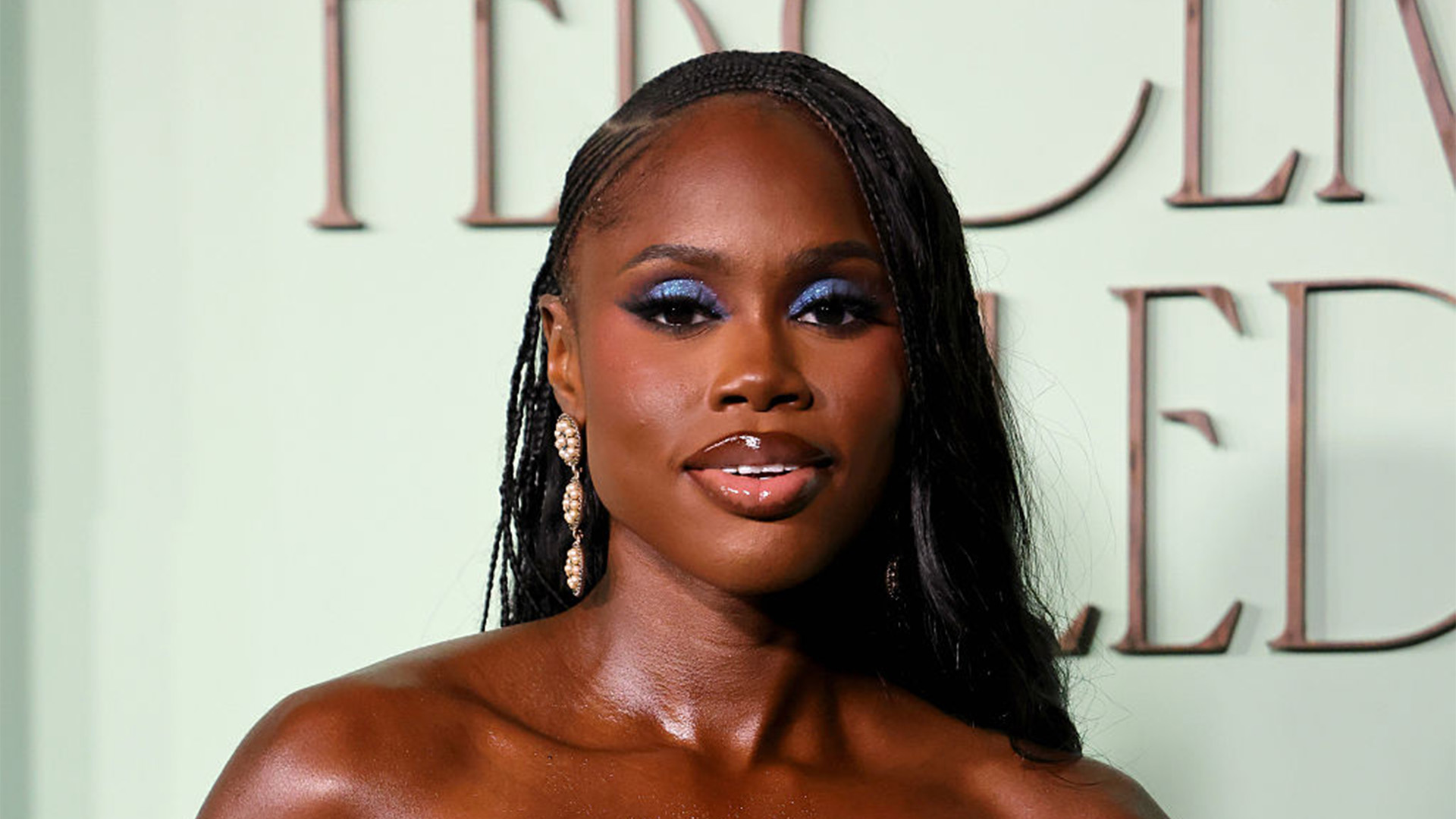

Eni Popoola took one of the most traditionally prestigious career paths as a lawyer and turned it into a lucrative career in the gig economy.
The New York City-based creator known as enigivensunday has a following of 428K on Instagram, 708.2K on TikTok, and 38.9K on YouTube. Unlike many of her peers, her start began with what was shaping up to be a very successful career path in corporate law with degrees from Harvard and Columbia Law School to match.
But before that, creating content became a reality for Popoola. After graduating from undergrad at Harvard in 2017, she pulled out a camera she’d used to document her senior year in high school and did a random, social media-led photo shoot with her older brother.
“We started doing that every Sunday for my outfits that I would wear to church, and that was the beginning,” she recalled. “I didn’t really intentionally create content, but I was like, “Hey, there’s this day of the week where I’m dressing up, where I like the way I look, my outfit, I might as well post it on Instagram. And it happens every week, so let me post it every Sunday.’”
Committing To Content Creation
It was a conversation in January 2023 with a friend where Popoola posed the question, “How long are we going to give it to start doing the things we actually want to do?”
By March, she was called in by her partner about a moonlighting outside of work policy that forbade employees from working with brands, a compromise that Popoola was not willing to make since her work as a creator was starting to gain traction.
“My firm at the time had the broadest language, which meant it had the strictest policy that you essentially could not make money out of work. You could not have a business,” she explained. “And immediately, I remember thinking … ‘Oh, this is my way out. This is when it happens. This is how I quit. This is how I leave.’”
Entering The Creator Economy
Rather than starting from ground zero, Popoola was intentional about using what she had learned over the years as a stepping stone toward her entrepreneurial journey in the gig economy.
As someone who has always been disciplined and strategic, she brings those same principles to how she structures her days, a huge shift from treating content creation as just a hobby.
“When you approach something as a hobby, you’re kind of like, ‘I don’t care if this takes off or not.’ And one of the things that I really kind of resented about the legal world was how elitist it could feel, how image and perception-focused it could feel, how sometimes the networking could feel icky,” said Popoola. “Content creation was meant to be my escape from that, and then once I grew and turned it into a full-time job, I realized, there’s no escaping the need to build connections with people. There’s no escaping the need to have a strong reputation.”
She added, “I really just had to come to terms with the fact that the groundwork was already there by embarking on a more traditional career, and that I had everything that I needed in order to be successful in a non-traditional career, because those principles still applied.”
Why Black Creators Stand Apart From Their Peers
Popoola has long been vocal about fellow Black women creators and how they aren’t always compensated at the same level as their peers, so AFROTECH™ asked her to share what’s missing in how people like her use hard numbers, data, and metrics to prove their worth.
“There is a premium on driving culture, and I think Black women and Black creators naturally bring that to a conversation,” she explained.
“There’s just a baseline level of when a Black creator creates something, there is a built-in level of cultural awareness that should be accounted for in even payment, or it’s part of the reason why they’re even brought to the picture, and that standard doesn’t necessarily apply for everyone,” Popoola added.
While creators from other backgrounds may have high engagement or be well-liked, Popoola notes that they may not bring the same level of cultural awareness or significance to every piece of content they create, which is important to consider for Black creators.