
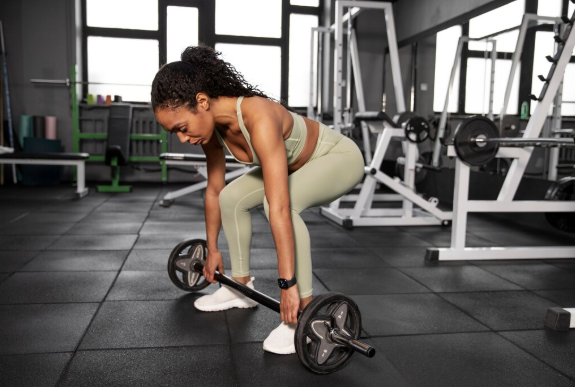
Something has shifted in how Australians approach their fitness. Gym memberships haven’t disappeared, but a growing number of people are investing in their own training space and taking a more deliberate approach to what they eat. They’re building sustainable habits around strength training and nutrition that actually hold up over time.
The combination that keeps coming up is simple: lift consistently, eat with intention, and stop outsourcing your health to whatever’s trending this month. Most people only get one or two of those right. This article breaks down how to get all three working together, starting with the training foundation every serious home gym needs.
Key Takeaways
- Strength training builds muscle, boosts metabolism, and improves long-term health in ways cardio alone cannot match.
- The squat is one of the most effective compound movements you can do, and having the right rack at home removes the barriers to doing it consistently.
- Nutrition is where most training results are won or lost, and high-quality meal replacement shakes can fill the gaps without derailing your progress.
- Home gym equipment is a long-term investment that pays off compared to ongoing gym fees when you actually use it.
- Tracking both training and nutrition progress keeps you honest and gives you something concrete to build on.
- The best fitness setup is one you will actually use, week after week, for years.
Why Strength Training Has to Come First
Most people who want to change their body start with cardio. It feels productive, it burns calories in the moment, and it’s easy to measure. But cardio alone doesn’t build the kind of muscle that changes how your body looks and functions over time.
Strength training does something different. When you put your muscles under load repeatedly, your body responds by building more muscle tissue, burning more calories at rest, and becoming structurally stronger in ways that protect your joints and spine. The results are slower to show up but far more durable than anything you get from a treadmill.
The squat sits at the centre of most good strength programs because it works more of your body at once than almost any other movement. Quads, hamstrings, glutes, core, and lower back all get trained under load. When you add weight over time, the benefits compound quickly.
The challenge with squatting seriously at home is having the right equipment. You can work with bodyweight squats for a while, but the moment you want to progress with a barbell, you need a rack. Without one, you either can’t get the bar into position safely, or you’re limited to weights you can lift to your shoulders without assistance. That ceiling comes faster than most people expect.
A quality home squat rack solves this problem permanently. It gives you a safe bar path, adjustable safety catches, and the ability to train heavy without a spotter. For anyone who takes strength training seriously, it’s the single most important piece of equipment in a home gym.

Choosing Equipment That Matches Your Training
The squat rack market has expanded significantly, and not all racks are equal. The key variables are build quality, steel gauge, weight capacity, the safety catch system, and what attachments the rack supports down the track.
Cheaper racks flex under heavy loads, have poorly designed safety catches, and limit how far you can take your training. A rack that costs less upfront but fails at heavier weights is a false economy. What you want is something built to handle serious loads over years of use.
Kinta Fitness is an Australian-owned brand with a showroom in Malaga, Western Australia, that has built its reputation on exactly this kind of equipment. Their K75 range covers a broad spectrum of home gym setups, from wall-mounted and fold-away options designed for tight spaces right through to full power cages and dual pulley systems. If you want to find the perfect squat rack for sale for your specific setup, their range starts at $1,000 for compact wall-mounted options and extends to $10,550 for the K75 Crossover Pro Power Rack, which is more at home in a commercial setting.
What sets Kinta apart for the Australian market is that they back their equipment with local support. Next-day delivery is available for Perth Metro customers, and they offer finance options so the upfront cost doesn’t have to hit all at once. They also provide discounts for emergency services, defence personnel, and gym industry professionals. For a home gym that you’re building to last, starting with the right rack removes one of the biggest limitations on how far your training can go.
Once your rack is in place, the other components come together more easily. A quality barbell, weight plates, and an adjustable bench cover the core of what you need for a serious strength program. Kinta carries all of these, which simplifies sourcing when you’re building from scratch.
Nutrition Is Where Most People Leave Results on the Table
Training creates the stimulus. Nutrition determines the outcome. You can squat consistently for months and barely change your body if what you’re eating doesn’t support your goals.
The fundamentals aren’t complicated: enough protein to support muscle repair and growth, controlled calories if fat loss is part of the goal, and enough fibre to keep your digestive system working properly. The problem for most people isn’t knowing what to eat. It’s the daily reality of preparing the right foods at the right times when life is busy and motivation dips. This is where having a reliable, practical backup plan makes the real difference between staying on track and sliding off it.
Meal replacement shakes sit in a genuinely useful space here. When a balanced meal isn’t realistic, a good shake keeps your nutrition on track without defaulting to whatever processed food is closest. The key is choosing one that actually delivers real nutritional value rather than one that’s mostly filler with a health label.
The Fast 800 fills that role well for the Australian market. The program was developed by Dr Michael Mosley, and the shakes are formulated around Mediterranean diet principles: high protein, high fibre, no added sugar or simple carbs, and calorie-controlled. Each serving is designed to be genuinely filling rather than just adequate. If you’re looking for the best diet shakes in AU, The Fast 800 range covers original whey-based options as well as vegan alternatives, with flavours including Strawberry, Chocolate, Vanilla, Coffee, Mint Chocolate, Banana, and Salted Caramel.
The original whey shakes are $49.99 each, with Banana and Salted Caramel currently at $39.99. Vegan options run $24.99, and the Best Sellers Bundle comes in at $149.97. For those getting started, the bundle offers the most practical way to find what works for your routine. As seen in Better Homes and Gardens, the Herald Sun, and the Daily Telegraph, The Fast 800 has established itself as a credible option for Australians approaching weight management seriously rather than looking for shortcuts.
Measuring What Matters
The missing piece in most fitness routines is tracking. People train hard, clean up their eating, and then get discouraged when progress isn’t obvious. But without measuring anything, you have no way to know whether your routine is working, where the gaps are, or what to adjust.
Monitoring key health indicators like your body composition, resting energy levels, and physical performance markers tells you far more than the scale alone. Take weekly photos from consistent angles. Track your working weights across main lifts. Note how well you sleep and how quickly you recover between sessions. These data points give you a clear picture of whether your program is actually working.
When you see progress in the numbers, it compounds your motivation. When you don’t, it prompts the right questions earlier: Is your protein intake high enough? Are you sleeping enough to recover? Have you been skipping training days? The tracking keeps you accountable to the plan rather than just feeling busy.
Soruce: FreePik
Building a Setup That You’ll Actually Use
The home gyms that gather dust are the ones built on impulse. The ones that become an actual part of someone’s routine are built around an honest assessment of how they train, how much space they have, and what they’re willing to commit to over the long term.
If you train alone, a power rack with safety catches is non-negotiable. If space is tight, a wall-mounted or fold-away rack with a solid weight set can handle the core of a strength program without dominating a room. If you’re starting from scratch, prioritise the rack first, then add from there.
On the nutrition side, the discipline required to eat well every day is real. Having a practical solution for the days when cooking a balanced meal isn’t going to happen is part of a sustainable approach, not a compromise of one. Building the habit of using a quality meal replacement shake on difficult days removes the biggest weak point in most nutrition plans.
The two pieces work together. Strong, consistent training plus deliberate nutrition gives you results that are both visible and functional. It takes longer than most people want but it lasts far longer than anything that comes from a crash program.
Conclusion
Building a stronger body at home in Australia has never been more accessible. The equipment is better, the nutrition options are smarter, and the information on how to train effectively is widely available. What separates people who make real progress from those who don’t is consistency and the decision to invest in the right foundation from the start.
A quality squat rack from Kinta Fitness and a well-formulated nutrition plan that includes The Fast 800 shakes when you need them covers the two highest-leverage points in any strength transformation. The rest is showing up.
Frequently Asked Questions
What equipment do I need to start strength training at home? A squat rack, a barbell, and weight plates form the core of a home strength setup. A quality adjustable bench expands your options significantly. Prioritise these three before adding anything else.
Is a power rack worth the investment for a home gym? Yes, particularly if you train without a spotter. A power rack with adjustable safety catches lets you squat and bench press to failure safely. Without one, your progress is capped at whatever you can lift to shoulder height.
How do I choose the right squat rack for my space? Measure your ceiling height, floor space, and consider whether a permanent or fold-away setup works better. Kinta Fitness offers compact wall-mounted options from $1,000 for tighter spaces and full power cages for those with more room.
What makes a meal replacement shake useful for fitness goals? A quality shake covers your protein and fibre needs quickly when a full meal isn’t practical. It keeps your nutrition on track during demanding days instead of defaulting to processed food. Choose one with real nutritional content rather than just low calories.
Are The Fast 800 shakes suitable for vegans? Yes. The Fast 800 offers Vegan Shakes in Chocolate and Vanilla at $24.99 each, which are plant-based alternatives to their original whey-based range.
How often should I track my fitness progress? Weekly is sufficient for most metrics. Log your training weights after each session, take consistent progress photos, and note energy and recovery levels. Monthly body composition measurements give you a broader trend to work with.
Can I lose fat and build muscle at the same time? Yes, particularly early in a strength training program or after a period of inconsistent training. The combination of calorie-controlled, high-protein nutrition with consistent strength training makes body recomposition achievable, though it takes patience.
How long before I see results from home strength training? Most people notice strength gains within four to six weeks. Visible changes in body composition typically take eight to twelve weeks when training is consistent and nutrition supports the goal.